
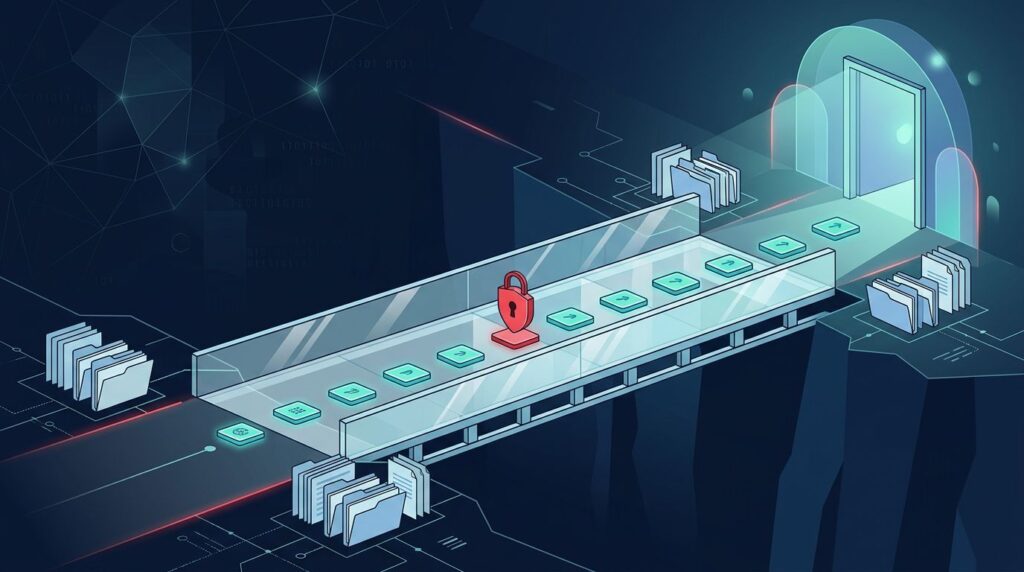
A breach ends in the incident room long before it ends for customers. They remember what you said, what you withheld, and whether your next promises matched what happened.
If you need to rebuild trust after breach, treat trust as an operating obligation, not a public relations campaign. Technical remediation, customer communication, vendor decisions, and board reporting must collectively support consumer trust.
The work takes time. A clear 12-month sequence gives you a way to show progress without making promises your evidence cannot support.
Key takeaways for rebuilding trust after breach
- Acknowledge what happened without speculation or defensiveness.
- Give customers a clear action, contact point, and next update date.
- Connect every public promise to corrective measures you can prove.
- Track consumer trust through customer behavior, control improvements, and stakeholder confidence.
- Assign one executive owner for the recovery plan, even when several teams contribute.
Trust debt starts when your words stop matching reality
Trust debt is the accumulated cost of disappointing expectations. After a data breach, customers question more than your security controls. They question your judgment, your data privacy practices, and your ability to tell them the truth.
That change in perception can damage your brand reputation and customer loyalty. A loss of consumer trust can affect renewals, referrals, employee confidence, support volume, and board confidence. One incident may start the problem. Repeated vague updates or missed commitments make it harder to repair.
Research on restoring public trust after a cybersecurity breach points to the importance of response strategy across government, nonprofit, and commercial organizations. The same principle applies inside your company: people need evidence that the organization understands the failure and is correcting it.
The World Economic Forum’s guidance on rebuilding trust makes the point plainly. Communication must continue over time, and it must match a coherent plan.
Transparent communication does not mean publishing forensic details that could create additional risk by helping threat actors exploit the incident. It means sharing what you know, what you don’t know, what you have done, and when people will hear from you again.
How to rebuild trust after breach: the 12-month sequence
Trust recovery works best when you treat it as a managed business program. The plan should sit beside your incident response plan, not disappear when systems are back online. Each phase should produce evidence of progress that strengthens consumer trust.
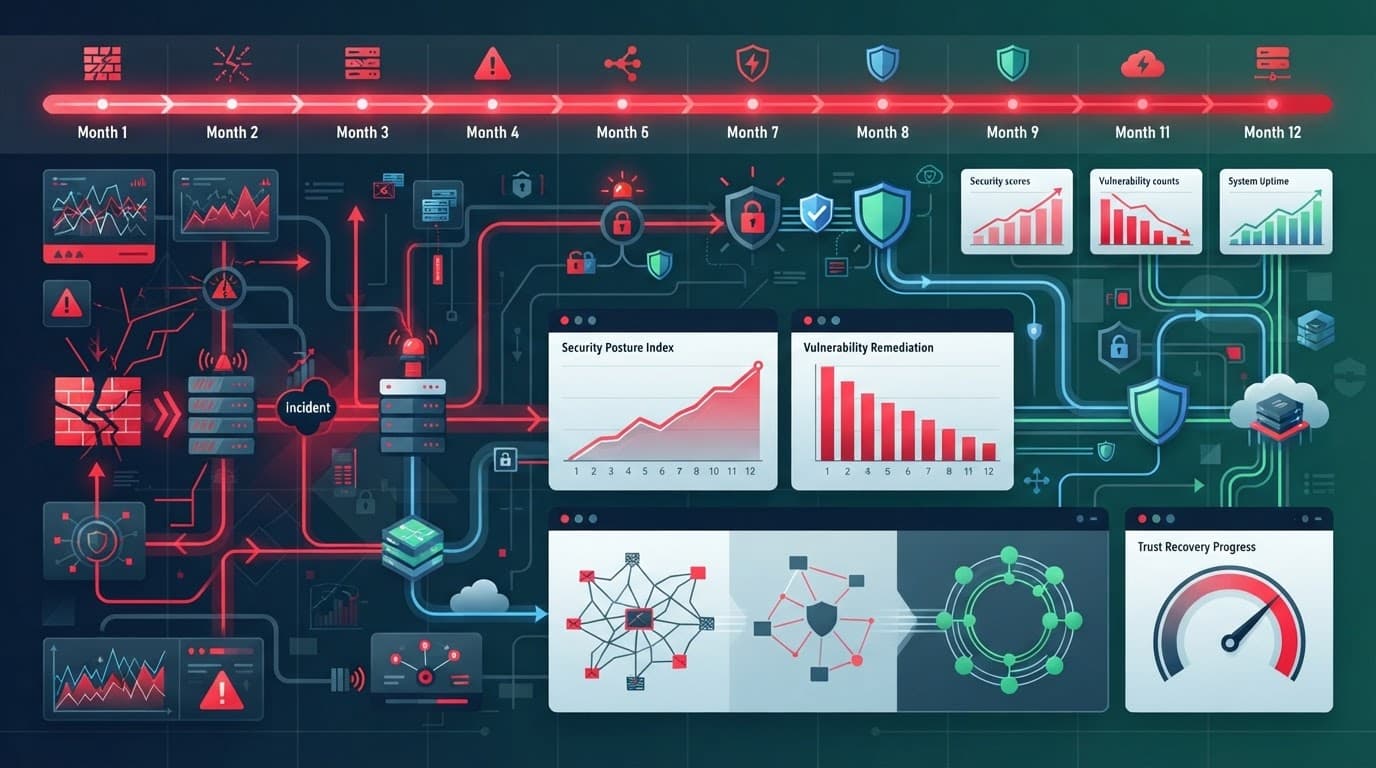
Days 0 to 30: establish facts and communicate clearly
Your first responsibility is to contain the incident, preserve evidence, and establish a reliable fact pattern. Bring together security, legal, operations, communications, customer support, and the executive owner.
Set internal decision points for the first 24 and 72 hours. Confirm what systems were accessed, which data may be involved, and how access occurred. Determine whether threat actors still have a path into the environment.
Before issuing a breach notification, review notification laws and applicable compliance requirements with legal and communications leads.
Your first customer notice should be direct:
“We identified unauthorized access to one of our systems on [date]. Our investigation is underway. At this time, we believe [data categories] may be involved. We have contained the access, engaged specialists, and will update you by [date]. We will tell you what action to take if your information is affected.”
Don’t promise that the incident is isolated until the investigation supports that conclusion. The Federal Trade Commission’s data breach response guide provides useful guidance on response communications and customer actions.
Months 2 to 3: investigate the root cause and show ownership
A root cause investigation should examine more than the exploited vulnerability. Review identity controls, administrative access, logging, alerting, software configuration, employee cyber hygiene practices, and third-party access.
Ask why the condition existed, why it was not detected earlier, and who had authority to correct it. If a vendor contributed to the incident, document the facts without shifting all responsibility outside the company.
Document root-cause findings, owners, deadlines, and unresolved risks in a post-incident review. Tie corrective measures to named owners and target dates.
They may include stronger access control, multifactor authentication, network segmentation, improved monitoring, vendor access restrictions, or a revised vendor incident response plan.
Use the first progress update to show movement, not to repeat the original apology. Tell customers which protections changed and which work remains open.
Months 4 to 6: prove that the controls work
This is where many companies lose credibility. They announce new controls but don’t show whether those controls operate as intended.
Run a security audit, vulnerability assessment, and targeted penetration testing. Test whether high-risk findings are assigned, funded, and closed within an agreed timeframe. Review backup integrity and conduct a real restore test. Data recovery is not complete because backups exist. You need evidence that you can recover priority systems and trustworthy data. Successful testing should demonstrate an improved security posture.
Review business continuity planning and disaster recovery planning against the lessons from the incident. If recovery depends on one employee, one vendor, or one undocumented process, the risk remains.
Vendor consolidation can help when overlapping tools create alert noise and unclear ownership. Evaluate options such as secure access service edge or extended detection and response only when they address a documented control gap. First map what each system detects, who owns it, and what happens after an alert before buying, removing, or consolidating tools.
Months 7 to 12: embed governance and keep reporting
By this stage, customers and employees are watching for consistency. Continue scheduled updates when you have meaningful progress. If a remediation date moves, explain why and reset it.
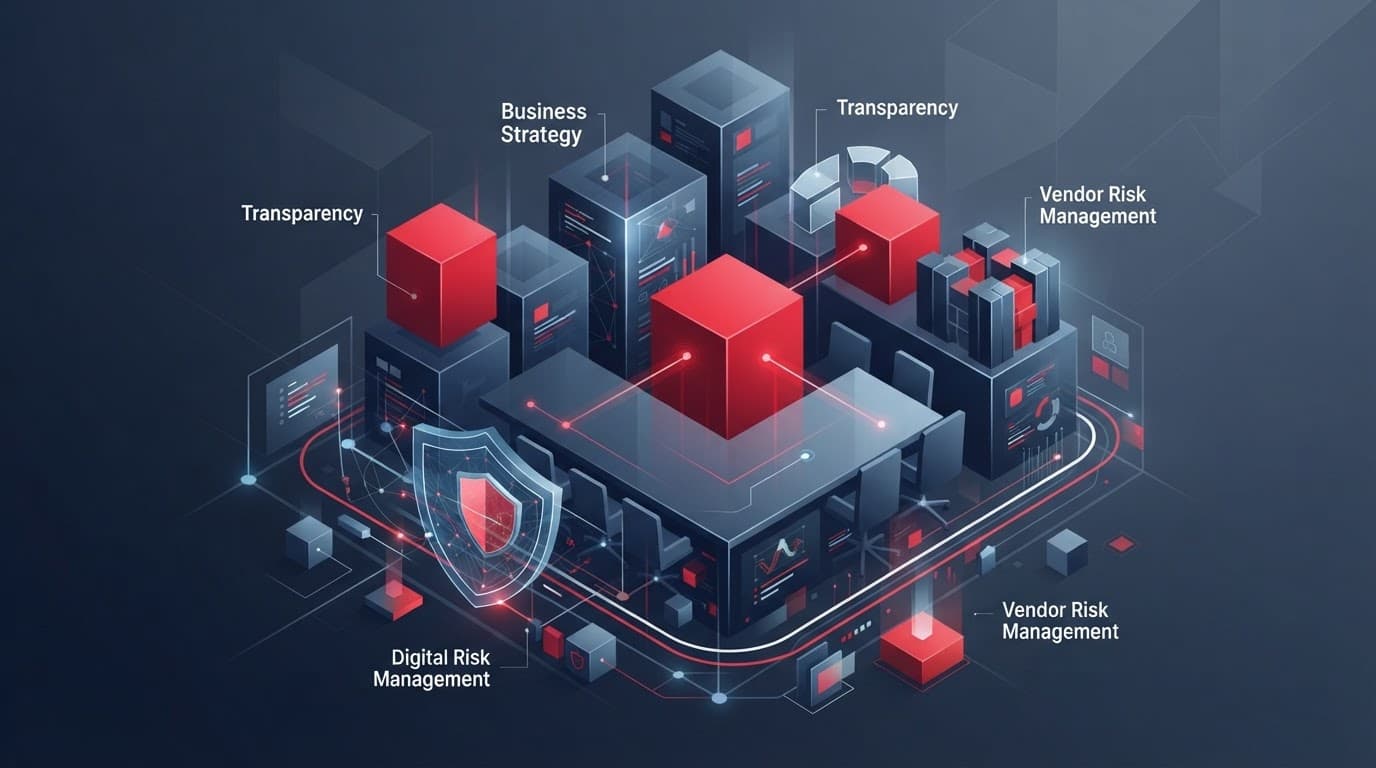
Bring third-party risk management into the regular operating rhythm. Review vendor due diligence, privileged access, contract notification duties, data retention, and vendor offboarding. A supplier should not remain connected because nobody owns the exit decision.
Your 12-month technology roadmap should now include security priorities, recovery improvements, ownership, funding, and decision dates. Use the roadmap to improve organizational resilience. It should show that information security is part of how the business operates, not a temporary project after bad news.
Measure whether confidence is returning
You cannot measure trust with a single reputation score. Use a small set of indicators that connect behavior, controls, and leadership confidence to recovery. They should show whether consumer trust is returning and your security posture is improving.
| Area | What to track | Review rhythm |
|---|---|---|
| Customer response | Support volume, renewal behavior, complaint themes, and trust survey results | Monthly or quarterly |
| Incident response | Time to contain, time to notify, and time to answer affected customers | After each event |
| Control health | Critical findings past due, privileged access reviews, and MFA coverage | Monthly |
| Recovery readiness | Successful restore tests and recovery time against business priorities | Quarterly |
| Vendor exposure | Open vendor findings, high-risk access, and overdue remediation | Monthly |
| Executive confidence | Risk status, owner clarity, and decisions delayed by missing information | Quarterly |
Set a baseline before you announce improvement. Report the trend, the owner, the threshold, and the next action. A dashboard full of activity is not the same as a useful technology dashboard.
Your reporting should also connect spend to outcomes. If you fund new monitoring, backup capacity, or access controls, show what risk it reduces and what evidence supports the investment. Cost-per-outcome reporting is more credible than a larger list of tools.
Give the board a clear view of risk
Boards don’t need a forensic chronology in every meeting. They need the company’s current security posture and a clear view of what changed since the incident. They also need to know what could happen next, whether exposure remains inside the company’s cyber risk appetite, and what management needs from them.
A board-ready risk summary should include:
- The business impact of the incident.
- The current risk position and what changed.
- The owner for each major remediation item.
- Progress against promised dates.
- Remaining third-party and data privacy exposure.
- The decision, funding, or escalation required from the board.
Use a stable format so directors can see trends between meetings. This guide to cyber risk reporting for boards provides a practical structure for risk scenarios, business impact, remediation status, and board decisions. You can also review what to report to the board about cyber when you need to turn technical findings into business language.
Technology governance for boards is not about directing daily security work. It is about ensuring risk is visible, owned, funded, tested, and tied to clear decisions.
Fix the ownership problem behind the incident
A breach often exposes a technology leadership gap. You may have capable engineers, an MSP, security vendors, a security platform, and outside counsel. You may still lack one person who owns the full connection between risk, systems, vendors, reporting, and business priorities.
A fractional CTO, virtual CTO, outsourced CTO, or part-time CTO can provide executive technology leadership when you need direction without a full-time hire. The role is to establish a business-aligned technology strategy, clarify decision rights, and keep the 12-month technology roadmap moving.
An interim CTO and interim CTO services may fit when the leadership seat is open, trust has broken down, or the company needs stabilization fast. If cybersecurity is the main pressure point, a fractional CISO, virtual CISO, or interim CISO may provide the right cybersecurity oversight.
The title matters less than the authority. Someone must be able to say what happens now, what waits, who owns the risk, and how leadership will know the work is complete.
If your recovery plan feels scattered or no one clearly owns the next decisions, Get an Executive Technology Clarity Check.
Conclusion
Trust doesn’t return through one apology, one audit, or one security purchase. It returns through accurate commitments, clear ownership, and evidence that the business is safer and better governed than it was before.
The first response contains the immediate damage. The next 12 months determine whether customers, employees, and directors believe your organization learned from it. Consumer trust returns when commitments, ownership, and operating reality begin to match.
FAQs about rebuilding trust after a breach
What processes identify vulnerabilities after a breach?
Start with a root cause investigation, system and access review, security audit, vulnerability assessment, and targeted penetration testing. Include employees, vendors, cloud services, logging, identity controls, and recovery procedures. The goal is to find the exploited weakness and assess related risks. Identify whether threat actors could exploit them, and why the original weakness remained open.
What training should employees receive?
Employees need practical training on phishing, credential protection, suspicious activity reporting, data handling, and escalation procedures. People with incident response responsibilities need role-based exercises and tabletop practice. Training should be repeated and measured through participation, reporting quality, and response time.
What should data recovery include?
Confirm that backups are protected from the same attack path, test restoration, validate recovered data, and rank systems by business importance. Connect the results to business continuity planning and disaster recovery planning. A recovery plan that has never been tested is an assumption, not readiness.