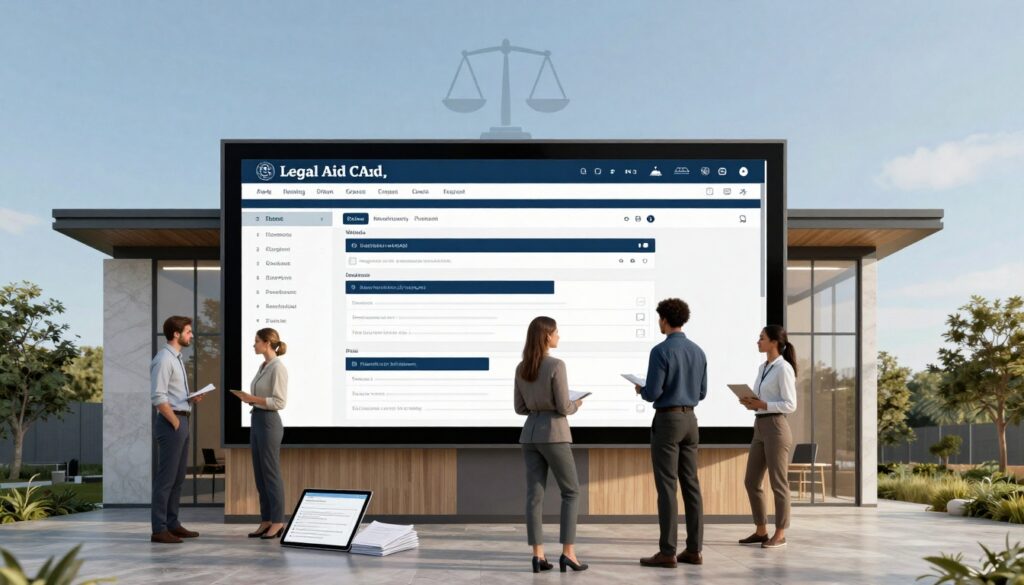
access to justice

A board discussing a cybersecurity assessment for access to justice organizations

Cybersecurity Assessment for Access to Justice Organizations (real risks in 10 business days)

It’s 4:45 p.m. Intake is backed up. A partner asks for a file “right now.” Finance needs numbers for a funder update. Then someone forwards a strange email that looks like it came from a court address, underscoring the operational security challenges nonprofit organizations face every day. This is the real context for a cybersecurity […]

Cybersecurity Assessment for Access to Justice Organizations (real risks in 10 business days) Read More »

A team working on grant reporting data quality for civil legal aid organizations

Grant Reporting Data Quality for Civil Legal Aid Organizations (The Fixes Funders Trust)

Your team knows the work advancing access to justice is real. The client stories are real. The need is relentless. Then the grant report is due, and the numbers feel shaky. Totals change between drafts. A case count doesn’t match the narrative. Finance asks why expenses don’t line up with units of service. Staff stay

Grant Reporting Data Quality for Civil Legal Aid Organizations (The Fixes Funders Trust) Read More »

Referral Handoff Process for Court Services Organizations (Move People From Self-Help to Services Faster)

People do the right thing. They go to court self-help, the emergency department of legal services, ask for guidance, fill out forms, and try to follow instructions. Then the chain breaks. The next step might be legal aid, a navigator program, mediation, housing support, substance use treatment, or DV services, but the referral handoff process

Referral Handoff Process for Court Services Organizations (Move People From Self-Help to Services Faster) Read More »

A team working with a fractional CTO for justice support networks

Fractional CTO for Justice Support Networks (Operating Discipline That Stops the Drop-Off)

The intake queue is full. A court navigator program makes a “warm handoff.” A partner says they’ll follow up. Then the trail goes quiet, disrupting access to justice. In justice support networks, that quiet can mean a self-represented litigant missed a deadline, lost housing, returned to harm, or showed up alone to a hearing. These

Fractional CTO for Justice Support Networks (Operating Discipline That Stops the Drop-Off) Read More »

A team discussing their Data Security Strategy for Access to Justice Organizations

Data Security Strategy for Access to Justice Organizations (Secure the Backbone That Keeps Services Moving)

The intake queue is up. A partner needs a same-day handoff. A client is waiting on a document that can’t be found because it’s “in someone’s email.” That’s what the backbone looks like in real life: intake forms, case notes containing bulk sensitive personal data, documents, and the quiet glue between staff and partners. For

Data Security Strategy for Access to Justice Organizations (Secure the Backbone That Keeps Services Moving) Read More »

How to find Technology Consulting for Civil Legal Aid Organizations

Technology consulting for civil legal aid organizations (stop spreadsheet chaos and improve throughput fast)

Your intake queue is swelling amid the justice gap. A partner referral went cold because no one saw it. A funder report is due, and three spreadsheets disagree. That’s not a staff problem. It’s a workflow problem. Spreadsheets are good duct tape, until they quietly become the system of record for intake, eligibility, case status,

Technology consulting for civil legal aid organizations (stop spreadsheet chaos and improve throughput fast) Read More »

A team is looking to Build An Intake Callback Queue That Cuts Abandoned Calls and Frees up Intake Staff

Build An Intake Callback Queue That Cuts Abandoned Calls and Frees up Intake Staff

The intake line hits a wall at 10:05 a.m. Calls stack up. Voicemails pile up. A person with a court date tomorrow tries again and again, then gives up. Later, staff find a note, half-written, with no call-back number. Everyone feels the same sinking thought: what did we miss? This is the scale problem in

Build An Intake Callback Queue That Cuts Abandoned Calls and Frees up Intake Staff Read More »

A team following a 3 tier intake triage model

Set a 3-tier Intake triage model that cuts time-to-first-contact to 48 hours in 60 days, without burning out intake staff

Monday, 9:12 a.m. The intake inbox is already a few hundred messages deep. Voicemails stack up. A partner emails, “Any update?” Someone flags a court deadline that was never captured in the first call. Intake staff do what they always do, they sprint, they improvise, they carry the anxiety for everyone else. This is the

Set a 3-tier Intake triage model that cuts time-to-first-contact to 48 hours in 60 days, without burning out intake staff Read More »

Stop letting voicemails pile up, set a 3-step callback workflow that cuts wait time for help

At 4:47 p.m., the voicemail light is still blinking. Someone left a message about an eviction notice. Another caller says they missed court paperwork because they “couldn’t get through.” A staff member has a sticky note with a number they meant to call back, but it’s now buried under intake forms. This is a justice

Stop letting voicemails pile up, set a 3-step callback workflow that cuts wait time for help Read More »