
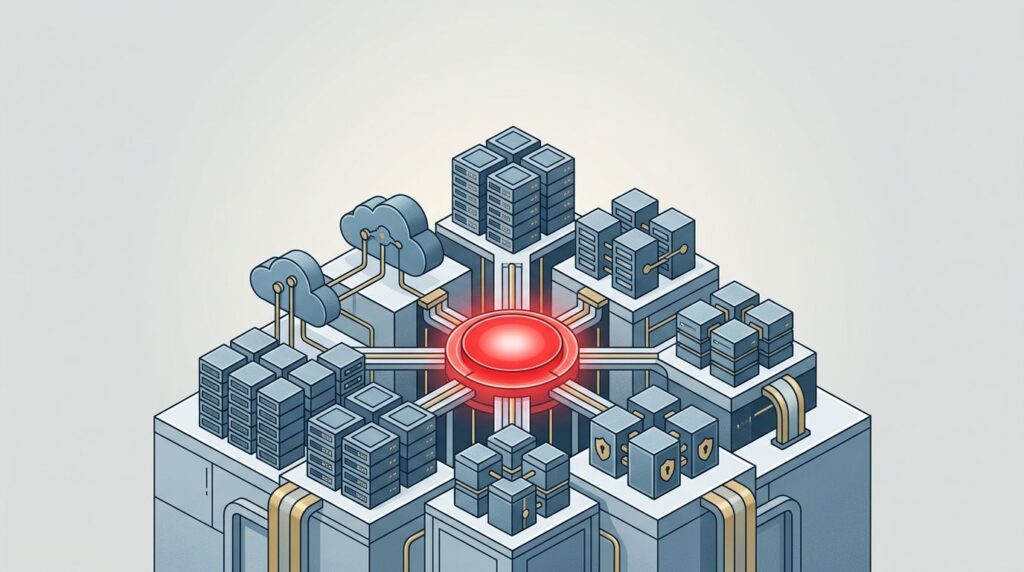
Growth puts pressure on every weak decision your company made when things were simpler. Systems that once worked well enough start slowing teams down. Vendor contracts pile up. Reporting gets harder to trust. Nobody can give a clean answer about risk, spend, or what should happen next.
That is why technology organization growth is not only an IT concern. It is a leadership concern. If you are preparing to scale, sell, raise capital, or acquire another business, digital transformation efforts must be explainable, governable, and tied directly to business growth and the core operating plan.
The goal is not a perfect technology environment. The goal is a business that can move with clearer ownership, stronger operational efficiency, and scalable operations to support confident decisions.
Key Takeaways
- Growth readiness starts with an honest view of systems, risks, vendors, data, and technical debt.
- Through effective strategic planning, a business-aligned technology strategy should connect spending and projects to revenue, margin, customer experience, and risk.
- Investors and buyers look for clear ownership, credible reporting, and evidence that technology problems are known and managed.
- Board-ready technology reporting should show tradeoffs, not bury leadership in technical detail.
- If executive ownership is missing, a fractional CTO or interim CTO can create direction before pressure becomes a crisis.
Start With the Operating Picture You Have
Most leadership teams do not lack technology activity. They lack a clear picture of what that activity is producing.
You may have an IT manager, developers, an MSP, cloud solutions, productivity tools, and robust it infrastructure. Work is happening. Yet the CEO, COO, or board may still struggle to answer basic questions.
Which systems matter most to revenue and operations? Where is the company carrying unacceptable risk? Which projects support business growth? What technology spend has a clear return? Who can make the final call when priorities conflict?
If those answers are scattered across meetings, spreadsheets, and vendor conversations, you have a visibility problem. It will become more expensive as the business scales.
Start with a technology health check. It does not need to become a six-month consulting exercise. You need an honest technology assessment that covers:
- Your systems inventory, major integrations, data flows, and critical dependencies.
- Vendor contracts, renewal dates, performance issues, and exit risk.
- Current technology spend, including overlapping tools and unplanned services.
- Technical debt, technology debt, process optimization, and manual workarounds that slow operations.
- Cybersecurity risk, remote work setups, access control, backups, incident response readiness, and recovery testing.
- Automation tools, customer relationship management platforms, data analytics, business intelligence, and systems intelligence capabilities.
- Ownership for the roadmap, risk decisions, vendor management, and delivery to maximize operational efficiency.
A systems inventory often exposes the real issue. Finance may own a key subscription. Operations may own the process it supports. Technology may own the integration. A vendor may control the underlying data. That arrangement can function for years, until an outage, audit, acquisition, or failed renewal forces someone to explain it.
“IT owns it” is not an ownership model. It is often what people say when no executive owns the business outcome.
You do not need every issue fixed before you grow. You need the issues named, ranked, owned, and connected to a practical plan.
Technology Organization Growth Needs a Clear Strategy
Technology organization growth works when technology decisions follow the business plan instead of competing with it.
If your plan calls for capturing new market opportunities, adding locations, improving customer retention, raising margins, or completing an acquisition, your technology strategy needs to show what must change and what can wait. By using effective tech-driven strategies, leadership can align systems with business growth. A list of requested projects is not enough.
A strong technology strategy execution system creates a basis for tradeoffs. It gives leaders a way to say yes, no, or not now without reopening every argument. Every high performing exponential organization relies on a smart innovation strategy and careful resource allocation to scale smoothly.

Your business technology strategy should answer a short set of practical questions:
- What business outcomes does technology need to support over the next 12 months?
- Which systems, data, and teams are most important to those outcomes?
- What risks could interrupt the plan or damage customer trust?
- What work should be funded, delayed, stopped, or retired?
- Who has authority to make each major decision?
A useful 12-month technology roadmap includes more than new features or software projects. It should include security improvements, vendor changes, data quality work, technical debt management, business continuity planning, and the operating changes needed for adoption.
This is where many growing companies get stuck. They fund visible projects but defer the boring work that keeps those projects usable. Integrations are left fragile. Data migration gets under-scoped. Access controls stay inconsistent, impacting operational efficiency and customer relationship management tools. Documentation lives in one person’s head.
The result is operational drag that does not show up cleanly on the P&L, often stalling broader digital transformation initiatives. It appears as delayed revenue, extra headcount, customer frustration, avoidable consulting fees, and leadership time spent untangling issues.
A one-page technology strategy can keep the work grounded. It should name the business priorities, the few major technology bets, the risks you are accepting, and the measures leadership will review. If it cannot be understood by your CEO, CFO, COO, and board, it is too complicated.
Make Technology Spend Easier to Defend
Technology spending becomes hard to govern when every line item has a technical explanation but no business owner.
A cloud solutions bill may be rising because demand is up. It may also be rising because no one has reviewed architecture, licensing, inactive accounts, or vendor pricing. A growing budget for productivity tools and automation tools may reflect useful expansion, or it may hide tool sprawl and shadow IT. Strategic resource allocation requires looking beneath these surfaces.
Do not begin with a blanket IT cost reduction target. Start by asking three questions of every meaningful cost:
- What business outcome, customer need, or risk does this support?
- Who owns that outcome outside the technology team?
- What happens to revenue, margin, operations, or compliance if this spend stops for 30 days?
Those questions create technology ROI discipline without treating every cost as waste, applying true financial intelligence to your operations. Some spending protects resilience, some enables growth, and some is simply the cost of running a business safely. The issue is whether leadership can explain the difference.
Use cost-per-outcome reporting for major technology investments. A customer portal project, for example, should have a stated outcome such as fewer service calls, faster onboarding, or improved renewal rates. A security project should identify the exposure it reduces, the business process it protects, and the owner accountable for completion.
Technology dashboards should not become a pile of green and red status indicators. They should help you decide what needs attention. Show technology spend optimization through a few measures that matter:
| Leadership question | Useful evidence |
|---|---|
| Are we spending against priorities? | Budget by business outcome and roadmap commitment |
| Are tools creating drag? | Redundant applications, unused licenses, and manual workarounds |
| Are projects worth finishing? | Expected value, remaining cost, delivery risk, and owner |
| Is risk becoming manageable? | Known exposure, remediation status, tested recovery capability |
Supporting these dashboards requires disciplined process optimization, improved operational efficiency, reliable data analytics, integrated business intelligence, and active performance management.
The takeaway is simple. A lower technology budget is not proof of good management. Clearer decisions about spend are.
Put Risk and Governance in Business Terms
Cybersecurity oversight is often where weak technology governance becomes visible first. A board asks about ransomware readiness, data privacy, third-party risk management, or cyber insurance renewal. Management responds with a long technical report detailing various cybersecurity measures. Nobody leaves the meeting more confident.
Board cybersecurity reporting should be short, plainspoken, and decision-oriented. It should cover the risk that matters, the controls that are missing, the owner, the budget required, and the remaining exposure after action.
Your board does not own daily execution. It does own oversight. That means it should understand the company’s cyber risk appetite, the risk it is accepting, and where management needs support or a decision.
A board-ready risk summary may include:
- The five to seven technology and cyber risks with the largest business impact.
- Critical vendors and systems that create operational dependency.
- Incident response readiness, backup recovery results, and business continuity gaps.
- Material findings from a cybersecurity risk assessment or IT security assessment.
- Decisions that require funding, risk acceptance, or escalation.
Do not treat vendor due diligence as a procurement task. A key SaaS provider may hold sensitive data, support a revenue process, or control a workflow your team cannot easily replace. Vendor management needs owners, service expectations, renewal discipline, and a vendor offboarding plan before things go wrong.
AI governance belongs in the same conversation. If teams are using generative AI tools with customer, employee, or internal operating data, you need a clear AI acceptable use policy, data handling rules, and AI vendor due diligence. Responsible AI is not about slowing down useful experimentation. It is about knowing what your people can use, what data they can enter, and who approves exceptions.
When risk cannot be expressed in business terms, it will either be ignored or overstated. Neither outcome helps leadership.
Prepare for Sale, Investment, or Acquisition Before Diligence Starts
A transaction does not create technology problems. It exposes the ones that were already there.
Buyers, investors, lenders, and outside advisers will want to understand whether the technology environment supports the business story. They will examine systems that drive revenue, software ownership, vendor contracts, intellectual property, data privacy, security controls, technical debt, and key-person dependency, specifically evaluating whether your setup can maintain scalable operations and execute tech-driven strategies.
That is why technical due diligence should begin well before a data room opens. You need time to separate true red flags from manageable issues, assign owners, and build a credible remediation plan. If a sale is roughly six months out, a six-month sale preparation plan gives you the runway to close the gaps buyers will probe.
External diligence teams also assess whether technology can support value creation after the deal. This technology due diligence perspective is consistent with what experienced operators see in transactions: technology is part of the operating engine, not a side file for the IT team.
Build an acquisition readiness file that includes:
- A current systems inventory, a robust it infrastructure overview, and architecture notes.
- Major vendor agreements, renewal terms, security obligations, and concentration risk.
- A data map showing sensitive data, ownership, retention, and access, alongside how data analytics and business intelligence support overall business growth.
- A technology roadmap with priorities, costs, owners, and dependencies.
- A record of open security findings, known technical debt, and remediation plans.
- Evidence of disaster recovery planning, incident response, and recovery testing.
- An organizational view of key technology roles and decision rights.
Do not hide known issues. Buyers tend to react better to a clear problem with a credible owner and plan than to a surprise found late in diligence.
The same rule applies to capital raising. If your growth story depends on technology, investors will ask whether the team, architecture, data, and operating discipline can support it. They may also look at how technology costs affect margins and adjusted EBITDA. You should be able to trace major spend to audited financial statements and business outcomes. Do not claim savings or efficiency gains you cannot support.
For a buyer, technology diligence is part of validating value and post-close risk. This overview of IT diligence and value creation captures the same point. The work should inform the integration plan, not end as a report nobody uses.
If you are preparing for a leadership transition, a sale, or ownership change, Prepare Technology for Diligence or Transition before the pressure arrives.
Choose the Right Level of Technology Leadership
A strong IT director can run day-to-day operations and still be the wrong fit for executive technology leadership. The difference is not status. It is scope and authority.
A technology leader for growing companies needs to connect growth, risk, spend, vendors, systems, and execution. They need to shape the organizational structure, tap into employee intelligence, and drive employee empowerment. They also need to explain those tradeoffs in language the board can use.
You may not need a full-time CTO yet. A fractional CTO services engagement can fit when you need ongoing executive judgment, a technology roadmap, stronger governance, and a steadier operating rhythm without committing to a permanent hire.
A fractional CTO, virtual CTO, outsourced CTO, or part-time CTO can work when the business needs consistent leadership but the role is not yet full-time. They can also guide change management and secure remote work setups. A fractional CIO may be a better fit when enterprise systems, data, operations, and IT cost optimization are the larger concern.
An interim CTO is different. Interim CTO services fit when a leader has departed, a major initiative is slipping, trust has been damaged, or a transaction needs immediate executive ownership. If cyber risk is the main pressure point, a fractional CISO, virtual CISO, or interim CISO may be the better answer.
Do not confuse a fractional CTO vs IT consultant decision with a fractional CTO vs full-time CTO decision. A consultant may assess a narrow problem or deliver a project. A technology leader owns the operating picture and stays accountable for the hard decisions around it.
If ownership is unclear, Talk Through Your Technology Leadership Gap. The right title matters less than having someone with authority to create direction.
Use a 90-Day Plan to Turn Clarity Into Motion
You do not need to fix everything at once. You need to stop uncontrolled motion and put the important work in order.
A practical 90-day technology plan starts with decisions, not tools.
Days 1 through 30: Complete the technology audit. Confirm the systems inventory, major risks, active projects, vendor commitments, key dependencies, and current spend. Name the executive owner for each major area.
Days 31 through 60: Set the technology priorities for growing companies. Decide which projects continue, pause, stop, or need re-scoping. Build a decision rights map. Establish a technology operating rhythm for executive reviews, vendor meetings, and board reporting, supported by structured change management and employee empowerment.
Days 61 through 90: Publish the one-page technology strategy and board-ready tech roadmap. Agree on the 12-month technology roadmap, budget assumptions, risk treatment, and measures that leadership will review each quarter while executing process optimization, advancing digital transformation, maintaining the overall innovation strategy, and boosting operational efficiency.
This approach improves stakeholder alignment because it forces uncomfortable ambiguity into the open. It also gives capable managers and vendors a clearer path to execute.
Technology organization growth is easier to manage when leaders have a common picture of what matters now. You can grow without carrying the same level of drag, but only if someone has the authority to make the tradeoffs.
Conclusion
Growth, investment, and sale readiness all test the same thing: whether your technology organization can support business growth without creating hidden risk and operational drag.
You do not need a perfect stack or a polished presentation. You need clear ownership, honest reporting, a business-aligned roadmap, and a plan that holds up under scrutiny.
If technology decisions feel scattered, risky, or too dependent on the wrong people, Get an Executive Technology Clarity Check. A clearer picture is often the first step toward calmer leadership under pressure.
Frequently Asked Questions
What should a technology organization do before seeking investment?
Start with a technology assessment that shows what supports growth, what creates risk, and who owns the answers. Investors will want a credible view of your systems, data, security posture, vendors, technical debt, and technology spend.
You should also have a technology roadmap that ties planned investment to business outcomes. If the plan depends on better customer retention, improved margins, or a new product line, show how technology supports that result.
How early should you start technology due diligence before a sale?
Start as early as possible, ideally before a transaction is active. Late diligence leaves little room to validate facts, organize evidence, remediate obvious gaps, or explain issues with confidence.
Known weaknesses do not automatically damage a deal. Surprise weaknesses often do. A clear technology risk management framework, named owners, and a realistic remediation plan can make a difficult issue easier to govern.
What is the biggest technology risk for a growing company?
The biggest risk is usually not one system or one vendor. It is weak executive ownership.
When decisions are split across founders, finance, operations, IT, vendors, and outside advisers, priorities drift. Tool sprawl grows. Risk goes unreported. Projects become harder to finish. A single accountable technology leader helps bring those choices back into one operating picture.
When should you hire a fractional CTO instead of a full-time CTO?
Use a fractional CTO when you need strategic technology planning, vendor oversight, technology governance, and executive reporting, but the business does not yet need a permanent executive seat.
Choose an interim CTO when leadership is urgently missing or a major problem needs immediate control. Hire a full-time CTO when the company has sustained need, a defined mandate, and enough work to justify the role over the long term.