access to justice

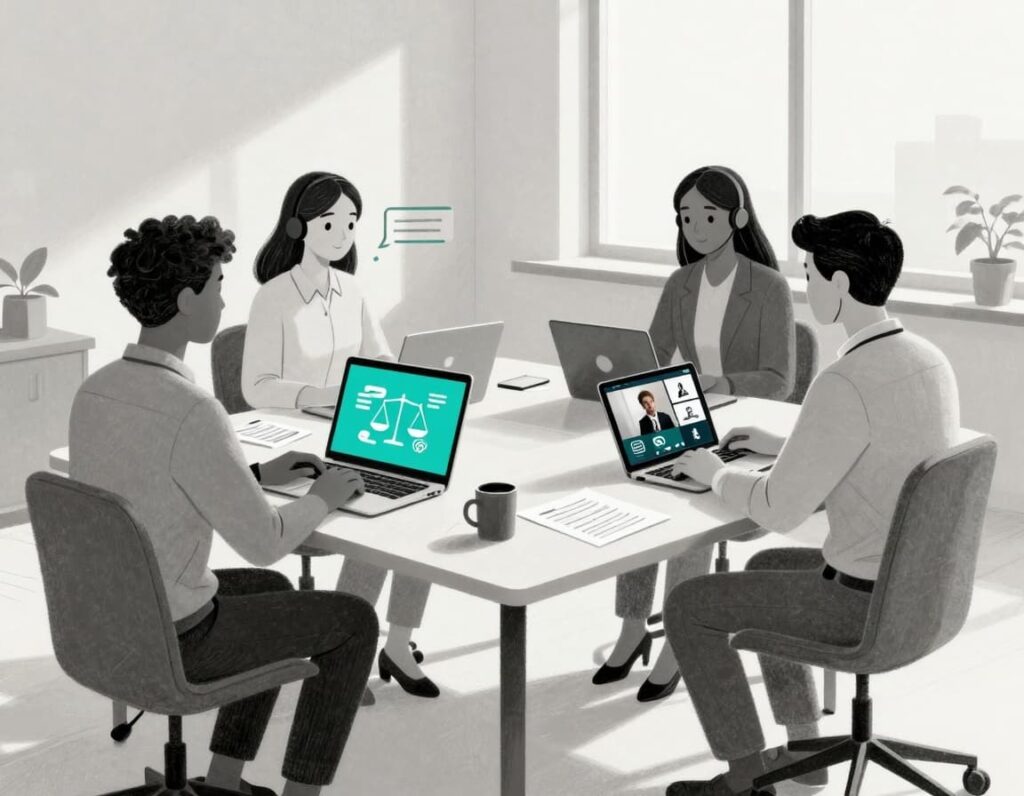
An image of a team using remote interpretation tools for legal nonprofits

Remote Interpretation Tools for Legal Nonprofits Serving Immigrants and Refugees

Much justice work now happens on digital devices like screens or phones. Your legal teams are trying to reach clients in detention, rural towns, crowded apartments, and shelters using remote legal support. Many speak languages your team does not, or cannot find in person on short notice, requiring real-time translation. Remote interpretation tools are the […]

Remote Interpretation Tools for Legal Nonprofits Serving Immigrants and Refugees Read More »

An image of a team performing information governance for justice organizations

Information governance for justice organizations: from chaos to clarity

Challenges in information exchange. Shared drives that feel like a maze. People quietly pasting client details into email, chat, and AI tools because they just need to get the work done. That is the daily reality for many justice organizations operating within the justice system. Legal aid nonprofits, clinics, impact hubs, coalitions, and intermediaries in

Information governance for justice organizations: from chaos to clarity Read More »

An image of a team reducing spreadsheet overload in legal aid

From Spreadsheet Chaos to Clarity: Reducing Spreadsheet Overload in Legal Aid

Legal teams did what they had to do. Intake logs in Excel. Clinic rosters in Google Sheets. Grant reports in a dozen different files, each with its own tabs, color codes, and macros that only one person understands. Over time, those quick fixes turn into a shadow system. Dozens of trackers live in different folders

From Spreadsheet Chaos to Clarity: Reducing Spreadsheet Overload in Legal Aid Read More »

Remote Work Tools For Legal Services Teams That Protect Clients And Calm The Chaos

Remote work and hybrid arrangements are now standard for justice-focused organizations, much like in law firms. Legal professionals support advocates from home offices, co-working spaces, clinics, and sometimes from cars outside detention centers. In that mix, remote work tools for legal services teams are no longer nice-to-have. They are the backbone that keeps client stories,

Remote Work Tools For Legal Services Teams That Protect Clients And Calm The Chaos Read More »

Cross-Org Data Security Strategy for Justice Support Networks (Stopping Cascade Risk)

A justice support network is rarely one organization. It’s legal aid providers, court self-help centers, navigator programs, community partners, pro bono clinics, and the tech vendors that hold forms, files, and case notes. Under frameworks like Executive Order 14117, which underscores data protection amid national security concerns, work moves fast because people need help now.

Cross-Org Data Security Strategy for Justice Support Networks (Stopping Cascade Risk) Read More »

Stop sending clients on a scavenger hunt for documents, build a 10-minute eligibility packet that cuts follow-up calls

Your intake line is full. A client finally gets through, and you can hear the stress in their voice. You ask for proof of income, a lease, a notice, a case number, a copy of an ID. They say they have some of it, somewhere. You tell them to email what they can, and you’ll

Stop sending clients on a scavenger hunt for documents, build a 10-minute eligibility packet that cuts follow-up calls Read More »

Intake That Doesn’t Lose People, Fix the 5 drop-off points, and stop re-asking the same questions

The intake queue is exploding. A partner is waiting for a referral that never arrives. Someone in need starts an application, then vanishes halfway through. By the time your team circles back, it’s too late, the moment passed, trust thinned, and your staff has another loose thread to track. A strong client intake process isn’t

Intake That Doesn’t Lose People, Fix the 5 drop-off points, and stop re-asking the same questions Read More »

Featured data classification guide for justice nonprofits image of data being sorted into different categories.

A Practical Data Classification Guide for Justice Nonprofits (Public, Internal, Sensitive, Restricted)

If your organization supports legal advocates, you already know the feeling: information is everywhere. Case notes in shared drives. Training rosters in spreadsheets. Partner lists in email threads. A “final” report living in five versions. A data classification policy (which is a key part of our data classification guide for justice nonprofits) is the simple

A Practical Data Classification Guide for Justice Nonprofits (Public, Internal, Sensitive, Restricted) Read More »

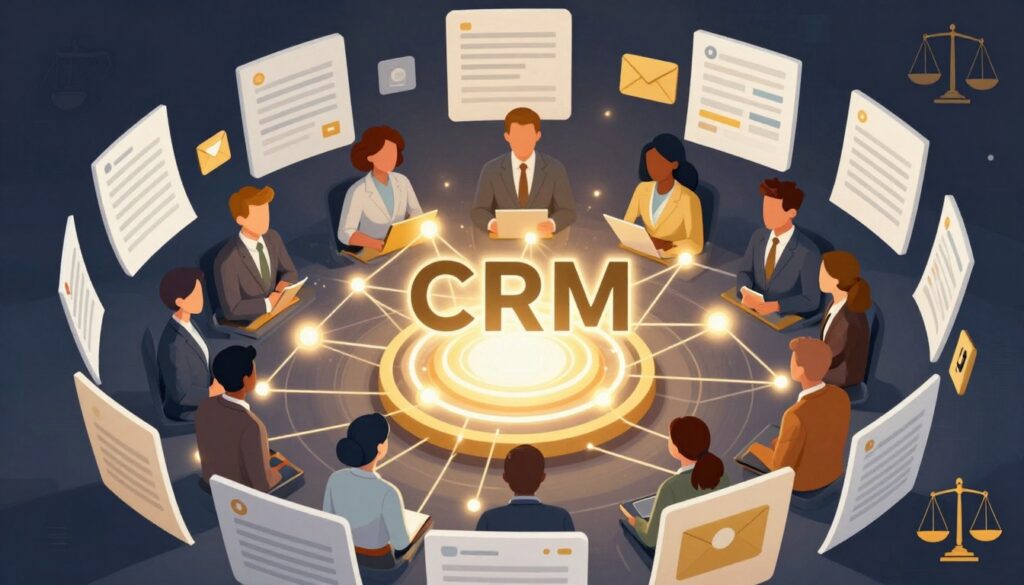
An image of a team using a shared crm for justice coalitions

Shared CRM For Justice Coalitions: Turning Fragmented Contacts Into Shared Power

If you lead advocacy coalitions pursuing social justice as multisectoral collaboratives, you probably feel it in your bones: contacts everywhere, clarity nowhere. Spreadsheets on personal drives. Lists inside Mailchimp and Eventbrite. Notes trapped in someone’s inbox who left last month. A shared CRM for justice coalitions is a central, shared contact and relationship database across

Shared CRM For Justice Coalitions: Turning Fragmented Contacts Into Shared Power Read More »

A team performing a SaaS cleanup for justice nonprofits

The 30-Day SaaS Cleanup for Justice Nonprofits, Find every tool, cut duplicates, and stop shadow IT

It’s 4:45 pm. A funder report is due tomorrow. Program says the numbers are in the case system. Development says they’re in the CRM. Finance says the invoice list doesn’t match either. Someone opens a spreadsheet named “FINAL_v7_REAL.xlsx” and hopes it’s the right one. This isn’t a “tech problem.” It’s a capacity problem. When your

The 30-Day SaaS Cleanup for Justice Nonprofits, Find every tool, cut duplicates, and stop shadow IT Read More »