vendor risk management

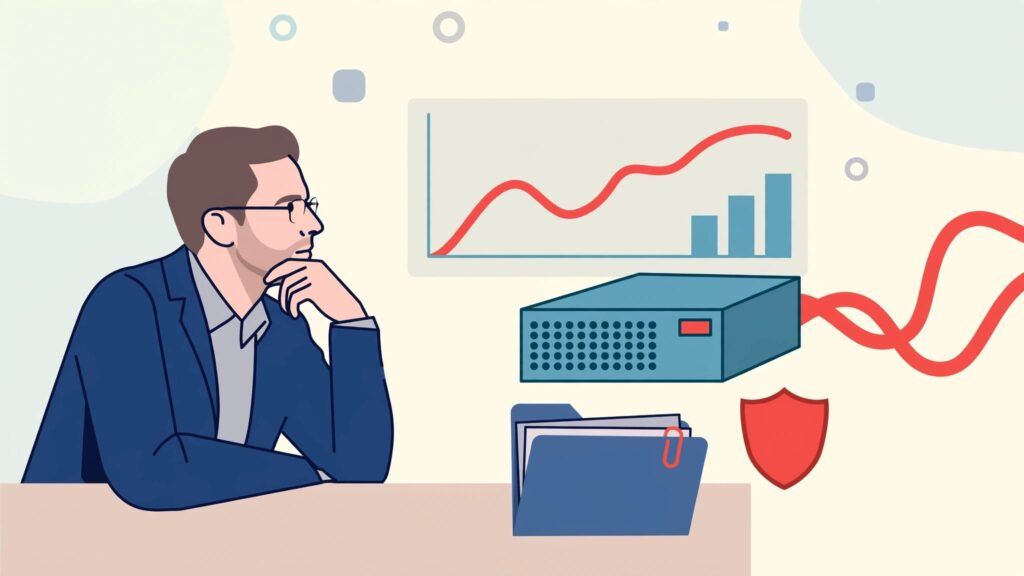
An executive reviews charts beside a server, shield, and contingency folder.

How CEOs Can Assess a Technology Vendor’s Financial Health

You can assess technology vendor financial health by reviewing its cash, debt, collections, and profit trends alongside independent credit information. Then connect those findings to the business consequences of losing the service. A vendor can meet yesterday’s commitments while losing the financial capacity to meet tomorrow’s. Your goal is early visibility, with enough time to

How CEOs Can Assess a Technology Vendor’s Financial Health Read More »
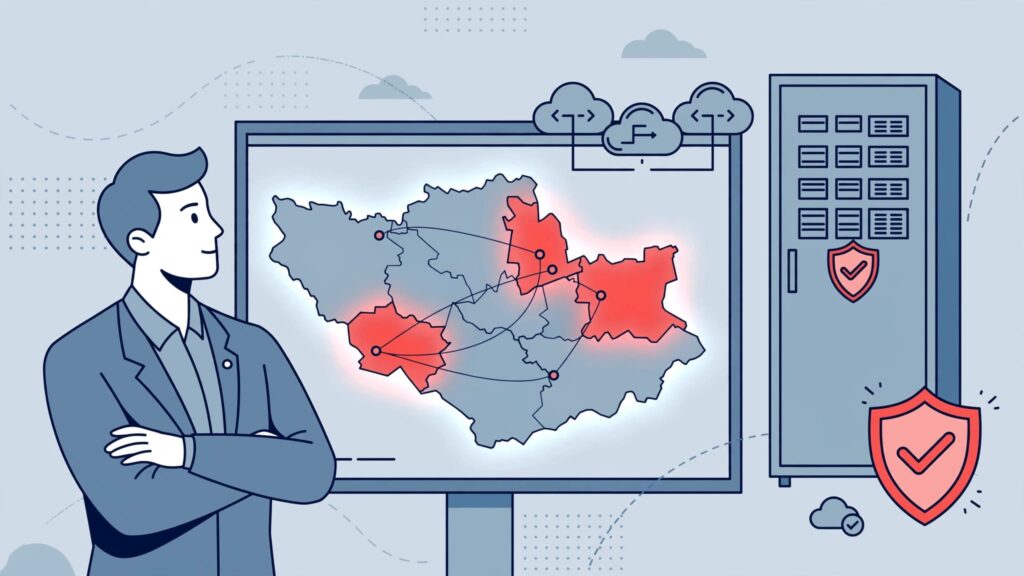
An executive reviews a glowing map beside a secure server cabinet and compliance symbols.

How CEOs Should Assess Data Residency Requests

You should assess data residency requests as business commitments with legal, operating, and financial consequences. Before you promise a location, establish what must stay there, why the customer requires it, and whether you can prove the boundary holds. An enterprise deal can make a regional hosting request feel urgent. The expensive mistake is accepting language

How CEOs Should Assess Data Residency Requests Read More »

A CEO reviews a service agreement beside a server dashboard and availability gauge.

SaaS Uptime SLA: What CEOs Should Review Before Signing

An uptime SLA, or service level agreement, sets the provider’s promise for how often its service will be available. Before signing, review how downtime is measured, excluded, and compensated, then compare those terms with the customer commitments your business must keep. A headline percentage alone isn’t an enforceable uptime guarantee or a clear remedy for

SaaS Uptime SLA: What CEOs Should Review Before Signing Read More »

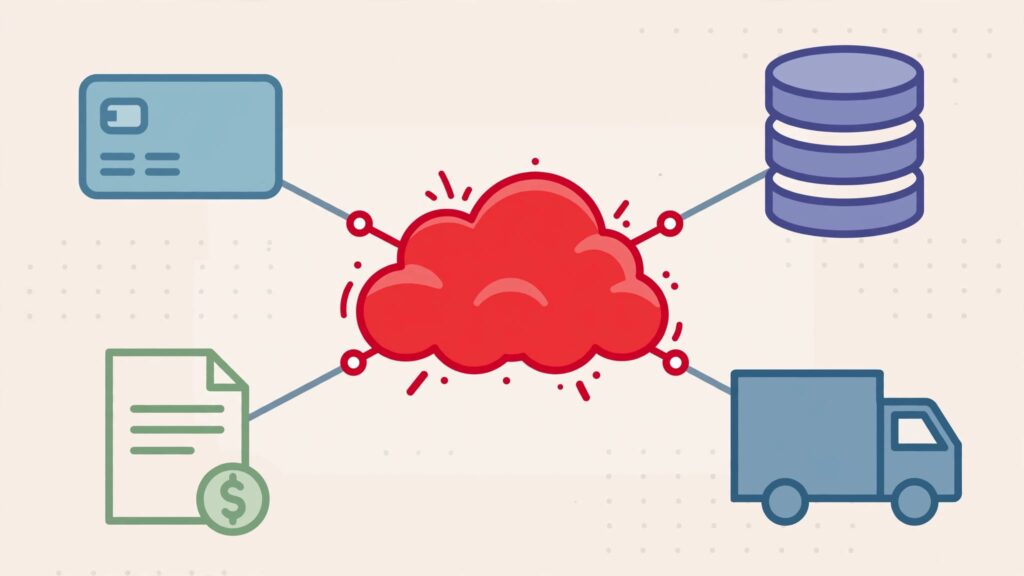
Four business service icons connect to a shared cloud hub highlighted in red.

How to Measure Technology Vendor Concentration

Measure vendor concentration risk through spend share, critical-function coverage, and shared dependencies that could disrupt services beyond recovery limits. Then test whether one failure could interrupt several business services beyond your recovery limits. Your vendor list can look diversified while payroll, payments, customer delivery, and backups share infrastructure. That hidden concentration won’t appear in your

How to Measure Technology Vendor Concentration Read More »

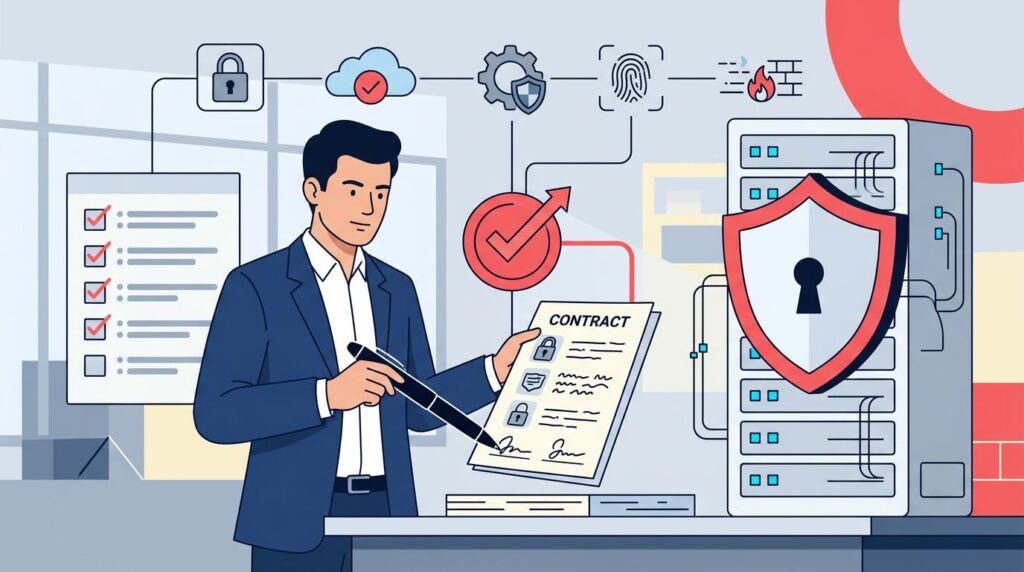
A CEO reviews a cybersecurity contract beside a protected server.

Cybersecurity Commitments CEOs Should Check Before Signing

Your signature can turn a broad security promise into a business obligation your team can’t support. Before signing, cybersecurity commitments need clear scope, accountable ownership, measurable controls, and workable terms when something goes wrong. You may be approving a customer’s security requirements or accepting a vendor’s promise to protect your data. Either way, unclear language

Cybersecurity Commitments CEOs Should Check Before Signing Read More »

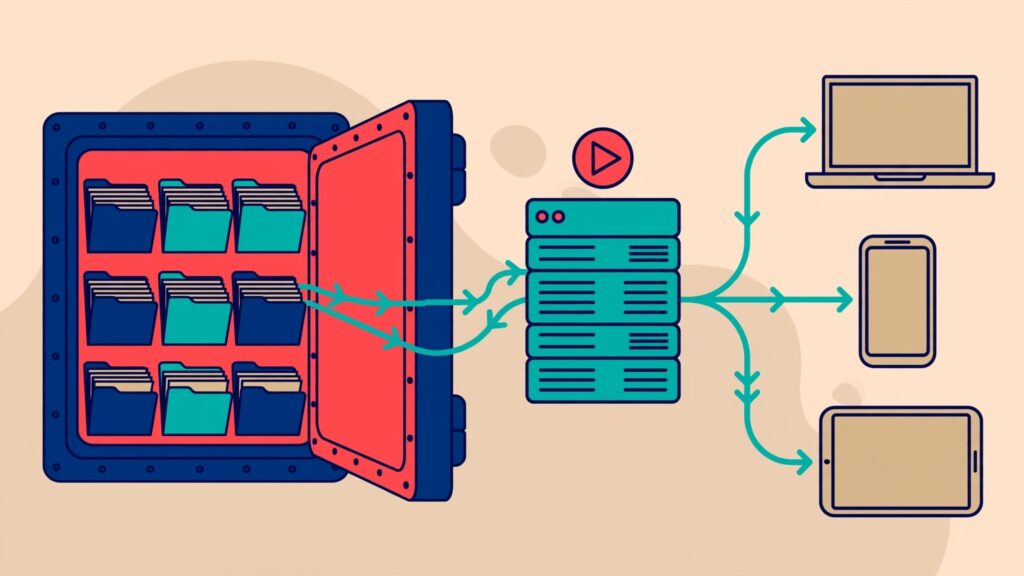
An open code vault connects through a server to customer devices.

When Source Code Escrow Protects Your Business

Your vendor can disappear while your business still depends on its software. Source code escrow can support business continuity, but only when the released materials provide a workable path to recovery. A signed agreement doesn’t prove you can keep serving customers. You need usable evidence that someone can access, build, operate, and maintain the software

When Source Code Escrow Protects Your Business Read More »

A glowing shield protects a cloud server amid keys, vendor connections, recovery arrows, and a checklist.

Securing a SaaS Company Before Series B: What Investors Expect

Before you raise a Series B, investors don’t expect perfect security. They do expect clear ownership, repeatable controls, recent evidence, and a credible plan for remaining gaps. The SaaS company security requirements for investors are no longer a side conversation. SaaS compliance affects enterprise sales, customer trust, diligence speed, valuation, and operational scalability. A weak

Securing a SaaS Company Before Series B: What Investors Expect Read More »

A planning board shows connected milestones, budgets, and risks, with red accents highlighting key decisions.

How CEOs Can Stress-Test a Technology Roadmap Before Approving It

A polished timeline can hide an expensive assumption: everyone needed to deliver it is available, funded, and working toward the same goal. Approving a technology roadmap on that basis can put digital transformation at risk when the first serious disruption exposes decisions nobody made. Your job isn’t to judge every technical detail. It’s to test

How CEOs Can Stress-Test a Technology Roadmap Before Approving It Read More »

A patient-record folder behind a shield, with security icons and a checklist in the background.

HIPAA for the Mid-Market: Evidence Over Checkboxes

You may have policies, risk assessments, training records, and signed forms. Protected health information is the information your organization must protect. The harder question is whether those safeguards work on an ordinary Tuesday. HIPAA compliance for mid sized companies is not a filing exercise. It is an operating healthcare compliance issue, supported by a current

HIPAA for the Mid-Market: Evidence Over Checkboxes Read More »