
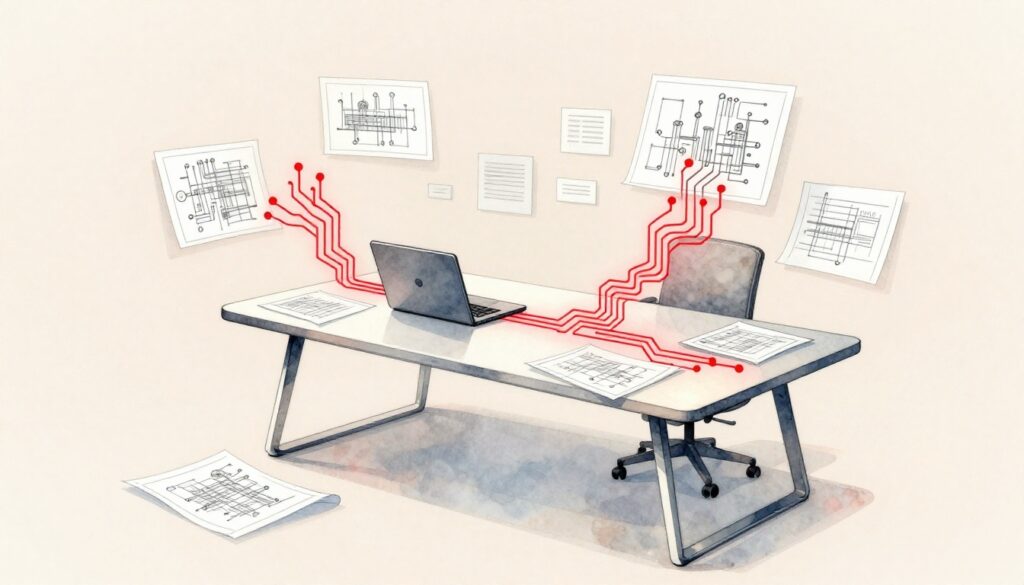
You can buy a company with strong revenue and still inherit a mess. Weak systems, fuzzy ownership, vendor dependence, and bad reporting can change the value of the deal before you ever sign.
That’s why technology due diligence is not an IT box to check. It’s a leadership step. You’re trying to learn what you’re really buying, where the risk lives, and whether the business can support growth after close. If the picture feels unclear already, Find What Technology Is Costing Your Growth can help you pressure-test it before you move.
Key takeaways
- Start with the deal thesis, then test the technology against it.
- Look for hidden drag, not just obvious failures.
- Treat ownership, reporting, and decision rights as part of the review.
- Check systems, vendors, data, and people together, because they usually fail together.
- Use the findings to shape price, timing, and the first 90 days after close.
Start with the business question, not the stack
Before you look at tools, platforms, or architecture diagrams, ask a simpler question: what does this company need to do well for the deal to work?
If the acquisition thesis depends on scale, then you need to know whether the current systems can carry more volume. If the thesis depends on margin, then you need to know where technology spend is wasteful. If the thesis depends on compliance or market expansion, then you need to know whether the current setup can handle that pressure without breaking.

That shift matters because you are not buying a stack in a vacuum. You are buying a business that has to keep working after the deal closes. A target can look healthy on paper and still be fragile in practice. The question is not, “Does the tech look modern?” The question is, “Does the tech help this business do what the deal needs it to do?”
Define the deal thesis in plain language
You do not need a fancy framework here. You need a few clear questions.
Does the business need to scale fast? Reduce cost? Improve controls? Enter a new market? Absorb another team? Support a cleaner exit or rollover?
Once you know that, you can judge the technology against those goals. That is better than grading it against generic best practices that may have little to do with the deal.
A platform can be dated and still fit the business. Another can be newer and still hold the company back. The point is fit, not polish.
Spot the signs of hidden drag early
Some of the worst problems do not look dramatic until after close. They show up as manual work, duplicate entry, fragile workarounds, or one person who seems to know how everything works.
Watch for aging systems, inconsistent data, slow reporting, and too much dependence on a few key people. These are the kinds of issues that get waved off during diligence and become expensive later. They also tend to spread. One weak system turns into three. One workaround turns into a habit.
Know when technology is a value driver versus a risk
Not every issue should scare you off. Some issues are manageable, and some are even normal for a business at this stage.
What matters is the pattern. Is the company still in control of its technology decisions, or is it drifting? Are the problems isolated, or are they connected? Is the stack supporting the business, or is the business spending energy babysitting the stack?
That’s the real lens. Technology can be a growth asset, a drag, or a hidden liability. Good diligence tells you which one you have.
Check the leadership, ownership, and reporting behind the tech
A lot of technology diligence is really a review of leadership. Many companies do not have a pure technology problem. They have a leadership gap, a reporting gap, or unclear accountability.
That’s why executive technology leadership matters so much in transactions. If no one owns the whole picture, busy people start mistaking motion for progress. Meetings happen. Dashboards appear. Emails fly. Yet no one can say, in plain language, who owns what, what risk is rising, and what decision has to happen next.
If you cannot explain ownership in plain language, you do not have diligence. You have a guess.
Ask who really owns each major system and decision
For every important system, identify three things. Who owns the business outcome? Who owns the technical side? What is the vendor responsible for?
That sounds basic, but fuzzy ownership is one of the fastest ways deals go sideways after close. If a platform fails and nobody can tell you who is accountable, then you are not looking at a system problem. You are looking at an operating problem.
This is also where Fractional CTO and Interim CTO Services can be useful if the target needs stronger executive structure before or after the transaction.
Review what leadership can actually see
Good reporting is not a dashboard full of charts. It is visibility that helps leaders act.
Can the team explain spend, delivery, risk, and service levels without jargon? Can they tell you where the pressure is and what it means? Can they show you the difference between a small issue and a material one?
If they cannot, the problem is bigger than reporting. It means leadership does not have a reliable operating picture. That gets expensive fast in a deal.
Look for decision-making bottlenecks
Pay attention to where choices really happen. If vendors are steering the roadmap, or one overloaded manager is approving everything, the business may not be able to make clear decisions after close.
That is not just a staffing issue. It is a control issue. You want to know whether the company can make decisions without waiting on one person, one supplier, or one informal conversation.
When the answer is no, the transaction will need more structure, not more optimism. If the gap is obvious, Talk Through Your Technology Leadership Gap is the kind of conversation that helps separate a real fix from a wish.
Test the technology health that will shape post-deal results
You do not need to audit every line of code. You need to find the issues that will affect growth, stability, and cost after the deal closes.
A small number of weak systems can create outsized drag across the whole company. That is why this part of diligence should stay practical. You are looking for the spots where a weak foundation will slow integration, raise support costs, or create avoidable risk.
Review architecture, core systems, and integration risk
Start with the core stack. Is it too fragmented? Too custom? Too hard to support?
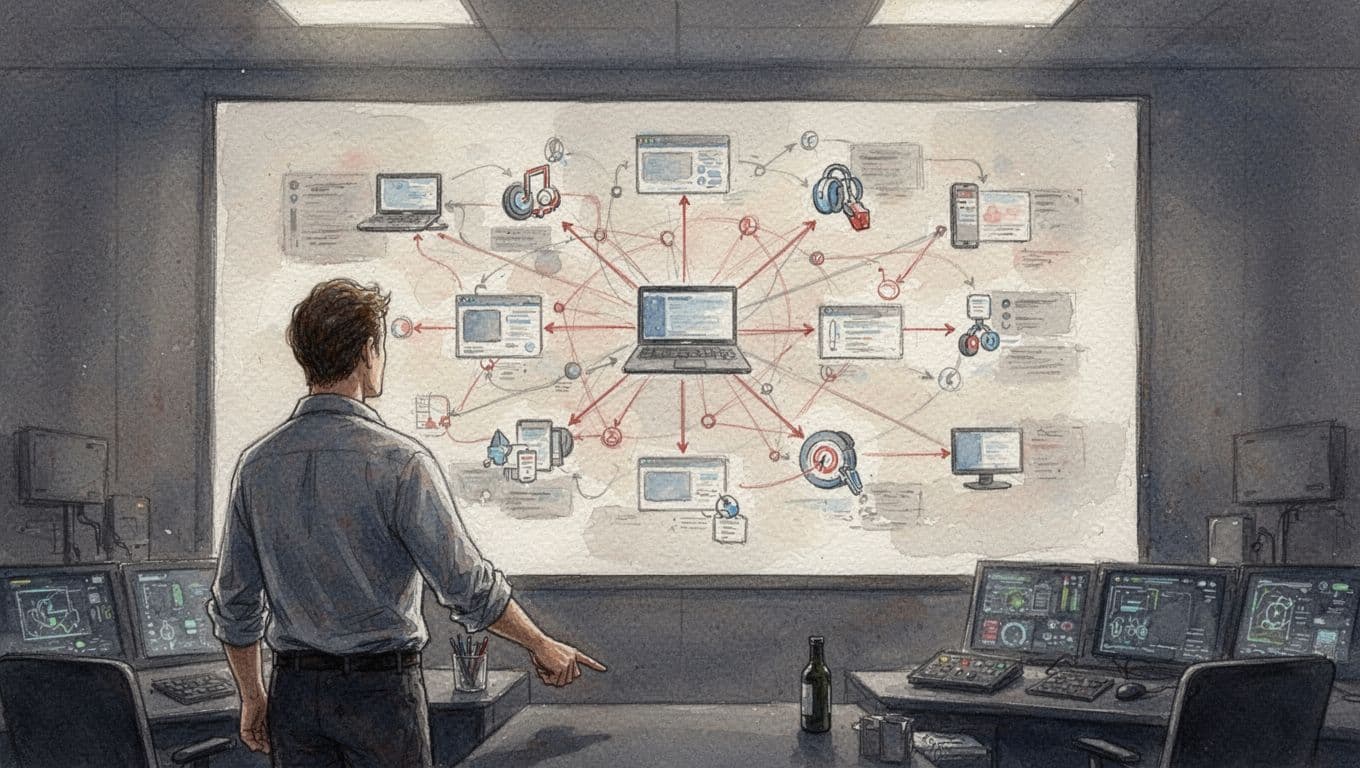
Look for duplicate tools, systems that do not share data well, and integrations held together by habit. These problems are easy to miss if each system is reviewed alone. They matter more when you see how much manual effort sits between them.
A messy architecture does not always kill a deal. But it can turn a promising deal into a slow and costly one.
Measure technical debt in business terms
Technical debt sounds abstract until you translate it into dollars and time.
How much does the debt cost in support hours? How much delay does it create? What risks does it raise? How much flexibility does it take away if the company wants to grow, integrate, or shift strategy?
That is the real question. Debt is not the problem by itself. Unmanaged debt is the problem.
Assess cybersecurity and resilience at an executive level
You do not need a deep forensic report to know whether the company is prepared for a serious event. You do need honest answers about access control, backups, recovery time, incident response, and visibility into security issues.
Ask what happens if a critical system goes down. Ask how fast the business can recover. Ask who gets notified, who decides, and who acts. If those answers are fuzzy, the company has more exposure than it may want to admit.
For a leadership team that needs a sharper risk picture, Build a Board-Ready Technology Risk View is often the right next move.
Evaluate vendors, contracts, data, and people before you close
Technology diligence does not stop at the software list. You also need to understand the outside and inside forces that keep the business running.
That includes vendors, contracts, data quality, access rights, and key-person risk. This is where too many reviews get shallow. They count systems but ignore the governance around them. That is a mistake. Tool sprawl and vendor sprawl are governance problems, not just purchasing problems.
Find out whether vendors are driving the roadmap
You want to know whether the company is steering its own choices or just reacting to vendor pressure.
If suppliers are influencing priorities, renewals, and product direction more than leadership is, you have a control problem. You also may have a spend problem. Vendor influence can be useful. Vendor control is another story.
Review contracts, renewals, and lock-in risk
Read the terms like you are going to inherit them, because you are.
How long are the contracts? What happens at renewal? Are prices set to jump? What are the cancellation terms? Are there service levels the company can actually enforce? Are there hidden dependencies that will be hard to unwind later?
This is where buyers get surprised. The software may look manageable, but the contract can trap you in cost, timing, or weak service.
Check data quality, access, and key-person risk
If the data is messy, the reports are shaky. If access is poorly controlled, the business is exposed. If one person holds all the knowledge, continuity is weak.
You need to know whether the company can trust its own data, whether the right people can get to it, and whether the business will keep running if a key employee leaves. That matters even more after a transaction, when pressure goes up and patience goes down.
If the diligence work reveals more scatter than structure, Get an Executive Technology Clarity Check can help you sort the mess without guessing.
Turn diligence findings into clear deal decisions
Good diligence does not end with a report. It changes what you do next.
Some issues are fixable before close. Others are too structural. Your job is to tell the difference and use that judgment to shape price, timing, structure, and integration planning.
Decide what is fixable before close and what is not
A few problems can be cleaned up fast, such as unclear reporting, missing documentation, or a vendor relationship that needs tighter oversight.
Other issues take longer. Legacy architecture, chronic data quality issues, or deep ownership confusion may need to affect valuation, close timing, or the decision to move forward. Do not force all problems into the same bucket.
Use the findings to shape your integration plan
Your diligence findings should feed the first 90 days after close.
Decide who owns the systems, who owns reporting, what vendor cleanup has to happen, and which risks need early attention. If you wait until after close to sort that out, you are already behind.
This is also where an interim CTO can help when the business needs immediate control and a steady hand, not more discussion.
Know when to pause, renegotiate, or walk away
Good diligence does not always say no. But it should give you a clear reason to slow down if the technology picture is too risky.
If the company cannot explain ownership, if the systems are brittle, if the vendors hold too much control, or if the reporting is too weak to trust, then the deal deserves a hard look. That is not fear. That is discipline.
Conclusion
A strong technology diligence process gives you more than facts. It gives you better judgment. It helps you see whether the business is built for the deal thesis, or whether the deal is about to inherit hidden drag.
The big lesson is simple. Technology risk usually lives in the seams, ownership, reporting, vendors, data, and the gap between what leaders think is happening and what is actually happening. If you can see those clearly, you can make a better decision.
That is the point of a real Guide to Technology Due Diligence. Not more noise. Just a clearer path to a sound deal and a cleaner next step.