
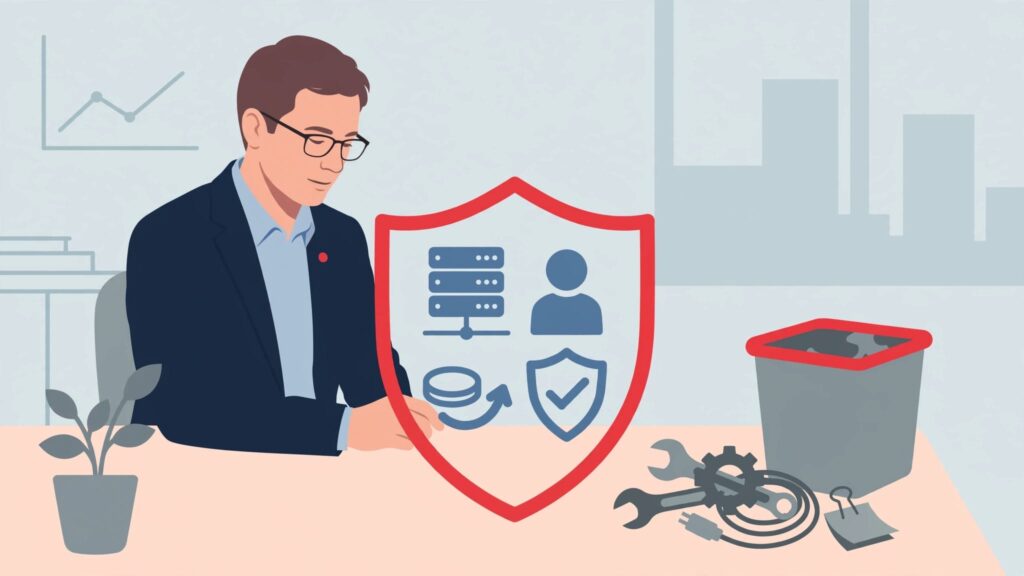
When revenue falls, protect technology investment by separating what supports cash flow, customers, and business continuity from spending you can stop. A blanket budget cut can remove capabilities you need to stabilize the business.
You need clearer ownership, credible numbers, and an honest view of what happens when funding disappears. Start with the business outcomes you must preserve, then decide which technology deserves the cash.
Key Takeaways for Technology Investment Decisions
- Protect systems and work that support collections, customer retention, essential operations, and resilience.
- Remove unused capacity and duplicate tools before weakening capabilities the business depends on.
- Measure technology ROI through financial outcomes, usable capacity, and visible risk reduction.
- Give every material investment a business owner, a funding decision, and a review date.
- Keep your roadmap flexible because a market recovery doesn’t predict your company’s revenue recovery.
Protect the Technology That Protects Revenue
Follow the connection to cash
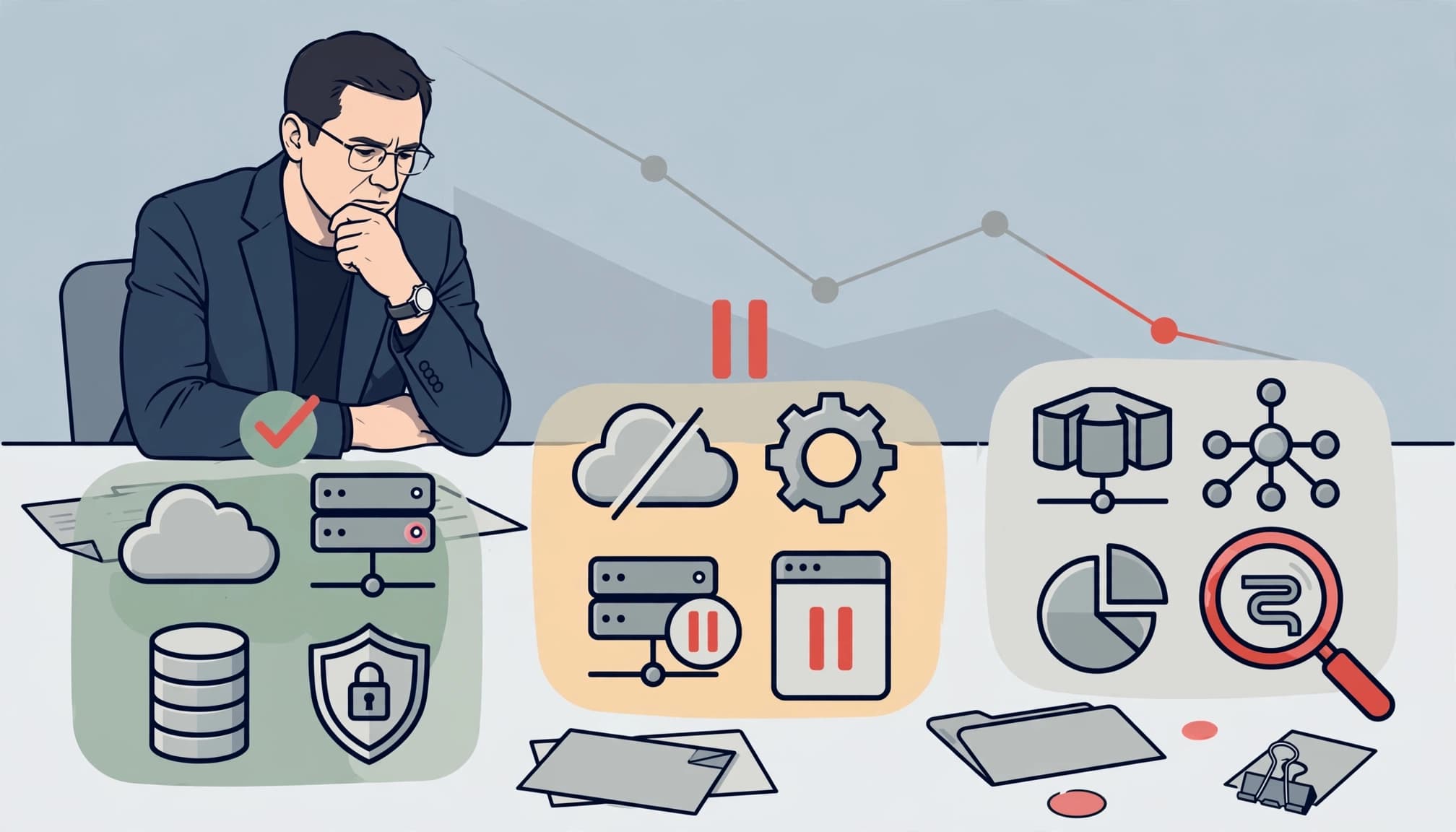
Begin with the systems behind orders, delivery, invoicing, collections, and renewals. Include customer security requirements when meeting them determines whether a deal can close.
Ask your CFO and operating leaders what would happen if each major service stopped for 30 days. That discussion exposes dependencies a software inventory alone won’t show.
Then distinguish essential operation from improvement. Keeping billing reliable may deserve protection. Rebuilding the entire billing platform may need a smaller scope or a later start. Both decisions require business judgment.
Preserve a defensible risk baseline
Protect access controls, tested recovery capabilities, and incident response readiness according to the exposure they address. Name the business consequence of postponing each material security improvement.
Your cyber risk appetite should guide these choices. Document who accepts an exception, how long it lasts, and what would trigger action.
Data privacy also belongs in this review. NIST’s Privacy Framework provides a structure for managing privacy risk. Lower spending doesn’t remove your obligations to customers or the information you hold.
Cut Waste Before You Cut Capability
Build one view of spending
Bring finance, procurement, IT, and department leaders together around a systems inventory. Capture contract costs, renewal dates, active usage, business owners, and dependencies.
Look beyond the central IT budget. Tool sprawl and shadow IT often sit inside departmental purchasing.
For platforms such as Microsoft 365 or Salesforce, compare purchased licenses with actual assignments and usage. Also review cloud capacity, overlapping applications, and support agreements. Our technology budget forecasting guidance helps connect these costs with the outcomes they support.
Count the full cost of stopping
Application portfolio rationalization needs an exit plan. Include data export, retention obligations, integrations, user migration, and vendor offboarding.
A cheaper supplier can create expensive dependence if your team loses access to records or restoration options. Similarly, cancelling support can leave a critical system without accountable expertise.
Separate technical debt that creates operational exposure from cleanup that can wait. Fund the repairs that reduce recurring failures or remove a constraint on revenue. Defer work whose benefit remains unclear.
For an MSP, review outcomes and responsibilities before reducing coverage. Lower fees provide little relief if missing responsibilities return to your internal team.
Make Technology ROI Visible in Cash Terms
Establish a baseline finance can trust
For every major initiative, record the current performance measure, total cost, expected benefit, and accountable business owner. Include implementation, training, internal effort, and ongoing support.
Use cost-per-outcome reporting where it fits. Cost per completed order or customer onboarding can reveal more than a monthly software bill.
Also distinguish savings from cost avoidance. A cancelled invoice reduces spending. Avoiding a future hire changes the forecast. Both matter, but they affect cash differently. Our guidance on measuring technology investment returns develops this outcome-focused approach.
Release funding against evidence
Approve the next useful milestone rather than automatically funding the entire original plan. Set a review date and define what would justify continuing, changing scope, or stopping.
This discipline matters for AI investment decisions. A practical AI pilot needs a defined workflow, acceptable error limits, data safeguards, and a cost comparison that includes human review.
Hours saved become financial savings only when spending falls. Otherwise, report the capacity released and the measurable work that capacity supports.
Require the operating owner and finance leader to agree on the result. Technology teams shouldn’t have to claim business benefits they don’t control.
Give the Board Decisions It Can Govern

Present the tradeoff behind the number
Board-ready technology reporting should explain what leadership proposes to protect, reduce, or defer. Show the cash effect alongside the operational consequence.
For each material decision, state the alternatives considered, the owner, and the risk of delay. Our guidance on building a board-ready technology case helps translate technical proposals into business choices.
Avoid reporting every project as strategically necessary. Your board needs to understand the choices you rejected as well as those you recommend.
Set thresholds and decision rights
Create a decision rights map that names who recommends, approves, funds, and monitors major technology choices. Include authority for accepting material risk.
Use defensible technology approval thresholds so routine renewals don’t compete with consequential investment decisions.
Then establish a monthly technology operating rhythm. Review spending, delivery evidence, emerging risks, and decisions that need escalation. Board cybersecurity reporting should highlight material exposure and tested restoration evidence, rather than bury directors in technical activity.
Where vendor dependence matters, include exit constraints and the accountable executive. A low-cost provider can still support a high-consequence business process.
Use Market Recoveries as Context, Not a Forecast
Historical market performance offers perspective, but it can’t set your operating budget.
The Hartford Funds’ recovery analysis examines the S&P 500 Index’s 10 worst one-day drops between 1981 and 2025. These stock market drops were followed by double-digit positive returns in nine cases over the next year.
These four events show how widely recovery times differed.
| Date | Cause | One-day decline | Days to previous high | One-year return |
|---|---|---|---|---|
| October 19, 1987 | Black Monday | -20.47% | 264 | 23.19% |
| March 16, 2020 | COVID-19 Pandemic | -11.98% | 19 | 66.07% |
| September 29, 2008 | Global Financial Crisis | -8.79% | 410 | -4.14% |
| October 27, 1997 | Asian Financial Crisis | -6.87% | 8 | 16.30% |
The table’s one-year figures show the return after 1 year, not an annualized return. Hartford Funds found a positive return after 3 years and a positive return after 5 years for all 10 events.
The COVID-19 Pandemic brought the index back to its previous high in 19 days, compared with 264 days after Black Monday. Its 66.07% return after 1 year isn’t a forecast for business revenue.
The September 2008 event was the only negative return after 1 year among the 10.
The analysis uses S&P 500 Price Index data as of December 31, 2025, from Morningstar, Ned Davis Research, and Hartford Funds. The S&P 500 Index is market capitalization-weighted and covers 500 widely held common stocks. Returns exclude reinvested dividends, which would have increased them.
Days to a previous high don’t necessarily show when an individual investor would break even, because the table reports index performance, not a specific purchase experience.
Past performance doesn’t guarantee future results. Investing involves risk, including possible loss of principal.
For your business, the relevant question is how long you can support a capability before it produces value. The market’s time to regain its prior high can’t answer that.
Put a 90-Day Technology Plan Behind the Budget
A 12-month technology roadmap still matters during a downturn. However, the next 90 days need firmer commitments and clearer funding boundaries.
- During days 1 through 30, establish the operating picture. Reconcile spending, contracts, major systems, active projects, and material risks. Classify each investment for protection, reduction, deferral, or retirement. Name a business owner.
- During days 31 through 60, act on approved changes. Remove unused licenses, address renewals, narrow project scope, and resolve ownership gaps. Complete recovery tests where missing evidence prevents a sound risk decision.
- During days 61 through 90, review actual results. Compare cash savings, customer outcomes, delivery progress, and accepted exposure against the baseline. Redirect funding when the evidence changes.
Maintain a one-page technology strategy alongside this plan. State the business priorities, spending boundaries, and conditions for restarting deferred work.
Record restart costs before pausing major initiatives. Lost expertise, unfinished integrations, and contract obligations can make a temporary pause expensive.
Finally, separate what you can stop immediately from what needs an orderly wind-down. This makes your cash forecast more credible and reduces disruption for employees and customers.
Close the Technology Leadership Gap
You need someone accountable for the portfolio across departments and vendors. An IT team or MSP may deliver services without owning enterprise-wide investment tradeoffs.
A fractional CTO can provide part-time executive technology leadership when you need strategic ownership without a full-time role. An interim CTO fits a temporary leadership vacancy or transition.
A fractional CIO may be appropriate when enterprise systems, operating processes, and vendor accountability dominate the problem. A fractional CISO can lead cybersecurity governance and risk decisions.
Choose the mandate before choosing the title. At CTO Input, our fractional CTO, CIO, and CISO support helps you establish priorities and accountable leadership.
The engagement should leave you with clearer decisions, stronger internal ownership, and reporting your leadership team can use.
Frequently Asked Questions
Should you freeze all new technology spending?
An immediate freeze can be useful while you establish visibility, but define exceptions. Protect urgent service-restoration work, contractual obligations, and investments with credible near-term cash benefits. Give the review a deadline so uncertainty doesn’t become an indefinite halt.
Which technology projects should you pause first?
Start with work that lacks a business owner, measurable benefit, or a credible delivery path. Also examine projects that depend on unresolved data quality or broken processes. Compare remaining cost with achievable future benefit. Money already spent doesn’t justify further funding.
Should AI spending continue during a downturn?
Continue bounded work with evidence of useful results. Require AI governance, an acceptable use policy, and vendor due diligence appropriate to the data involved. Pause pilots that generate activity without a plausible path to better output or lower cost.
Protect Your Ability to Recover
Your strongest budget decision preserves the capabilities that generate cash while removing spending you can’t defend. Clear ownership makes those choices easier to execute and explain.
Bring finance, operations, and technology leadership together around one portfolio view.
If those decisions remain scattered, Get an Executive Technology Clarity Check to establish sharper priorities and a practical next step.