
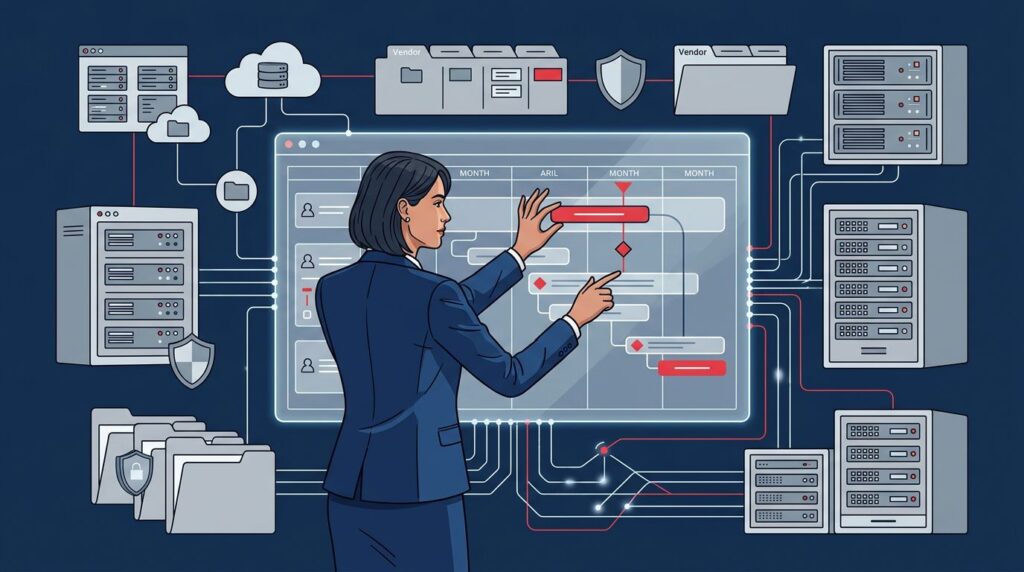
A possible acquisition changes the questions your leadership team must answer, particularly when selling a technology business. Buyers will assemble a deal team to examine whether your technology supports revenue, protects customer trust, controls cost, and can operate through the transaction.
Knowing how to prepare technology for company sale is not about making every system perfect. It is about proving that you understand your systems, risks, vendors, ownership, costs, and improvement plan. Buyers value honest visibility and accountable leadership more than claims of a flawless environment.
You have six months to create a clearer operating picture during the transaction process. The work starts with facts, not panic. If you need help organizing that work, Prepare Technology for Diligence or Transition can help you build a practical path forward with support from an external CTO or business advisors.
Key takeaways for sell-side technology readiness
- Start with a baseline assessment covering systems, data, vendors, security, costs, ownership, and technical debt before sell-side due diligence begins.
- Name one executive owner for the technology story. An MSP, engineer, or cloud provider cannot carry management’s accountability.
- Document material risks, business impact, remediation owners, target dates, and accepted exceptions.
- Clean up vendor contracts, software licenses, cloud spend, renewal dates, and technology allocations before diligence begins.
- Test backups, recovery, incident response, access removal, and critical workflows. Evidence matters more than written claims.
- Do not promise savings or improvements you cannot support with records, approved plans, or measurable results.
A focused technical due diligence review can expose gaps before a buyer does.

## How to prepare technology for company sale in six months
Your six-month plan should reduce buyer uncertainty through a controlled sale process. It should not become a rushed attempt to rebuild the entire technology environment.
A useful sequence is straightforward:
- Establish the facts.
- Assign ownership.
- Fix urgent exposure.
- Document the operating model.
- Test resilience.
- Prepare evidence for diligence.
This work connects directly to revenue, margin, customer confidence, continuity, and deal value throughout the transaction process. A buyer may accept old technology if you can explain how it supports the business and what it costs to maintain. A buyer will worry when no one can answer basic questions.
Your technology strategy should connect the sale process to business priorities. A business-aligned technology strategy helps you separate work that protects the deal from work that can wait until after closing.

### Month one: Build a fact-based technology baseline
Create one current inventory of your applications, infrastructure, cloud services, data flows, integrations, software licenses, security controls, technical debt, incidents, suppliers, and active projects. This fact-finding supports an operational evaluation by showing how technology affects day-to-day performance and business continuity.
For each item, record four things:
- How important it is to revenue or operations.
- What risk it creates.
- What it costs.
- How ready it is for buyer review.
Include the person who owns the system and the person who depends on it. Ownership often creates a larger problem than old technology. A dated application with a known owner and documented recovery process may be easier to defend than a modern platform nobody fully understands.
Look for a technology leadership gap early. You may have capable engineers, technical managers, and vendors. That still does not mean someone owns the full technology story. Executive technology leadership gives management one accountable person for priorities, risk, reporting, and decisions.
Review cloud and technology spending at the same time. Clear allocations, renewal dates, and usage records help explain the quality of earnings and reduce questions about costs that may otherwise become EBITDA adjustments.
Months two and three: Fix the risks that can change the deal
Prioritize issues that can affect customer trust, continuity, valuation, or closing conditions. These may include unsupported systems, weak access controls, untested backups, unresolved vulnerabilities, privacy gaps, poor incident response, fragile integrations, undocumented recovery steps, and dependence on one key person.
Separate urgent remediation from work that can wait. A full platform replacement may be sensible later, but it may not be the best use of your six-month window. The same discipline applies to cost cleanup: distinguish durable savings from estimates that cannot yet support earnings analysis.
Your risk register should include:
- The risk and its business impact.
- A named owner.
- A target date.
- Current status.
- Planned mitigation.
- Any accepted exception and who approved it.
This is the working discipline behind technology risk oversight and a clear cyber risk appetite. Use a board-ready cybersecurity reporting template to keep the conversation focused on exposure, decisions, and accountability.
Months four and five: Prove technology can support the business
Written policies are not enough. Test disaster recovery, backup restoration, incident response, access removal, critical workflows, monitoring, and vendor continuity as part of buyer due diligence.
Document what happened. Record the test date, scope, result, failure points, corrective action, and owner. If restoration took longer than expected, say so. A documented weakness with a funded plan is more credible than a claim that everything works perfectly.
Create a practical technology roadmap for the buyer. Show completed work, remaining debt, major dependencies, expected investment, and decisions that should wait until after closing. Connect the roadmap to the company’s growth strategy and the technology-related valuation drivers that matter to buyers. A technology roadmap and one-page technology strategy can make the story easier for nontechnical leaders to understand.
Tie every major item to a business outcome. Aligning technology with business goals means showing how a decision affects revenue, margin, customer experience, risk, or operating capacity.
Month six: Assemble the evidence and manage the buyer story
Your final readiness package should include:
- Systems, data, and integration maps.
- An architecture overview.
- Security policies and access practices.
- The risk register and remediation plan.
- Incident history and penetration test results, when available.
- Disaster recovery and backup test evidence.
- Vendor contracts and software licenses.
- Project status and technology budget.
- Staffing model, key-person dependencies, and open decisions.
Use board technology reports as a model for concise reporting. Your materials should help answer the questions covered in what to report to the board about cyber.
Answer directly. Disclose known issues. Name the owner, date, and expected cost for open work. Do not bury a material weakness in technical language.
What buyers examine during technology due diligence
Buyers are testing more than your systems during due diligence. They are testing management’s understanding of the business.
They want to know whether technology can support operations after closing, whether hidden investment is waiting behind the transaction, and whether integration risk could damage value. They do not expect zero problems. They expect you to know the facts, understand the consequences, and have a credible plan.
Ownership, leadership, and key-person risk
Who owns technology strategy? Who owns engineering, infrastructure, cybersecurity, data, vendors, and incident response?
A buyer may view dependence on one founder, engineer, MSP, or supplier as a continuity risk. If one person holds the passwords, system knowledge, vendor history, and recovery steps, your operating model has a material weakness.
Tactical IT support keeps systems running. Executive technology ownership sets priorities, resolves tradeoffs, reports risk, and connects spending to business results. If you need that judgment without a permanent hire, review fractional CTO services and when to hire a fractional CTO. If the seat is open or trust has broken down, interim CTO support may fit better.
Security, privacy, resilience, and third-party exposure
Expect questions about privileged accounts, access reviews, endpoint protection, vulnerability management, privacy obligations, customer data, incidents, insurance, business continuity, and disaster recovery.
Buyers will also examine vendor concentration. A critical supplier may control your data, payments, infrastructure, or customer workflow. Show what happens if that supplier fails, raises prices, changes terms, or cannot support the transition.
Your third-party risk reporting should identify business impact, contract protections, concentration, recovery options, and ownership. Keep cybersecurity reporting focused on material exposure and management decisions.
Technology spend, contracts, and the path to better margins
Buyers will review recurring software costs, cloud spend, implementation costs, capitalized development, renewal dates, termination rights, staffing, and hidden obligations. They may also examine how engineering efficiency, working capital needs, and stock-based compensation affect margin expectations and EBITDA adjustments.
Technology spending can shape Adjusted EBITDA and other non-GAAP measures. Your technology costs should reconcile to audited financial statements and approved budgets, supporting a clear quality of earnings review and informed tax planning. Do not claim savings because a vendor promised them. Trace savings to contracts, usage records, canceled licenses, staffing changes, or approved actions.
A review of technology spending ROI can help connect spend to outcomes. Treat tool sprawl as a governance problem, not only a procurement issue.
Product, engineering, data, and technical debt
Buyers may ask about code ownership, development practices, testing, release controls, architecture, data quality, intellectual property, open-source use, documentation, and product dependencies. They may also verify whether intellectual property is properly assigned by employees, contractors, and development partners.
Show which technical debt creates material business risk. Not every old system threatens the transaction. Some debt is manageable if it has an owner, known cost, documented dependency, and place on the roadmap. Material debt can still affect financial projections and market valuation when it requires near-term investment or limits growth.
Protect product control by examining external development partners and suppliers. Stop vendors from driving your roadmap before a buyer concludes that your company cannot make independent technology decisions.
Create a buyer-ready technology operating picture
Scattered facts do not create confidence. Your leadership team, board, counsel, auditors, and buyer need one clear picture of what exists, who owns it, what can go wrong, and what happens next. That picture should support the information memorandum, management presentations, and other deal preparation documents used throughout the process.
Management remains responsible for knowing and accurately describing material facts. You cannot transfer that responsibility to an employee, consultant, MSP, cloud provider, or software vendor. The information memorandum should reflect the same controlled facts and risk assessments used in diligence, particularly once indicative offers begin shaping buyer interest.
Use services for executive technology oversight when the work crosses systems, vendors, risk, reporting, and business priorities. Fractional technology leadership can provide consistent judgment when a full-time executive hire is not yet justified.
Use one risk register, roadmap, and evidence index
Connect each material risk to its business impact, owner, mitigation, cost, deadline, and supporting evidence. Keep one version under management control, and consider how each issue may affect the deal structure, tax planning, valuation, or post-close obligations.
Separate the output into three decisions:
- What you will fix before the transaction.
- What you will monitor through closing.
- What the buyer should understand as planned post-close work.
The letter of intent often creates pressure to resolve every visible issue immediately, but not every remediation project belongs before signing or closing. Use the letter of intent, diligence findings, cost, risk, and operational capacity to distinguish urgent fixes from work that can be documented as a post-close plan.
Make the format usable by executives and nontechnical diligence teams. A clear table with owners and dates is better than a long technical report nobody can use.
Make board and buyer reporting short, honest, and decision-ready
A monthly or transaction-focused report should cover risk trends, incidents, critical projects, vendor exposure, spend, resilience, open decisions, and progress against the six-month plan. It should give management a consistent foundation for buyer updates and management presentations.
The board needs signals and tradeoffs, not dense technical detail. Good reporting answers four questions: What changed? Why does it matter? Who owns the response? What decision is needed?
Avoid sell-side technology mistakes that weaken buyer confidence
The most common mistakes are avoidable. Leaders hide known issues, start too many projects, rely on verbal explanations, fail to document exceptions, overstate security maturity, ignore contract terms, let vendors control the roadmap, or treat the data room as a last-minute paperwork task. They may also fail to coordinate technology disclosures with the investment banking firm guiding the sale.
A buyer will ask why your materials omit a known issue, especially when it could affect the purchase price, working capital, or the terms of a letter of intent. A better answer is to disclose it, assign an owner, set a date, and show the plan. Honest disclosure paired with control often builds more trust than vague claims of perfection.
As the deal advances toward a stock purchase agreement and closing the transaction, unresolved technology risks can give buyers a reason to reduce the purchase price or add conditions. Business-aligned planning helps you decide what matters now. You cannot fix everything in six months. You can stop spending energy on work that does not protect the business or the transaction.
Leadership continuity matters after the sale as well. Without a clear succession plan, buyers may worry that key technology knowledge will leave with the seller. Technology marketing should reflect the company’s actual capabilities, not overstate security maturity or operational resilience.
Know when you need outside executive technology leadership
You may already have strong technical people. You may also have an MSP, developers, security providers, and project managers. The missing piece can still be someone who owns the complete technology story.
A fractional CTO provides ongoing executive judgment when you need leadership but not a permanent hire. An interim CTO fits when the seat is open, trust has broken down, or stabilization must happen quickly.
If decisions feel scattered or too dependent on the wrong people, talk to a fractional technology executive. You can also Get an Executive Technology Clarity Check to identify what needs attention first.
Frequently Asked Questions
What should we prioritize first when preparing technology for a company sale?
Start with a fact-based inventory of systems, data, vendors, costs, security controls, ownership, and technical debt. Then prioritize risks that could affect customer trust, business continuity, valuation, or closing conditions.
Do we need to replace outdated technology before the sale?
Not necessarily. Buyers may accept older systems when you can explain their business role, cost, ownership, dependencies, and recovery plan. Focus the six-month window on material risks and document larger modernization work as a credible post-close roadmap when appropriate.
Who should own the technology story during due diligence?
One accountable executive should own technology priorities, risk reporting, vendor decisions, and the overall operating picture. Engineers, MSPs, cloud providers, and consultants can provide evidence and expertise, but management remains responsible for accurate disclosures.
What technology evidence will buyers expect to review?
Prepare architecture and integration maps, security and access practices, risk registers, incident history, backup and recovery tests, vendor contracts, software licenses, budgets, project status, and staffing information. Evidence should show what was tested, what failed, who owns the response, and what happens next.
How should we handle unresolved technology risks before closing?
Disclose material issues directly and connect each one to a business impact, owner, target date, mitigation plan, cost, and accepted exception when applicable. A documented weakness with accountable remediation is generally more credible than an unsupported claim that the environment is perfect.
Conclusion
Selling a technology business in six months is enough time to improve sell-side technology readiness when you focus on material risks, clear ownership, evidence, and a credible plan.
The goal is not a perfect technology stack. The goal is a business that can explain how its technology works, what it costs, where risk sits, what has been fixed, and what comes next. This supports a controlled sale process, gives the deal team confidence in the operating picture, and helps protect the purchase price.
If you need a clear starting point, Book a sell-side readiness assessment. A buyer should not be the first person to ask whether you understand your technology, especially when you’re closing the transaction.