
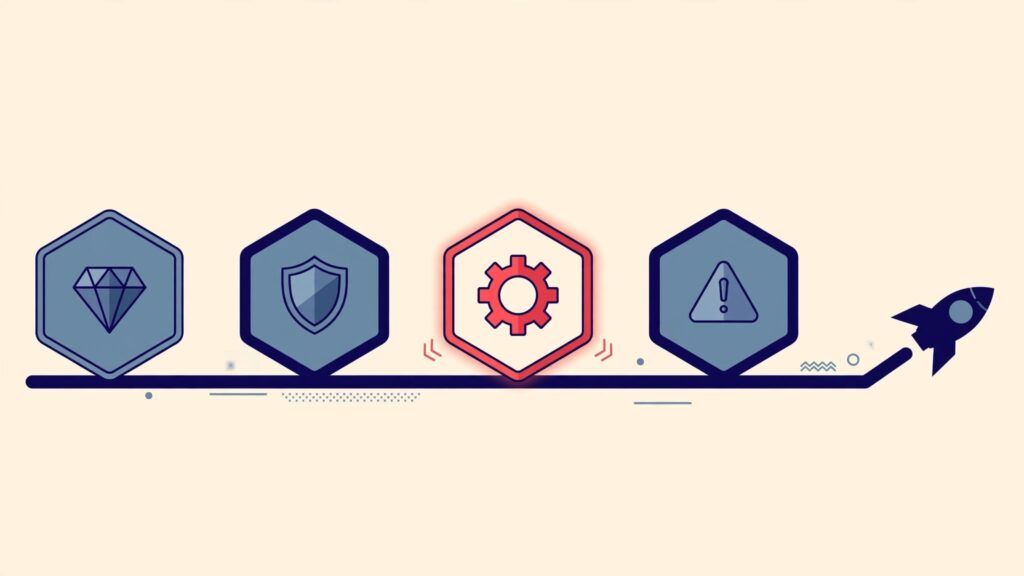
A technology project can look on track right up to the moment it needs more money, a new vendor contract, or permission to go live. If nobody has agreed what evidence those decisions require, progress becomes a poor reason to keep spending.
A stage-gate process, or phase-gate process, creates planned decision points before major commitments. Technology project stage gates help leaders assess value, risk, and readiness, see what has changed, and decide whether to proceed. Start by deciding which commitments deserve a gate.
Key Takeaways
- Use a phase-gate process to set a gate before each major commitment, such as signing a vendor contract, funding a build, migrating data, or approving launch.
- Require evidence tied to business value, technical feasibility, security, operational readiness, and cost.
- Name who can approve spending, stop work, and accept residual risk. Record each decision and its conditions.
- Let teams work in short cycles between gates. Good project management preserves team autonomy without turning every delivery choice into an approval meeting.
What technology project stage gates should decide
A stage is a period of work; a gate authorizes what comes next. The phase-gate process, also called the stage-gate process, uses decision gates. A stage-gate model applies them across the project lifecycle.
That distinction matters in a phase-gate process when a project team has delivered what it promised, but the business case has weakened.
At a gate, ask: Is the next commitment still justified? A passing test or completed design answers only part of that question. You also need to know whether expected benefits remain credible, whether risks sit within your tolerance, and whether the organization can support the result.
Gate outcomes should be explicit: go, stop, hold while an external condition changes, or return for more work. The Go, Kill, Hold, or Recycle decision options provide useful shorthand for a go/kill decision. Your decision record should say what each outcome means for funding, people, contracts, and the next review date.
A good gate can prevent a large, irreversible decision from resting on a reassuring status update.
Put gates where commitments become harder to reverse
You don’t need a review after every project task. A phase-gate process places reviews before decisions that increase exposure or make direction expensive to change. The stage-gate model keeps each review focused on evidence, while project management helps teams plan work between gates.
| Stage | Work to complete | Decision at the gate |
|---|---|---|
| Define | For product development, confirm the business problem, baseline, intended outcome, and owner across cross-functional teams. | Is the problem worth investigating? |
| Prove | For new product development, test demand through market research, along with technical feasibility, data needs, vendor options, and major risks. | Is there enough evidence to build a case? |
| Commit | Confirm benefits, cost range, dependencies, operating change, financial viability, and funding. | Should you authorize the next investment? |
| Build and validate | Deliver in increments; test quality, security, users, and recovery. | Is the solution ready for controlled release? |
| Release and learn | Approve the product launch and cutover, monitor outcomes, and assign ongoing ownership. | Should you expand, correct, or stop? |
Separate learning money from rollout money
An AI pilot or platform replacement may deserve a small investment before its full business case is knowable. A phase-gate process can fund a limited test with a decision date. Measure a baseline, such as time spent on a process, error rates, or customer impact.
The next gate decides whether the evidence warrants wider funding. This keeps a technology roadmap tied to business outcomes instead of turning every promising idea into a standing commitment.
Add gates for the risks you carry
A migration may need a mock-migration gate before cutover. An acquisition integration may need separate design, security-readiness, and post-close reviews. A customer-facing system may need a privacy review before real data enters testing.
Use the smallest set of gates your stage-gate process needs to cover consequential decisions. Routine work shouldn’t have to wait for the same room as a major data migration.
Define the evidence before work begins
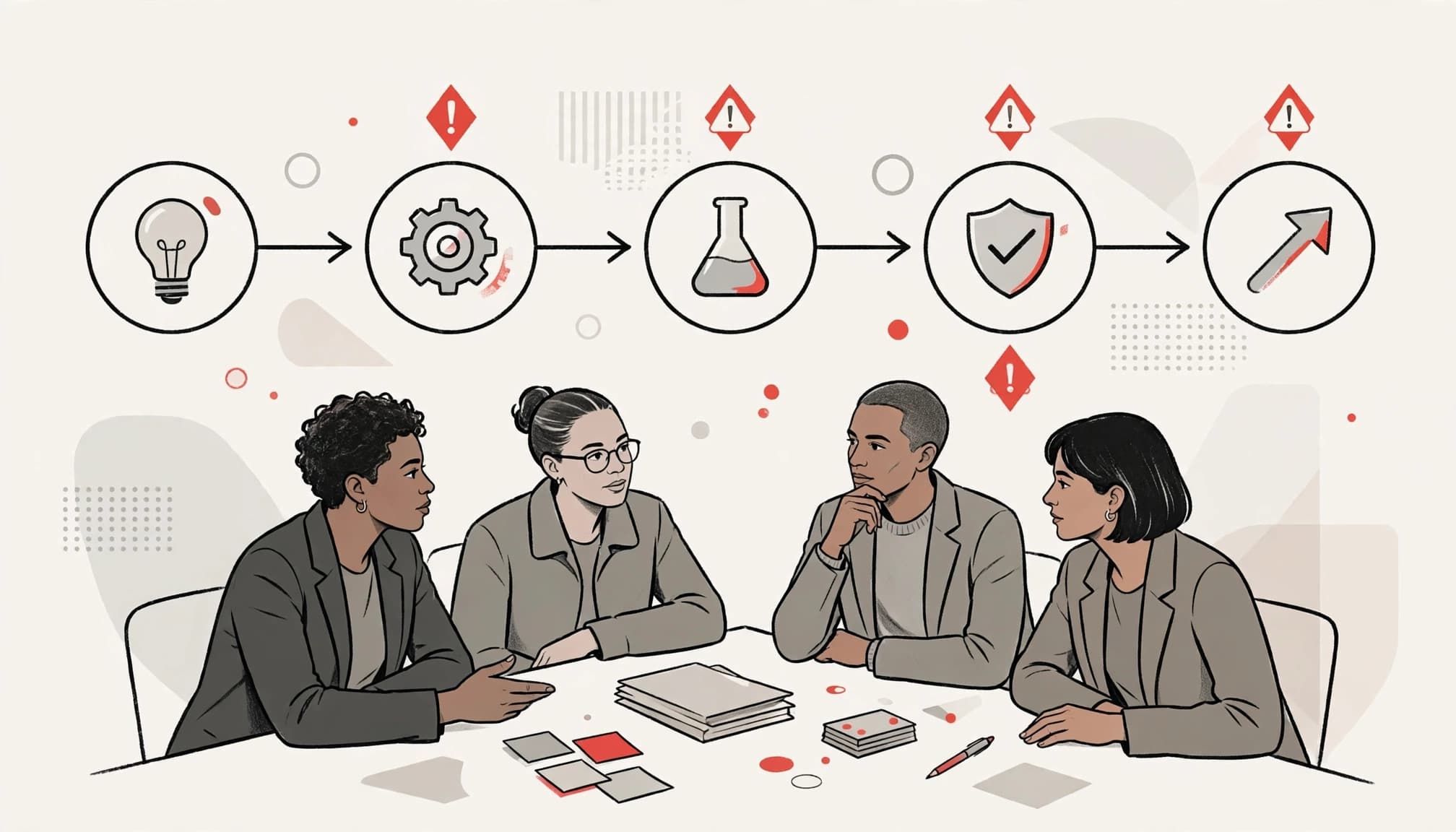
Teams lose time when a review introduces new standards at the last minute. Agree on gate criteria and evidence when you authorize each stage of the phase-gate process. That gives the stage-gate process clear expectations while letting the team plan how to meet them.
Require a short decision package
A useful package fits the decision and summarizes key project deliverables. For a high-risk project, it should show the expected business result against its baseline, spending to date, the next funding request, and the few dependencies that could change the outcome.
Include test results, unresolved defects, vendor obligations, and risks with named owners. Describe risk mitigation for unresolved exposure, and state what remains untested. The sponsor should recommend a decision and explain the tradeoff if leadership chooses a different path.
A gate passed with an undocumented exception can leave the business carrying a risk nobody agreed to own.
Treat security and recovery as launch evidence
Before release, require a cybersecurity risk assessment and a quality assurance review proportionate to the exposure. Check access, data privacy obligations, incident response readiness, and whether backup recovery has been tested. For a critical service, confirm business continuity and cutover plans with the people who would use them.
NIST’s secure software development guidance is a useful reference for evidence across development. A gate should ask which practices were performed, what they found, and what remains open.
For new product development that uses AI, include approved uses, data handling, human oversight, and vendor review. Urgency doesn’t remove the need to know where sensitive information goes.
Use a scorecard without hiding hard stops
A scorecard helps leaders compare evidence consistently in a phase-gate process. It should sharpen judgment, not replace it. Rate each area as evidenced, partially evidenced, or unresolved:
- Is the expected benefit still meaningful against the original baseline?
- Can the proposed design work with your systems, data, and operating capacity?
- Is project risk, including security, privacy, recovery, and vendor exposure, within agreed limits?
- Does the next spend support strategic alignment with other technology priorities?
- Is there a business owner ready to change how work gets done?
For a proposed customer portal, strong user feedback might support value. It can’t cancel an unresolved access-control flaw. Set non-negotiable conditions before scoring, such as completing a required privacy review or passing a restore test.
Have cross-functional teams, including the business sponsor, technology lead, finance lead, and relevant risk owners, review the evidence independently before the meeting. That makes disagreement visible before the most senior person speaks. Record material dissent and the reason for the final decision. A score that changes after a forceful opinion should trigger a closer look at the evidence.
Give each gate a decision owner
A phase-gate process can still leave a team waiting when six senior people meet without clear authority.
Separate delivery, value, and risk ownership
Assign clear roles across cross-functional teams. The business sponsor owns the outcome. The technology lead owns delivery evidence and technical options. The CFO tests funding and resource allocation. A security or privacy owner assesses exposure within their remit.
A stage-gate process needs one person to chair the gate and one to make decisions within an agreed threshold. Also name who can stop a release. A technology decision calendar can make approval points and escalation paths visible across projects.
If you have a technology leadership gap, an interim or fractional CTO can organize the evidence and challenge assumptions. The CEO still needs a clear business decision owner.
Escalate based on exposure, not only price
A modest software subscription can expose customer data or create a hard-to-exit vendor dependency. A larger infrastructure purchase may be routine if it follows an approved plan. A stage-gate model sets approval thresholds around risk, contract commitment, and business impact, as well as spend.
Only an authorized leader should accept a material exception. Record the business consequence, compensating controls, owner, expiration date, and review trigger. Escalate risks beyond management’s authority through the appropriate board process. A board-ready technology roadmap can show directors the major commitments and risks without handing them the delivery backlog.
Keep agile delivery inside clear boundaries
A phase-gate process and agile delivery answer different questions. The stage-gate process sets decision points; its stage-gate model leaves teams room to learn and adjust. Executives decide when to fund, expand, or accept greater risk.
Let the team iterate between gates
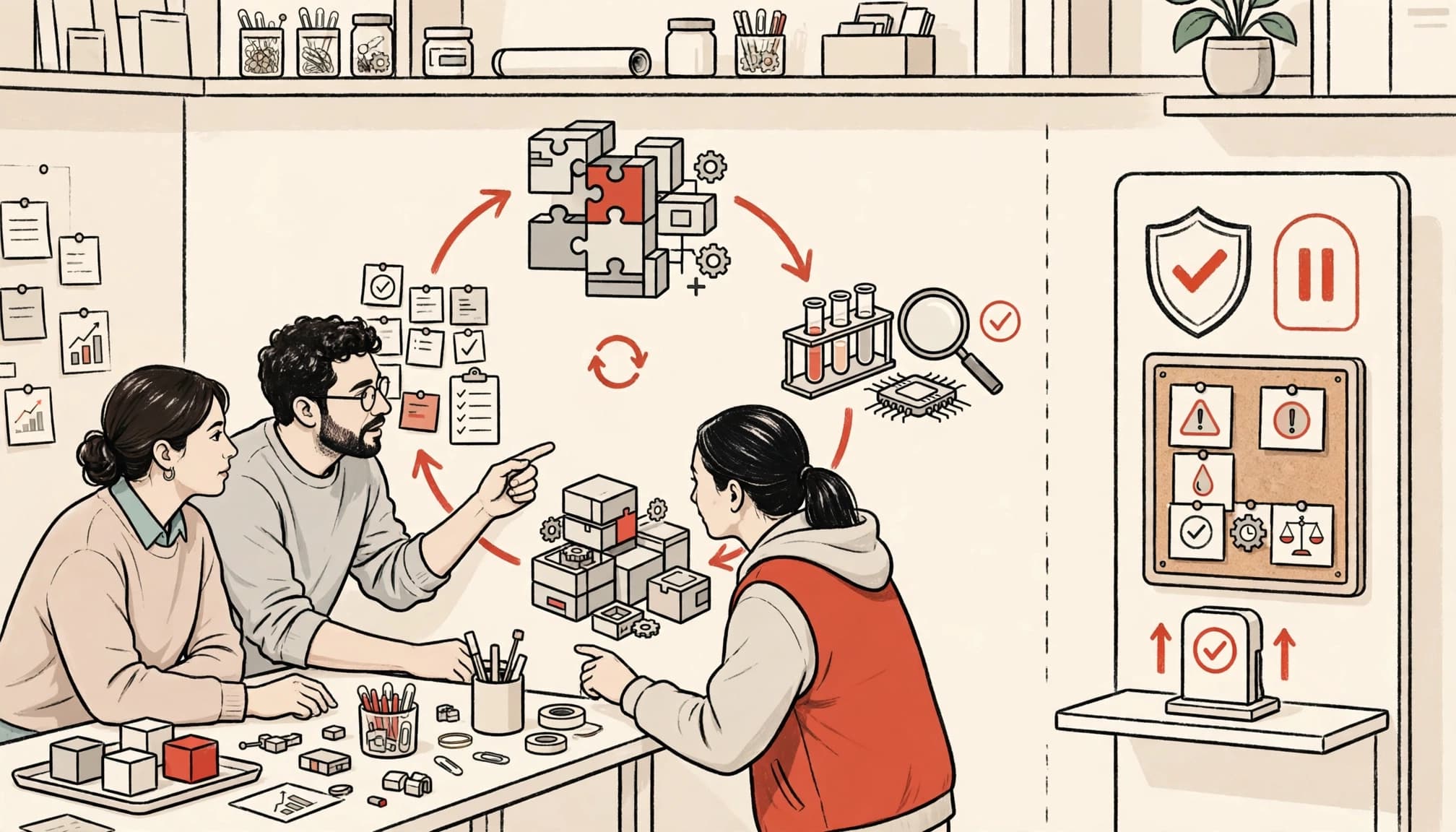
The 2020 Scrum Guide describes an iterative approach that uses increments to improve predictability and control risk. With an agile methodology, short cycles support testing and validation of workflows, integrations, or user needs before a wider release.
Don’t make project management dependent on executive approval for every backlog change. Bring material changes to decision gates when they alter the outcome, budget, risk profile, or launch conditions.
Reopen a gate when the facts change
A gate approval is based on evidence available at a point in time. A new data use, failed recovery test, vendor contract change, or unexpected integration cost may invalidate it.
Define triggers in advance. Your team should know when to pause, who to alert, and who can approve a revised plan. That keeps technology project stage gates useful between scheduled reviews, when many consequential changes occur.
Avoid the reviews that create false confidence
Too many gates in a phase-gate process create waiting. Too few let a project drift into commitments nobody examined. Watch for three signs your stage-gate process needs repair.
First, reviews focus on completed tasks rather than the next decision. Ask what you are authorizing and what evidence would change your mind. Second, a project passes with open issues described as “being managed.” Require owners, deadlines, and an explicit decision about residual risk.
Third, launch is treated as the finish line. Schedule a gate after the product launch to compare actual results with the business case and assess project success. Check support load, customer impact, costs, and unresolved defects. If the expected benefit requires staff to adopt a new process, give that change an owner too.
Frequently asked questions
How many gates does a technology project need?
Use enough reviews in a phase-gate process to cover its major commitments, not every phase label in a template. A contained internal improvement may need a funding decision and a release decision. A high-risk migration may also need design approval, a mock cutover, security readiness, and post-launch validation. Add a gate when finding a problem later would cost materially more.
Can a project pass a gate with open risks?
Yes, if the risks fall within approved limits and the right person accepts them. Document what’s open, the potential business impact, the control in place, and when the exception expires. A risk with no owner or review date shouldn’t pass as an informal footnote.
What should the board see?
Show the major investment decision, expected outcome, material exposure, accountable executive, and any exception beyond management’s authority. For cyber risk, connect the issue to operations, customers, recovery expectations, and the organization’s risk appetite. Keep detailed test results available for review, but lead with the decision directors need to make.
Make the next commitment a deliberate one
The value of technology project stage gates is a clearer answer before the next commitment. You can give teams room to deliver while requiring evidence at the points where funding, exposure, or reversibility changes.
If those decisions still depend on informal conversations, Get an Executive Technology Clarity Check. Clear owners and clear thresholds make it easier to move without losing control.