
When every technology issue arrives marked urgent, the loudest problem usually gets funded first. Treating every alert as urgent creates alert fatigue and can lead leaders to fund visible but lower-value work. That is how businesses end up patching low-value systems while a critical vendor dependency, recovery gap, or access-control weakness sits open.
Technology risk prioritization gives leadership a way to separate technical noise from risks that could disrupt revenue, customers, operations, or a major transaction. You don’t need perfect data. You need a clear rule for deciding what matters most now.
The goal isn’t to make the risk register longer. It’s to make the next decision clearer.
Key Takeaways
- Treat severity scores as one input, not the final answer. A serious issue on an unused internal tool is not equal to a moderate issue on the system that runs payroll or customer delivery.
- Rank risks by business impact, exploit evidence, asset criticality, dependencies, time pressure, and the cost of reducing exposure.
- Use a simple matrix to create order, then apply executive judgment where a score misses the real business context.
- Turn the top risks into named actions with an accountable owner, due date, and a decision point if progress stalls.
- Give the board a short view of exposure, trend, ownership, and required decisions. It does not need a technical activity log.
Why everything looks urgent
Technology teams see a constant stream of alerts, vulnerabilities, vendor notices, audit findings, and project requests. This volume can create alert fatigue when every signal receives the same response. Each issue may be valid, but they are not equally important.
Effective cyber risk prioritization starts with a practical question: “What happens to the business if we wait?”
Separate technical severity from business risk
A critical software vulnerability matters more when it is exposed to the internet, actively exploited, or supported by threat intelligence. It matters even more when it affects a system handling customer data or revenue.
The same finding on a segmented, low-use test environment may not need the same response.
Risk is about the likely business consequence. That includes lost revenue, operational downtime, legal exposure, missed customer commitments, recovery cost, and damaged trust.
Set a decision horizon
Some risks worsen slowly. Others have a deadline. A regulatory compliance deadline, expiring cyber insurance control, acquisition diligence request, or product launch can quickly change the order of work.
Your cyber risk appetite should make those distinctions clear. Leadership may accept a temporary delay in an internal improvement. It may not accept an unresolved weakness that could stop billing, expose regulated data, or prevent recovery after ransomware.
An issue is not urgent because a system generated an alert. It is urgent when delay puts a business outcome outside the company’s accepted risk tolerance.
Build a technology risk prioritization rule before reviewing alerts
If the team debates every issue from scratch, decisions will depend on who argues most forcefully. A repeatable risk prioritization process creates stronger ownership and calmer leadership under pressure.

Start with non-negotiable escalation triggers
Security operations teams can use these rules to identify issues requiring leadership attention, while security automation surfaces evidence without deciding business priority. Findings from vulnerability management are inputs, not an automatic queue, and should be interpreted through criticality, business impact, exploitability, and dependencies. Examples include active exploitation, compromised privileged access, failure of a core backup process, a material vendor outage, or a risk that puts payroll, safety, customer delivery, or a contractual obligation at risk.
CISA’s Known Exploited Vulnerabilities Catalog is a useful threat intelligence input. It identifies vulnerabilities with evidence of exploitation in the wild. That status does not replace business judgment, but it should sharply raise the priority of an affected, exposed asset.
Score the conditions that change the answer
For risks that do not meet an escalation trigger, assess a short set of factors:
- Likelihood, based on exposure, threat activity, threat intelligence, exploit evidence, and control effectiveness.
- Impact, based on downtime, customer harm, financial loss, legal exposure, and recovery difficulty.
- Asset criticality, including whether the system supports revenue, operations, sensitive data, or financial reporting.
- Dependency and velocity, meaning how many other systems rely on it and how quickly the consequences grow.
- Remediation effort, including cost, delivery capacity, and the disruption created by the fix.
NIST SP 800-30 Rev. 1 remains a sound reference for a simple risk assessment that documents assumptions about likelihood and impact, exploitability, and communication. Keep the model simple enough for leaders to challenge its assumptions and use it for remediation prioritization, without assuming every high-severity issue goes first.
Use a matrix to create order, not false precision
A 3×3 or 5×5 risk prioritization matrix can help a leadership team see the difference between a nuisance and a business-threatening exposure. It shouldn’t pretend that every risk can be captured in one colored square.
Use the matrix for the first pass
A matrix supports risk-based prioritization during the first pass. It creates a consistent starting point, not a final decision.
Compare likelihood and impact first. Then supplement the view with exploitability, asset criticality, dependencies, and business impact.
High-likelihood, high-impact risks receive immediate attention. Low-impact issues can move into planned maintenance work, while security operations teams avoid turning the matrix into a technical activity log.
A simple matrix is especially useful during a technology health check, vulnerability management review, or early technology due diligence. It gives management a common language before the details get complicated.
Override the score when context demands it
A low-likelihood event can still rank first when the result would be catastrophic. Threat intelligence can change the likelihood rating when exploitation activity or threat conditions shift.
Untested disaster recovery planning, for example, may have a lower event probability than phishing. Yet a failed recovery after a ransomware event can expose business continuity and threaten the business itself.
The same is true for third-party risk management. A vendor may have few reported security issues but still be mission-critical. Ask what happens in the first 48 hours if that provider fails, is breached, or can’t support you through an incident.
Add numbers when leaders must choose between investments
A score helps sort the queue. Dollar-based risk helps decide where to spend scarce money. This is where technology risk management becomes part of enterprise risk management and resource allocation decisions.
Use RPN as a repeatable screening score
The Risk Priority Number, or RPN, multiplies likelihood, impact, and detectability:
RPN = Likelihood x Impact x Detectability
It can expose a risk that is both harmful and hard to spot before damage occurs. Still, RPN is a screening tool. It should never outrank known exploit activity, a critical business dependency, or a clear risk appetite threshold.
Convert major scenarios into expected loss
For the top three to five scenarios, estimate probability and financial impact using threat intelligence as directional evidence, not a precise forecast. Consider a ransomware outage, business email compromise, core cloud failure, or vendor breach affecting customer data.
Include cost buckets such as lost revenue, recovery labor, outside counsel, notification, customer concessions, increased insurance costs, and delayed deals. Use low, base, and high estimates rather than pretending the forecast is exact.
Factor analysis of information risk (FAIR) can add discipline by separating event frequency from loss magnitude. The board doesn’t need to become a FAIR expert. It needs to ask: What assumptions created this range? What evidence supports them? How would the answer change if those assumptions move?
A $1 million recovery program that reduces a $10 million expected annual loss to $3 million deserves a different conversation than a tool that produces more alerts without changing exposure. That is risk reduction per dollar, not fear-based budgeting.
Turn the priority list into accountable work
A risk register without action is a filing cabinet. Sequence the highest-priority remediation efforts by business impact, likelihood, exploitability, dependencies, and feasibility, not severity alone. Each needs a treatment decision, an accountable owner, and a clear escalation path.
Choose the treatment, not just the control
There are five basic choices:
- Mitigate the risk through selected mitigation strategies, such as a control, process change, backup improvement, access cleanup, or system redesign.
- Accept a defined level of risk for a stated period, with the right executive approval.
- Transfer part of the exposure through insurance or contractual terms.
- Avoid the risk by stopping an unsafe activity or retiring a system.
- Share responsibility with a vendor, while still verifying that its controls and incident response plan are credible.
Vendor management matters here. Vendor due diligence should cover service dependencies, data handling, recovery commitments, notification terms, offboarding, and incident response readiness. These details clarify the business consequences when a vendor fails or recovery takes longer than expected. A contract does not remove your responsibility when your customers are affected.
Give each action a real owner
The owner is not “IT.” It is a named executive or operational leader with the authority to remove blockers, approve spend, or accept risk.
For every critical item, record the business consequence, treatment choice, accountable owner, deadline, cost, and escalation path. A clear cybersecurity risk ownership framework prevents the familiar problem where everyone attended the meeting and nobody owned the outcome.
Keep prioritization current as conditions change
A quarterly review is useful. It is not enough on its own. Continuous monitoring complements scheduled reviews, but it does not replace executive judgment. Risk changes when threat intelligence shows new exploitation, vulnerability management identifies a gap, an acquisition adds systems, a vendor changes terms, an AI tool gains access to sensitive data, or a core project goes live.
Re-score when the business changes
A new customer portal can turn a formerly internal system into a public-facing risk. A cloud migration can create new dependencies. An AI adoption strategy can create data privacy and AI governance obligations that were not present six months earlier.
Revisit the score when the asset, threat, control environment, or business dependency changes. The list should move as reality moves.
Automate evidence, not judgment
Security tools can collect asset data, identify missing patches, detect unusual activity, and track remediation status. Security operations teams can use that evidence, while security automation can support repeatable checks and workflows.
Platforms for governance risk and compliance (GRC) can organize ownership, evidence, and review history. They help teams maintain context without replacing judgment. Automated remediation is appropriate for bounded, low-risk fixes with validation. It should not silently change treatment decisions for material business exposures.
Tool evidence can show changes in security posture, but it cannot decide what your business can afford to lose. That calls for executive technology leadership, finance input, operational context, and a clear technology governance process.
Translate the top risks into board decisions
Board-ready reporting should make directors more capable of oversight, not more dependent on technical translation. A useful summary focuses on the few risks that could materially affect the business.
Show exposure, trend, owner, and decision
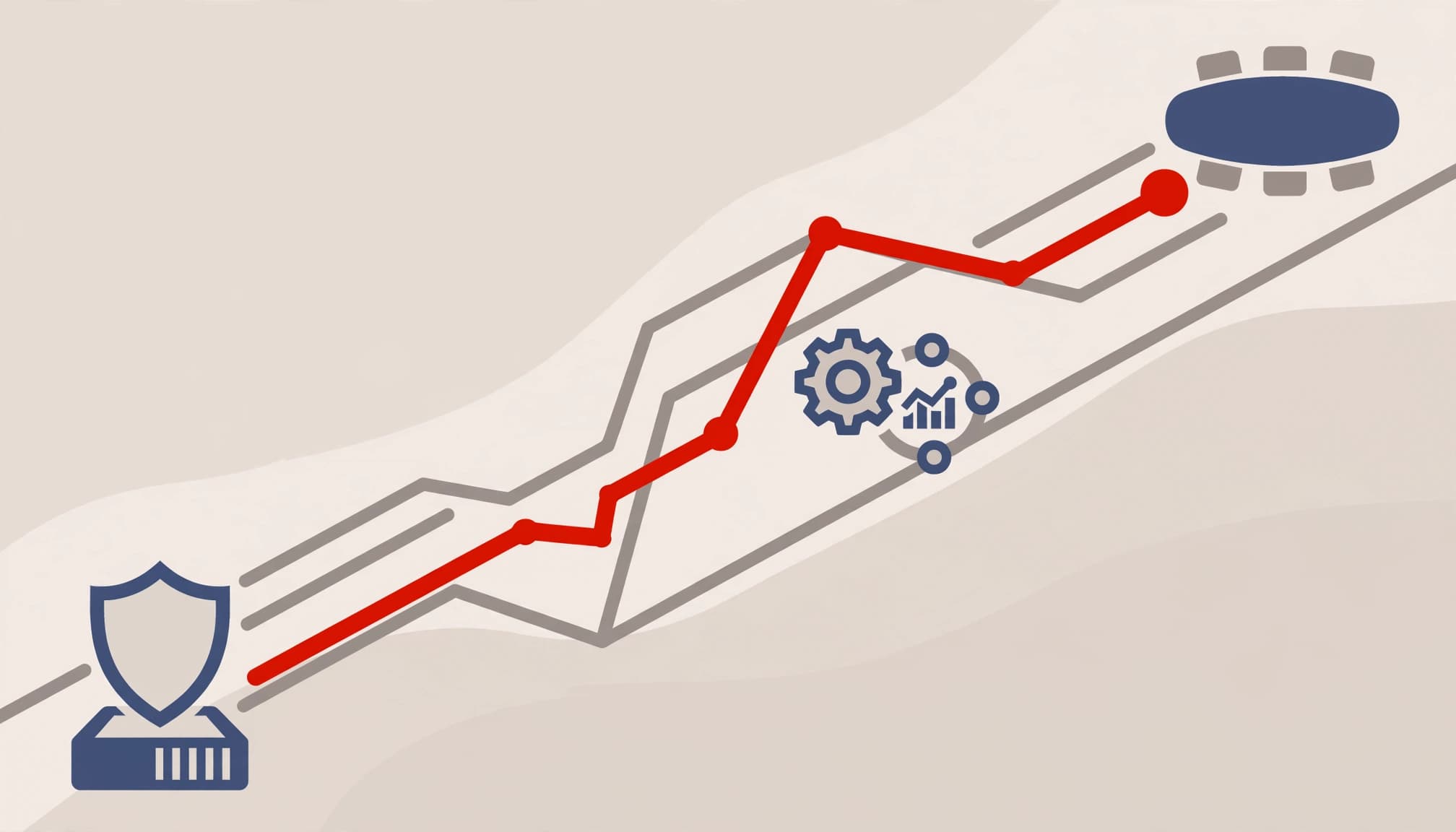
For each major risk, state what could happen, the current exposure, whether it is improving or worsening, who owns the response, and what management needs from the board. Use current threat intelligence to help explain changing trends, but keep business context central. Security operations data can support the assessment without shifting the report toward activity volume.
A board-ready technology risk report should also show the decision already made or required next. That may be approval for recovery investment, acceptance of a time-limited exception, or a direction to replace a high-risk vendor.
Tie the decision to business priorities
Board cybersecurity reporting should connect risk to business priorities and cybersecurity strategy. It should address launch readiness, acquisition readiness, resilience, and customer trust.
If growth depends on a new platform, show the security and recovery conditions required before launch. If acquisition readiness is the priority, show unresolved technical debt, vendor exposure, data governance gaps, and the conditions management must satisfy before accepting additional exposure.
This is where a fractional CTO, fractional CISO, or interim CTO can help during a technology leadership gap. The job is not to create more dashboards. It is to give CEOs, COOs, and boards reporting they can trust and decisions they can defend.
If risk decisions feel scattered or too dependent on the wrong people, Get an Executive Technology Clarity Check to establish sharper priorities, clearer ownership, and a practical next step.
Frequently Asked Questions
What is the difference between vulnerability severity and business risk?
Severity describes the technical seriousness of a weakness. Business risk adds context: whether the asset is exposed, what it supports, who depends on it, whether exploitation is likely, and what failure would cost. A lower-severity issue on a critical revenue system can outrank a higher-severity issue elsewhere.
How many technology risks should leadership track closely?
Most executive teams should focus on the top three to five material risks at a time. Keep the full register for management, but reserve board attention for exposures that could affect strategy, continuity, customer trust, regulatory obligations, or financial performance.
Who should be allowed to accept technology risk?
The person accepting risk should have authority over the business consequence. A system owner may accept a minor operational exception. Material cyber risk, prolonged control gaps, or risks outside appetite should move to the CEO, executive team, or board under a defined decision rights map.
Clear priorities create confident decisions
You will never remove every technology risk. The work is to stop treating every issue as equal, then direct money and leadership attention toward the exposures that can do real harm.
A clear decision rule, current evidence, named ownership, and board-ready reporting turn a noisy queue into a manageable set of choices. That is how technology risk becomes something leaders can actually see, govern, and act on.