
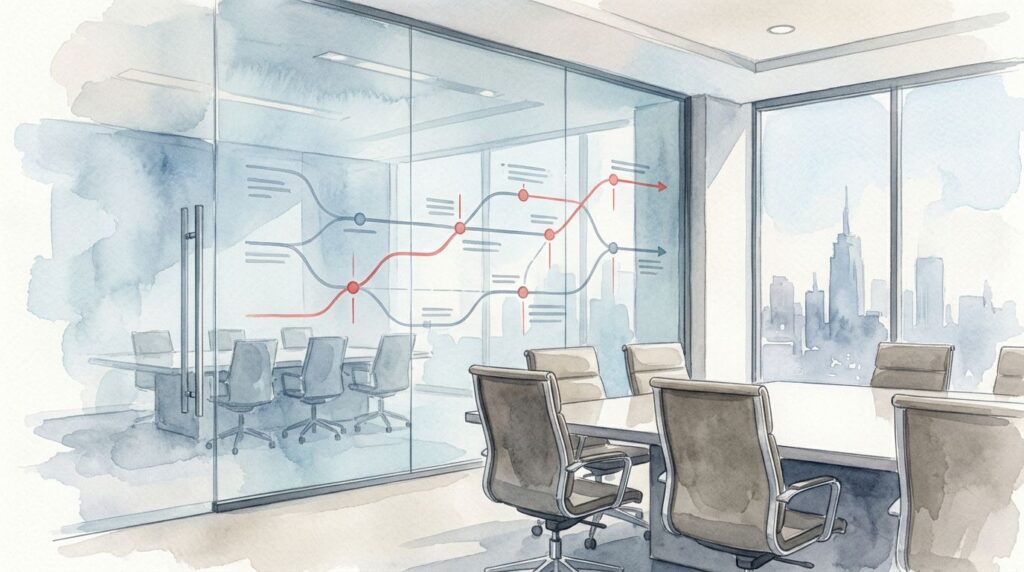
You can tell a technology roadmap, a tool for defining the company’s long-term vision, has stopped helping when every meeting creates motion, but not confidence. Projects shift, dashboards multiply, and the same questions about business goals keep coming back from the board and the leadership team.
At that point, the problem is not the document. It’s technology roadmap leadership. You’re no longer just sequencing work, you’re deciding who owns the choices, where risk sits, and what the business can trust.
Key takeaways for leaders
- A technology roadmap becomes a leadership problem when it starts carrying weak ownership, shifting priorities, and fuzzy tradeoffs.
- Better business-aligned technology strategy ties spend, risk, and delivery to strategic objectives.
- Effective leadership ensures optimal resource allocation by focusing on high-value priorities.
- The fix is usually not more tools. It is clearer governance, board-ready reporting, mapping milestones to business goals, and a real decision rhythm.
- If you can’t explain the roadmap in one page, the business probably can’t lead with it.
The roadmap is doing a job it should not do
A product roadmap or a broader IT roadmap should show direction. Both feed into strategic planning, but neither should absorb every unresolved argument in the business.
When the technology roadmap is expected to settle competing priorities, calm the board, explain budget pressure, and absorb vendor noise, it has become a substitute for leadership. That is where the real issue starts. You do not have a planning problem. You have a technology leadership gap.
If the roadmap only works when every smart person is in the room, it is not a roadmap yet.
This shows up fast in founder-led technology decisions, CEO technology decisions, and COO technology strategy. The business keeps growing, but the operating rhythm never catches up. You add meetings, status reports, and dashboards, then wonder why nothing feels clearer.
A clean technology roadmap helps, but only when it sits inside executive decision-making. Without stakeholder buy-in, even the best visual roadmap fails. McKinsey makes the same point in its view on building an integrated technology road map, where strategy and execution have to stay connected.
The warning signs you can read in plain English
The signs are usually obvious once you stop calling them isolated issues.
The board asks the same question three meetings in a row. Vendors seem to be driving decisions. Technology spend keeps rising, but technology ROI and performance metrics do not. Tool sprawl grows from a lack of technical infrastructure oversight. Shadow IT spreads. Technical debt piles up. No one can say whether the current mix still supports the business without a gap analysis of IT priorities.
That is where board-ready reporting matters, particularly for risk management. If your reports do not show ownership, risk, and tradeoffs, they are not helping you lead. They are just documenting confusion.
The same pattern shows up in cyber risk reporting to the board. If no one can name the cyber risk appetite, or if cybersecurity oversight lives in a slide deck instead of a decision process, the technology roadmap is already in governance territory. Add AI governance, AI adoption strategy, and AI vendor due diligence, and the mess gets bigger fast.
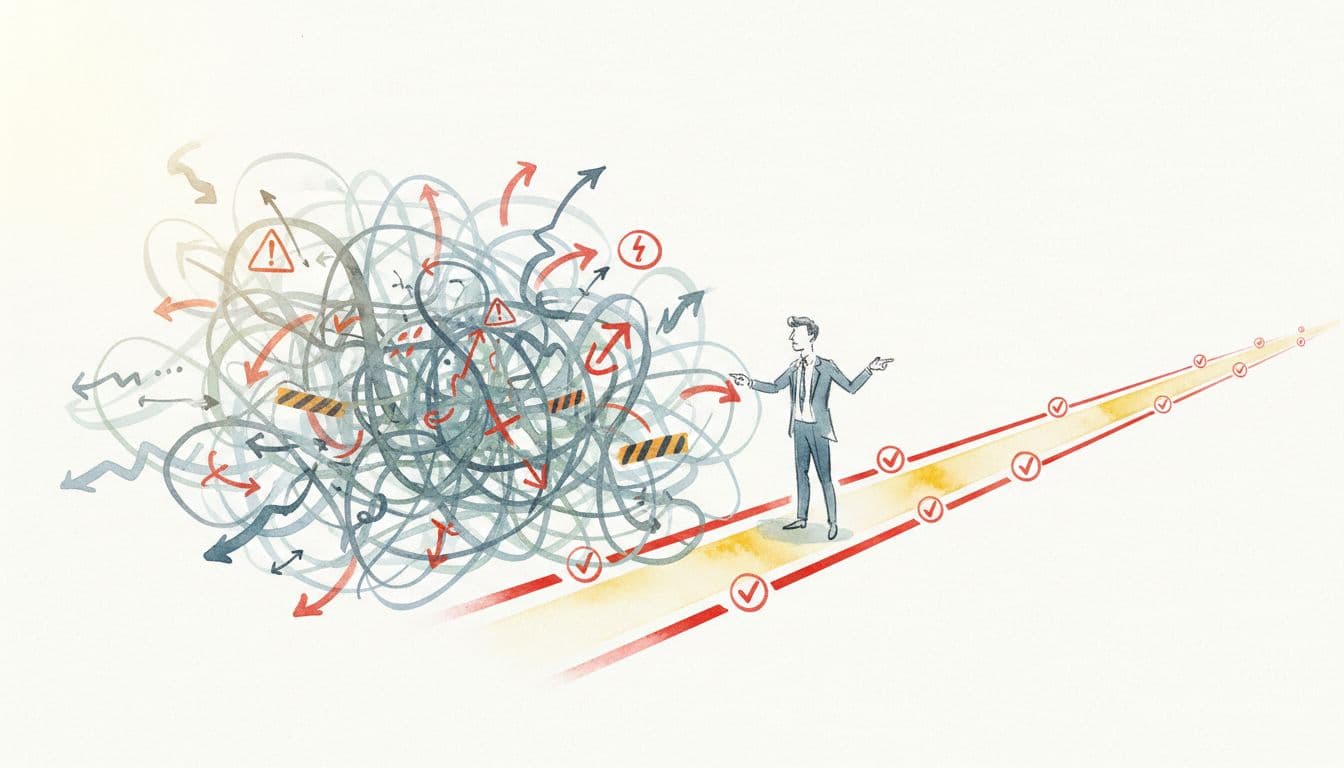
If your technology roadmap also has to answer for third-party risk management, vendor management, data quality, data privacy, or acquisition readiness, you are not dealing with a project list anymore. You are dealing with business control.
What strong roadmap leadership changes
Good roadmap leadership makes the hard choices visible.
You get a business-aligned technology strategy instead of a pile of disconnected initiatives. You get strategic planning that shows what matters now, what waits, and why. A simple one-page technology strategy or a 12-month technology roadmap can work well as a clear implementation plan if it is tied to real outcomes, not wishful thinking or a bloated technology roadmap template.
That is also where executive technology leadership earns its keep. You get a technology operating rhythm, a decision rights map for better decision-making, and board technology reports that leaders can use without translation. Good technology governance for CEOs and technology governance for boards keeps the technology roadmap tied to decisions, not opinions. This strategic blueprint fosters cross-functional collaboration and turns your visual roadmap into a clear implementation plan.
Depending on the gap, that support might look like fractional CTO services, interim CTO services, an outsourced CTO, a virtual CTO, or a part-time CTO. If the pressure sits closer to security and control, it may be a fractional CIO, fractional CISO, virtual CISO, or interim CISO. The label matters less than the outcome.
This is where a technology leader for growing companies earns trust and competitive advantage. The job is not more activity. The job is better decisions, clearer ownership, and less drama.
If you need a cleaner read on the problem, Talk Through Your Technology Leadership Gap.

How to reset the conversation
Start with three questions. What business outcome does this support? Who owns the decision? What breaks if you wait?
Those three questions cut through tool sprawl, vendor pressure, and the kind of technical debt that hides in plain sight, especially for R&D activities and emerging technologies that require clear owner decisions. They also force better stakeholder alignment and lead to SMART goals. If the answer is fuzzy, project management software cannot replace an actual digital transformation strategy. You do not need a bigger dashboard. You need a better operating picture.
A technology health check, technology audit, or technology assessment can help you get there. So can a systems inventory, a review of vendor due diligence, vendor offboarding, technology risk management, and third-party risk reporting. If the gap is wider, fold in business continuity planning, disaster recovery planning, incident response readiness, ransomware readiness, and cyber insurance renewal.
That is also the point where board technology reports should become more useful. The board does not need more noise. It needs a board-ready risk summary and a board-ready technology roadmap it can govern.
If the situation is tied to a deal or ownership change, Prepare Technology for Diligence or Transition is the right way to frame the next step.
FAQs
When is a roadmap problem really a leadership problem?
When senior management often overlooks the need for an IT roadmap, and the same plan keeps failing because ownership, reporting, or priorities are unclear. If the roadmap changes every time the room changes, the issue is leadership, not sequencing.
When should you consider a fractional CTO?
When you need executive technology leadership, but not a full-time hire yet. A good guide on when to hire a fractional CTO can help you compare it with a full-time CTO or a fractional CTO vs IT consultant decision.
What should a board-ready roadmap include?
It should follow industry standards by showing business outcomes, named owners, major risks, the next 90 days, and decision-making points that need board visibility for the product roadmap. If it does not support board-ready reporting, it is not ready.
Conclusion
A technology roadmap is a living document, rather than a static list, that stops being a simple planning tool the moment it has to carry weak ownership, vague reporting, and unresolved tradeoffs. Then it becomes a business leadership problem.
You do not fix that with more projects. You fix it with clearer decisions, stronger governance, and a technology roadmap that serves the organization’s long-term vision and business goals, one the business can actually lead from. That is the difference between motion and control.