
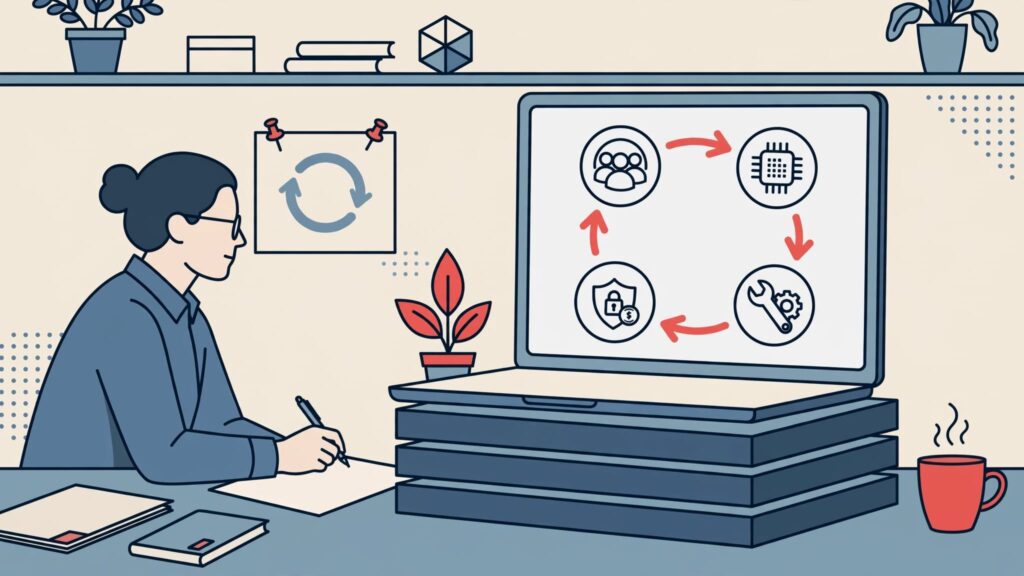
You assess technology sustainability in grant proposals by testing whether the applicant can operate, maintain, and fund the technology after your award ends. For technology sustainability grants, lasting mission value matters more than a successful launch.
A persuasive proposal can still hide recurring costs, weak ownership, or dependence on one vendor. Your review should expose those dependencies before you commit funding.
Start with the outcome that must continue, then examine the evidence behind the operating plan.
Key Takeaways for Technology Sustainability Grants
- Require a measurable mission outcome, a baseline, and an accountable owner.
- Review full lifecycle costs, including internal labor, training, maintenance, and eventual retirement.
- Separate committed operating funding from hoped-for future grants.
- Match security, vendor, and reporting requirements to the project’s actual risks.
- Use funding conditions to close evidence gaps without imposing unnecessary administrative work.
Define What Must Continue After the Grant
Technology sustainability means the organization can keep delivering an intended benefit without accumulating unaffordable costs or unmanaged risk. That includes financial capacity, usable systems, and people who can support them.
Environmental sustainability is a separate consideration. If a proposal promises lower energy consumption or less electronic waste, require evidence for those claims alongside its operating plan.
Ask applicants to name the service improvement they expect. Useful measures include application processing time, service completion rates, accessibility, and error rates. Installation counts and account registrations don’t establish lasting value.
For connectivity projects, the 2026 Community Connect application guide addresses funding for high-speed internet installation. Your review should also establish who will maintain the resulting service.
Our technology project funding questions connect that initial investment to outcomes, delivery capacity, and ongoing obligations.

Test the Full Cost Beyond Launch
A smaller subscription doesn’t guarantee a lower operating cost. Additional administration, manual reconciliation, or specialist support can erase apparent savings.
Separate implementation from ongoing operations
Require a total cost of ownership model covering the grant period and a reasonable post-grant horizon. Three to five years is a useful review window for many systems, adjusted to their expected life.
Separate implementation and migration from recurring hosting, licensing, support, and security costs. Include testing, staff training, documentation, internal administration, and eventual decommissioning.
Also identify technical debt the project creates or inherits. Custom integrations and unsupported components can produce maintenance obligations that the initial quote excludes.
Budget discipline matters in public programs too. NTIA’s wireless innovation funding notice requires proposed funding to match project scope and allowable costs.
Distinguish available money from funding assumptions
Ask applicants to identify each continuing funding source and its status. An approved operating allocation carries more weight than a planned fundraising campaign or a submitted grant application.
Then test the downside. A pipeline of grant opportunities can inform contingency planning, but only confirmed awards count as available resources. If future funding falls short, establish which services continue, which costs fall, and how the organization protects users.
Connect technology ROI to evidence. Cost-per-outcome reporting divides relevant costs by accepted completed outcomes. Time saved is capacity, not automatically cash savings. Financial savings need an identifiable change in spending or staffing.
Require Ownership and a Workable Technology Roadmap
An applicant can have capable IT staff and still lack someone who owns the full decision. Your review should distinguish technical delivery from executive accountability and governance.
Name the person accountable for continued value
Require an executive sponsor and an operational owner. Clarify who can approve spending or system changes, accept material risk, and pause a service when needed. Ask for practical evidence, such as delegated authorities, a responsibility matrix, or documented approval procedures. These roles should also cover data quality and vendor management.
A fractional CTO can provide strategic capacity when a full-time appointment isn’t justified. An interim CTO can cover a leadership transition. Either arrangement still needs clear authority, deliverables, and a handover plan.
Avoid making a particular job title an eligibility test. Smaller organizations may distribute these responsibilities across existing leaders.
Turn the proposal into an executable roadmap
Ask for a 12-month technology roadmap showing dependencies, decision dates, and adoption milestones. It should explain how staff will learn the system and how the organization will address rollout problems.
For critical workflows, phased deployment can reveal problems before they affect every user. Define acceptance criteria before launch.
Also require continuity when staff leave. Shared administrative access procedures, current documentation, and a trained backup reduce dependence on one person. Our guidance on IT succession planning addresses that exposure.

Examine Security, Vendor Dependence, and Exit Options
A technology project becomes harder to sustain when the organization can’t recover its data or replace a failing supplier. Assess these conditions before treating the operating plan as credible.
Scale cybersecurity oversight to the potential harm
Start with the information involved and the consequence of service interruption. Sensitive client records require different safeguards than a public information website.
Request evidence of access controls, backup restoration testing, incident responsibilities, and data privacy decisions. Business continuity planning should identify an acceptable interruption period and a workable fallback.
For AI-enabled projects, include AI governance early. Establish permitted uses, human review responsibilities, and who can suspend a feature when quality or privacy problems appear.
Make vendor exit a practical option
Vendor due diligence should address support capacity, renewal terms, usage charges, and subcontractor dependencies. A low introductory price doesn’t establish long-term affordability.
Check whether the system can exchange data with essential existing services and handle expected growth in users or records. Ask for a data-flow or integration diagram, documented standards, and integration or load test results.
Require clear data ownership and usable export arrangements. Request evidence that data export has been tested, and review transition costs, contract termination rights, and vendor offboarding responsibilities.
If a supplier fails, identify who restores service and communicates with affected users. Third-party risk management belongs in the operating budget, alongside routine vendor management.
Use Evidence to Make the Funding Decision
A consistent rubric helps you compare proposals without rewarding presentation quality over delivery readiness. Use it to organize judgment rather than manufacture precision.
Ask applicants: Who owns each decision? What evidence shows the system can integrate and scale?
| Review area | Evidence to request | Warning sign |
|---|---|---|
| Mission value | Baseline, target, measurement owner | Success means installation only |
| Financial capacity | Lifecycle budget and funding status | Future support has no identified source |
| Delivery capacity | Staffing, adoption plan, milestones | Vendor owns every decision |
| Operational risk | Recovery evidence and security ownership | Backups exist but remain untested |
| Continuity | Documentation, export plan, handover | One person holds essential access |
| Interoperability and scale | Integration documentation, export testing, load testing | Proprietary formats or untested growth |
| Governance and exit | Decision rights, data ownership, transition or termination plan | Unclear authority or an impractical exit |
The strongest proposal makes its assumptions visible and assigns responsibility for testing them.
Strong scores on mission value cannot compensate for an unresolved risk that makes safe service delivery impossible.
You can approve with conditions when gaps are manageable. Tie later payments to meaningful evidence, such as completed migration testing or an approved operating allocation.
Keep requirements proportionate. If maintenance is essential to the outcome, consider funding it rather than treating operating costs as evidence of weak commitment.
Keep Grant Discovery Separate From Sustainability Review
Search tools can help applicants identify follow-on grants. They can’t establish that more funding will arrive or that a project can operate without it.
What The Grant Portal provides
The Grant Portal is a paid grant database that requires a subscription. This grant database includes opportunities from federal, state, and local governments, other government agencies, private foundations, and international sources. Its information on private foundations draws on IRS Form 990-PF filings. A subscription also provides access to TGP-Man, an AI-powered search assistant that accepts plain-language funding goals and is available around the clock.
Grant database listings include application requirements, deadlines, funding amounts, and eligible expenses. Users can save searches, set custom alerts, and review information about past grant recipients to understand a funder’s interests. These records offer context, but they don’t establish future eligibility or guarantee a successful application.
Who the database and resources support
The portal covers opportunities for nonprofits, small businesses, individuals, educational institutions, veterans, and minority-owned businesses. Each listing has its own eligibility requirements.
Small-business funding categories include research and development, business expansion, equipment, and workforce training. Individual opportunities include scholarships and support for students, artists, researchers, and entrepreneurs.
Environmental sustainability appears alongside education, health, arts, and community development. Educational resources include articles, webinars, tutorials, templates, and sample proposals.
Use the grant catalog to shortlist opportunities by applicant type, location, and eligible use. Compare scholarships and education criteria, and check whether veterans meet each listing’s eligibility requirements. For community development opportunities, compare local outcomes and confirm geographic fit. Check whether business expansion expenses are eligible before including them in a grant proposal.
Before submitting a grant application, verify deadlines and eligible uses directly with the funder. A second review of the grant catalog can help identify community development listings that serve the proposed area and veterans’ eligibility details. Use database research to inform grant proposals, not as a substitute for committed resources, realistic costs, or an executable technology strategy.
Build Reporting Around Decisions, Not Activity
After approval, require a reporting rhythm that helps you act before problems become expensive. For many projects, quarterly reporting is a reasonable starting point, with closer oversight during critical milestones.
Keep technology dashboards focused on delivery status, adoption, spending against budget, and material risks. Pair each concern with an owner and a decision date.
For board-ready reporting, show whether the expected outcome remains credible. If usage grows but support costs rise faster, the operating model needs attention.
Also define escalation thresholds before launch. Agree when a missed milestone, security incident, or funding shortfall requires a revised plan.
Your reporting requirements create costs too. Use existing financial records and system exports where possible. A shared spreadsheet can provide useful evidence without requiring another data-platform project.
Frequently Asked Questions
Should you require a technology specialist on every review?
No. You can assess ownership, funding assumptions, and mission outcomes without specialist expertise. Bring in independent technology advisory support when architecture, sensitive data, custom software, or supplier dependence creates material uncertainty. Separate that assessment from vendors competing for implementation work.
Can a project be sustainable if it needs another grant?
Yes, provided the applicant explains the dependency and has a credible fallback. Distinguish a diversified funding plan from reliance on one unawarded opportunity. A defined service reduction or orderly closure can be more responsible than an unsupported promise of permanent operation.
What if the applicant lacks a formal technology strategy?
Require enough planning to support the investment, not a large document. A one-page technology strategy can identify the mission outcome, priorities, operating costs, and ownership. The level of detail should reflect project complexity and potential harm.
Fund a Capability the Organization Can Sustain
Your decision should rest on credible operating evidence. The applicant needs to show who will maintain the technology and how continuing costs support a measurable mission result.
Before approval, resolve the largest ownership, funding, or recovery gap. That focused conversation is more useful than another polished proposal.
If the decision still depends on unclear technology leadership or hidden risk, Get an Executive Technology Clarity Check to establish sharper priorities and a practical next step.