

Your usage-based software pricing bill can grow faster than your business, even when every purchase looked reasonable.
Usage-based pricing can align spending with demand, but rising activity can outpace value when ownership and cost assumptions are weak.
Before you approve expansion, you need cost per business outcome, credible usage forecasts, and controls that work under pressure. Start by understanding what the vendor counts, then test whether that count supports your growth plan.
Key Takeaways
- Evaluate usage-based software pricing against profitable business output, not the lowest entry price.
- Test total operating cost, billing accuracy, and spending controls before expanding adoption.
- Give one executive accountability for the contract, usage thresholds, reporting, and expansion decisions.
Understand What You’re Paying For
A subscription pricing model charges for access, often by seat or tier. Usage-based pricing, also called consumption-based pricing, charges for activity such as transactions, storage, compute, or tokens.
That difference changes your exposure. Adoption can increase spending without another purchase approval.
Choose a Metric That Reflects Business Value
Ask whether the value metric tracks something your business benefits from.
For a distributor, cost per completed order may be useful. For a service organization, cost per resolved case may tell you more. Cost per user can mislead when a small team generates most consumption.
For generative ai pricing, distinguish billable activity from acceptable output. Tokens, retries, and human review can increase while useful results remain flat.
Your evaluation should connect the vendor’s value metric to an outcome your operators recognize. Otherwise, you have usage metrics without a credible business case.
Compare the Pricing Mechanics
Several structures can sit underneath a usage-based proposal.
| Model | What you need to examine |
|---|---|
| Pay-as-you-go pricing | Variable spending without a baseline commitment |
| Tiered pricing model | Different rates for successive usage bands |
| Volume pricing | A rate applied across usage at the reached tier |
| Stair-step pricing | Fixed charges that jump at usage thresholds |
| Hybrid pricing model | A subscription or minimum commitment plus usage charges |
Ask the vendor to calculate invoices using your actual workload. Clarify whether discounts apply only to additional units or all units.
For hybrid commitments, inspect included usage, overage pricing, and unused amounts separately. A predictable base charge doesn’t make the entire bill predictable.
Test the Economics Under Growth Conditions

A rising bill can be healthy when it supports profitable growth. Your concern is whether unit costs, margins, and cash requirements remain acceptable.
Model Normal Demand and Abnormal Activity
Use measured workloads to build a baseline. Then test peak demand, slower adoption, and failure-driven consumption.
Include retries, duplicate processing, large imports, scheduled jobs, and major customer usage spikes. Together, these can create revenue unpredictability and charges without equivalent revenue.
Separate contracted minimums from variable cloud computing costs. Show when payments are due and whether prepaid credits expire.
Your technology budget forecast should expose these assumptions. An annual average can conceal a painful month or an underused commitment, complicating revenue forecasting.
Track Cost Per Accepted Outcome
Divide total operating cost by completed, acceptable outcomes, your value metric. For AI workflows, count review time and correction work alongside model usage.
Also examine customer or product margins. A company-wide average can hide an expensive segment.
Compare actual usage metrics with forecasts regularly. AWS Budgets supports cost and usage monitoring with threshold alerts. Similar visibility should be part of your vendor evaluation.
Don’t treat lower unit pricing as proof of better economics. Higher consumption, additional support, or weaker output quality can erase the discount.
Require Evidence That Usage-Based Billing Is Accurate
You don’t need to design the billing infrastructure yourself. You do need evidence that someone can explain and reconcile every charge.
Follow an Event Through the Billing Pipeline
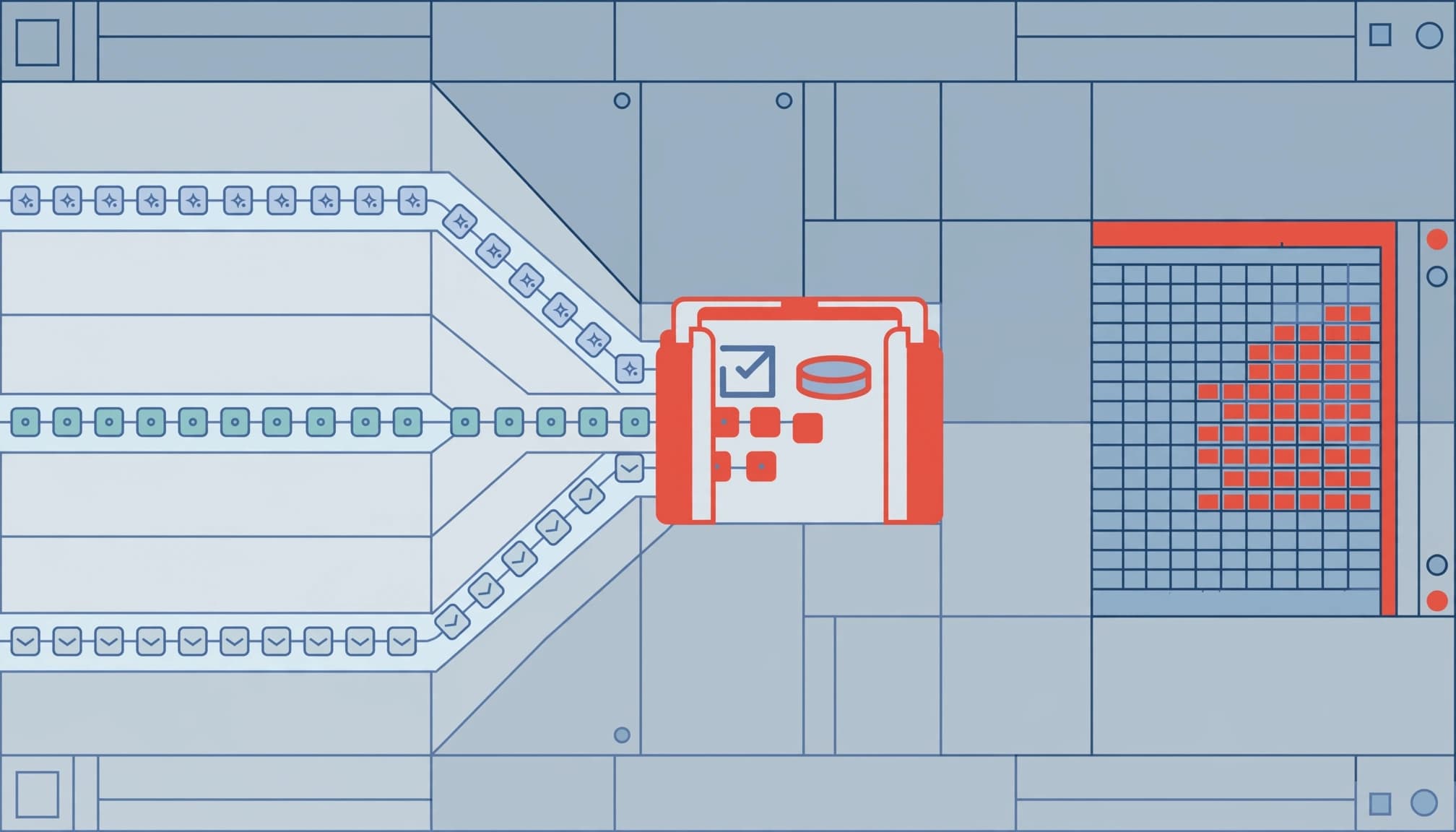
Ask your technology lead to trace a billable event through capture, storage, validation, rating, and automated invoicing. Real-time metering should make activity visible promptly, so discrepancies surface before invoices go out.
Require a unique event identifier, customer identifier, timestamp, quantity, and relevant attributes. Multi-attribute metering may also need the model, region, service level, or operation type.
A mediation engine cleans and translates raw activity into billable records. Your team should explain how it handles retries, duplicates, missing events, and late arrivals.
Stripe’s metered billing product combines event ingestion, metering, billing, and payment collection. That capability still needs reconciliation against application records.
Retrying a failed submission must not create a second charge for the same billable event.
Test Limits and Recovery During Spikes
Run a controlled burst test before expansion. Compare source activity and usage metrics with accepted meter events, invoice quantities, credits, and rejected records.
If your product handles entitlements management through a distributed cache, ask what happens when that cache is stale or unavailable. Define which operations continue and which require fresh authorization.
Schematic’s usage-based billing documentation describes enforcing associated limits as customers reach them. Evaluate that enforcement separately from invoice generation.
Require a replay process, versioned pricing rules, and a named reconciliation owner. Otherwise, a billing dispute becomes an investigation nobody can finish.
Prevent Bill Shock Before Adoption Accelerates
Ask for current usage, estimated charges, and a forecast of the period-end bill. Delayed visibility can create customer bill shock, leaving little room to respond.
Set warning thresholds below the approved budget. Name who receives alerts, investigates unusual activity, and authorizes expansion.
Stripe’s usage-based billing alerts illustrate usage-triggered notifications. Notifications and spending caps serve different purposes.
An alert asks someone to act. A cap must change system behavior.
Define that behavior before launch. You might pause optional jobs, throttle noncritical processing, require approval, or switch to a lower-cost workflow.
Keep business continuity planning in view. Abruptly stopping a customer-facing service may cost more than the overage.
If you sell usage-priced software, give customers the same visibility and choices. Explain how your usage-based billing works, whether limits are enforceable, and how quickly usage appears. Tell customers what happens when a threshold is crossed.
Negotiate Lifetime Cost and a Credible Exit
Your strongest negotiation position comes from understanding the workload, setting business guardrails, and assessing the vendor’s software monetization model.
Share your phased roadmap, budget constraints, and evidence requirements. Invite the vendor to redesign the proposal within them.
Count the Work Around the Software
Total cost includes implementation, integrations, data cleanup, training, premium support, monitoring, and internal staff time.
For AI tools, add quality checks, security review, legal review, and human review of consequential output.
Check for duplicate capabilities before adding another platform. Existing monitoring or reporting may already meet the need. Simplifying integrations can reduce both cost and operating drag.
These technology cost optimization strategies matter because a cheaper rate won’t fix an unnecessarily complicated stack.
Ask for a phased commitment rather than the largest package on day one. Match the pricing strategy to expected workload and adoption risk.
Make Contract Terms Support Your Decisions
Define billable usage, failed operations, pricing changes, included support, renewal dates, and dispute rights. Choose a value metric that connects the negotiated unit to measurable business outcomes.
Inspect data ownership, export formats, retention, deletion, and transition assistance. For AI vendors, address confidentiality and model-training rights.
Longer commitments can support better pricing. Balance that discount against uncertain adoption and the cost of leaving.
Tie expansion to agreed evidence and a scheduled review. Where negotiable, retain the right to reduce scope if results don’t appear.
Don’t report savings merely because a tool is scheduled for retirement. Savings become real when the obligation ends and the replacement can carry the work.
Put Executive Ownership Around the Model
Usage-based software pricing crosses finance, operations, product, security, and vendor management. Informal coordination leaves gaps.
Give One Leader Accountability
Name an executive owner for the business case, contract, thresholds, reporting, and expansion decision.
A fractional CTO or interim CTO can close a technology leadership gap when nobody currently connects technical reality with financial controls. The mandate matters more than the title.
Create a decision rights map so teams know what they can approve and what needs escalation.
Use technology cost allocation to connect consumption with accountable products or business units. Start with visibility before moving charges into budgets. Don’t make shared security spending disappear by pushing it onto individual teams.
Align Finance and Sales With Actual Consumption
Have finance review revenue recognition under the applicable accounting standards. Cash collected, contractual commitments, and recognized revenue aren’t interchangeable.
If you sell consumption-priced software, align sales compensation with the commercial model and revenue recognition policy. Consider commitments, customer activation, and sustained paid usage that supports recurring revenue, rather than rewarding a large signature alone.
Document credit for expansion and ownership of underconsuming accounts. Avoid paying twice for the same consumption.
Your board-ready reporting should show usage metrics, committed costs, variable exposure, unit economics, and major exceptions. Make revenue unpredictability from uneven consumption visible, along with decisions needed. Technology governance becomes useful when leaders can see who owns the next action.
Use a Scaling Gate Before Broader Rollout
A successful pilot supports a controlled next step. It doesn’t prove company-wide economics.
Before expansion, require three decisions:
- Finance confirms the forecast, total operating cost, and acceptable margin or cost-per-outcome range for the chosen value metric.
- Technology and operations demonstrate reconciliation, spike handling, recovery, and spending controls.
- The business owner confirms useful outcomes, contract protections, and a workable exit path.
Record unresolved issues with an owner and decision date. Carry approved work into your technology roadmap and budget.
Expand by workflow or customer segment so you can identify where costs and outcomes diverge. In product-led growth, evaluate usage alongside customer value, and ensure expansion doesn’t weaken customer outcomes or customer retention. Keep rollback criteria explicit.
If invoices can’t be reconciled, limits can’t be demonstrated, or results depend on uncounted manual work, hold expansion. You have a specific problem to resolve before taking on more exposure.
Frequently Asked Questions
Is a Hybrid Pricing Model Always Safer?
A hybrid model can make baseline spending easier to plan. It can also combine a baseline commitment with variable charges through consumption-based pricing, leaving you with unused capacity and expensive overages.
Test the included allowance, rollover rules, expiration, and marginal rates against measured demand. Choose the structure that fits your workload and risk tolerance.
Can You Rely on the Vendor’s Usage Dashboard?
Use it, but require a way to reconcile material charges against your records.
Check update delays, aggregation rules, adjustments, and data export. If your team can’t reproduce the billed quantity, your vendor due diligence is incomplete. Visibility without verification leaves you dependent on the vendor’s explanation.
When Should You Bring in Fractional CTO Services?
Bring in senior technology leadership when no one can connect the contract, workload, financial exposure, and operating controls.
You may need that support before a full-time hire. Ask for a technology assessment and a practical action plan with clear ownership. More dashboards won’t resolve missing decision rights.
Scale With Costs You Can Explain
With usage-based pricing, expand only when usage, costs, and customer outcomes tell an explainable story. Require defensible evidence before a larger commitment makes weak assumptions harder to reverse.
If ownership or exposure remains unclear, Get an Executive Technology Clarity Check with CTO Input.
Your next leadership conversation should end with an accountable owner, a tested cost model, and a clear expansion decision.