
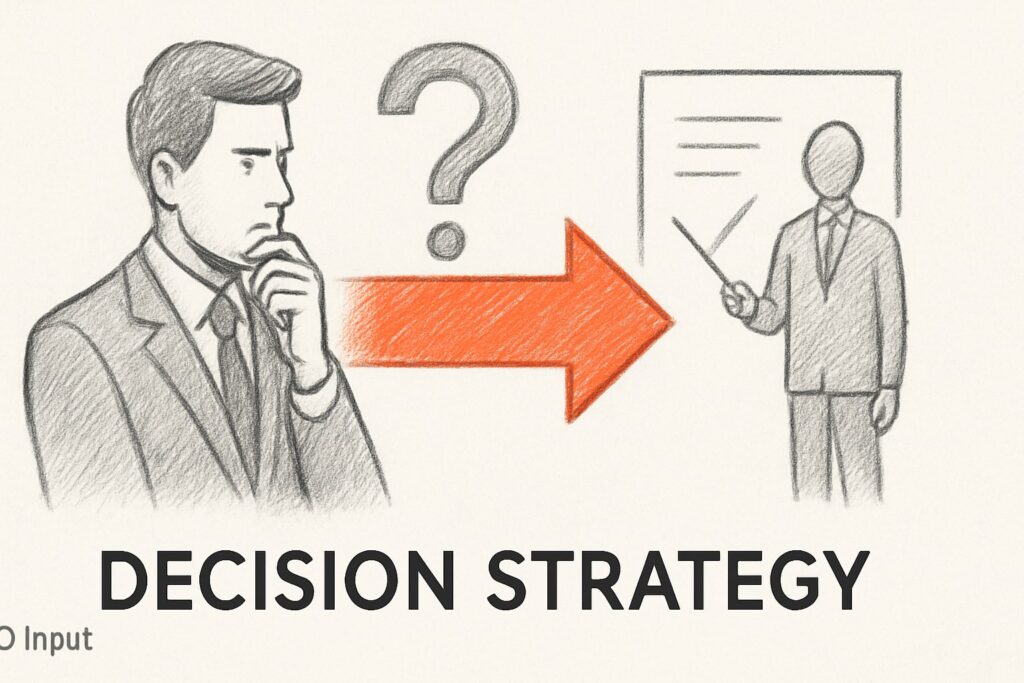
Imagine a company facing a critical crossroads, where one choice could propel it forward while another risks costly setbacks. In today’s fast-paced business world, navigating these situations is more complex than ever, making every decision count. Organizations that excel at decision strategy consistently outperform their competitors, demonstrating greater resilience and adaptability. This guide will equip you with the knowledge and tools to master decision strategy, from understanding core principles and proven frameworks to leveraging technology, human dynamics, and real-world steps. You will also discover emerging trends shaping the future of effective decisions.
To learn more and connect with an expert, visit https://www.ctoinput.com.
Spend a few minutes exploring the rest of the articles on the CTO Input blog at https://blog.ctoinput.com.
Understanding Decision Strategy Fundamentals
Defining Decision Strategy
A decision strategy is a structured approach organizations use to make choices that drive success. Unlike ad-hoc decision-making, which relies on spontaneous reactions, a decision strategy follows defined steps and criteria.
When leaders apply a clear decision strategy, they ensure choices align with company vision and long-term goals. For example, a tech startup using a documented process for evaluating product launches consistently outperforms competitors who rely on gut feelings. In contrast, ineffective strategies often result in missed opportunities or costly missteps.
Core Principles of Effective Decision-Making
Effective decision strategy rests on a balance between data-driven analysis and intuition. While data provides objectivity, intuition can offer valuable context, especially in uncertain situations.
Organizations must weigh risks and opportunities carefully, ensuring every decision supports business objectives. Studies show that companies aligning their decision strategy with core goals achieve higher performance and resilience. This alignment is crucial for navigating change and maintaining a competitive edge.
Types of Decisions in Organizations
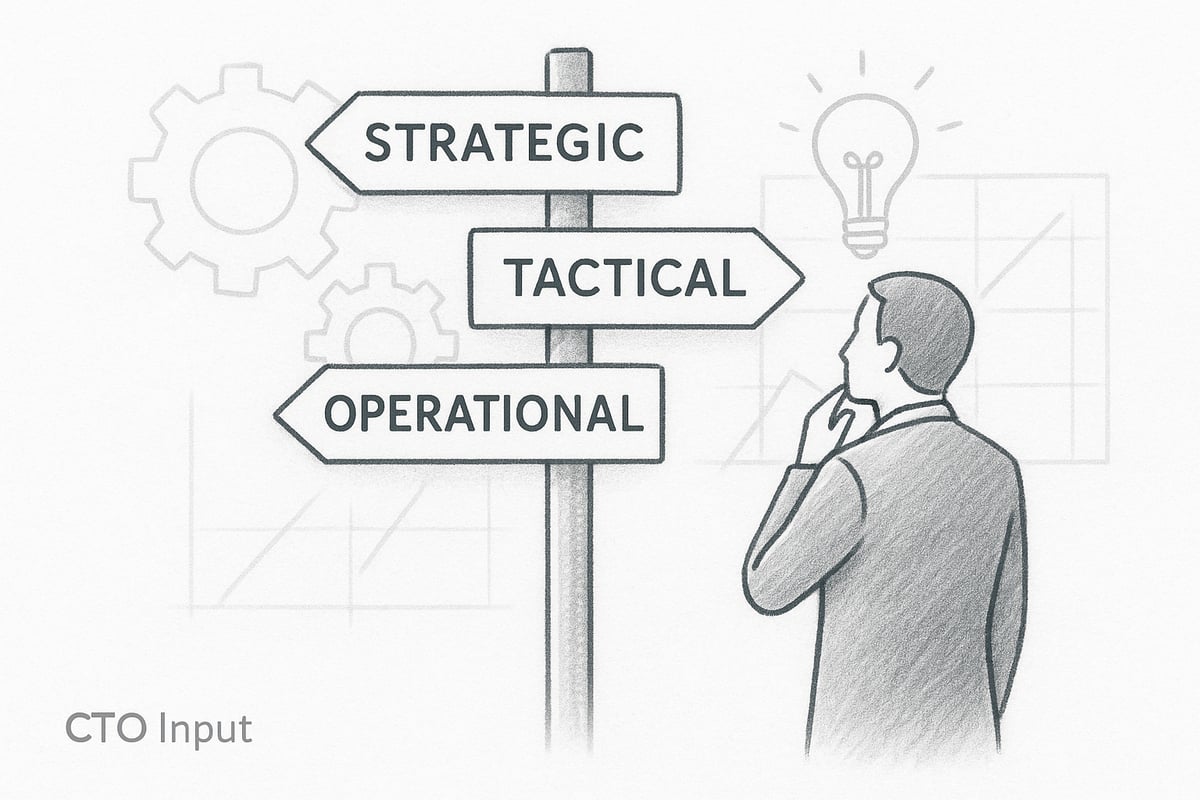
Organizations face a spectrum of decisions: strategic, tactical, and operational. Strategic decisions set long-term direction, such as entering new markets. Tactical decisions optimize ongoing projects, like resource allocation. Operational decisions occur daily, such as scheduling or inventory management.
Both short-term and long-term impacts should be considered when applying a decision strategy. For instance, a healthcare provider must balance immediate patient needs with long-term investments in technology. Each industry requires a tailored approach for effective decision strategy.
Common Pitfalls and Biases
Even the best decision strategy can be undermined by cognitive biases. Overconfidence, confirmation bias, and groupthink frequently lead teams astray. According to a study revealing that 45% of experienced professionals lack structured decision-making habits, these pitfalls contribute to poor outcomes and missed growth opportunities.
Real-world examples, such as failed product launches or market missteps, highlight the cost of not addressing these biases. Building awareness and adopting robust frameworks are essential steps toward a more reliable decision strategy.
To learn more and connect with an expert, visit https://www.ctoinput.com.
Spend a few minutes exploring the rest of the articles on the CTO Input blog at https://blog.ctoinput.com
Proven Frameworks and Models for Decision Strategy
Selecting the right frameworks is essential for building a robust decision strategy. Organizations today face complex choices, so proven models offer the structure and clarity needed to minimize risk and maximize opportunity. Understanding these frameworks empowers teams to adapt, innovate, and deliver consistent results.
Classic Decision-Making Frameworks
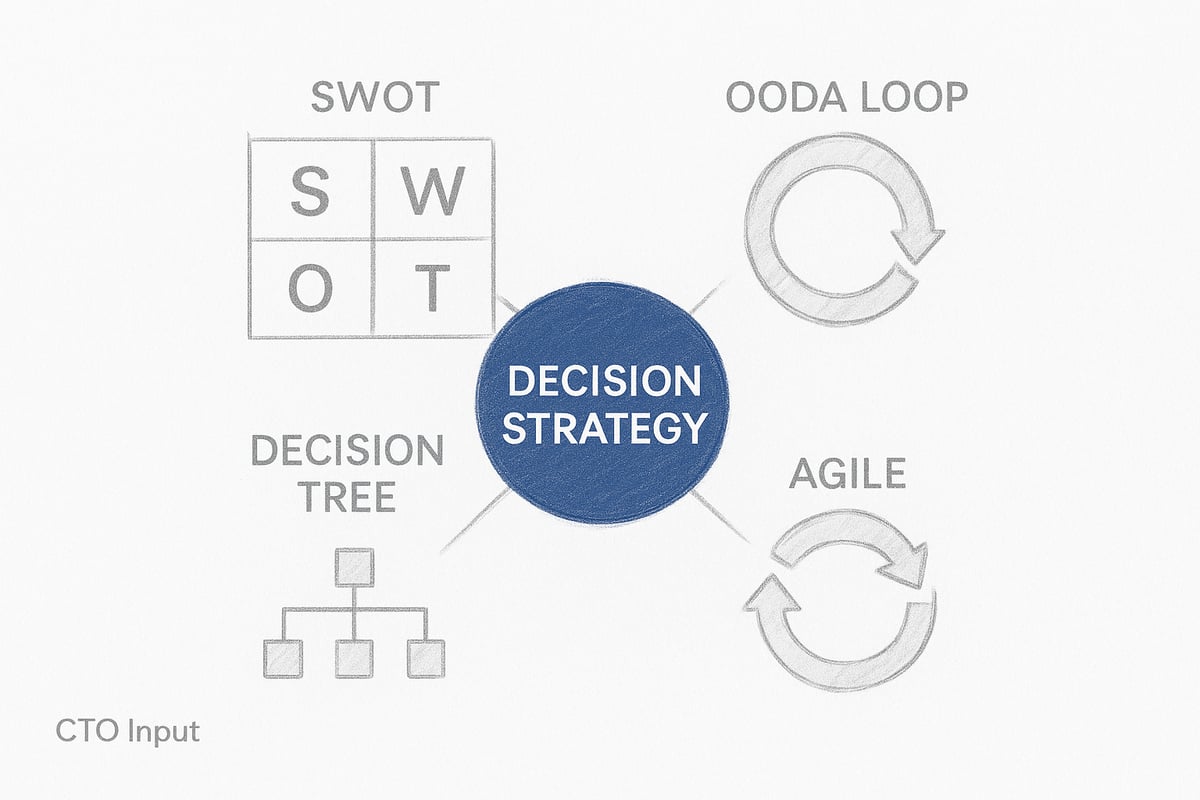
Classic frameworks remain foundational to any decision strategy. SWOT analysis helps teams assess internal strengths and weaknesses alongside external opportunities and threats. The OODA Loop—Observe, Orient, Decide, Act—enables rapid, iterative responses in dynamic situations. Decision Trees visualize choices, outcomes, and probabilities, supporting structured evaluation of complex scenarios.
For example, a manufacturer might use SWOT to plan market expansion, OODA Loop to navigate a crisis, and Decision Trees to evaluate new product investments. Selecting the right framework depends on context, urgency, and the level of ambiguity in the decision at hand.
Modern Approaches: Agile and Data-Driven Models
Modern organizations are increasingly adopting agile and data-driven models as part of their decision strategy. Agile principles emphasize iterative decision cycles, cross-functional collaboration, and rapid adaptation. Real-time data and advanced analytics enable teams to test hypotheses, monitor results, and pivot quickly when needed.
Research demonstrates that companies using agile, data-informed approaches experience faster decision cycles and higher success rates. For a deeper dive, explore how decision intelligence for business growth is transforming organizational performance.
Scenario Planning and Risk Assessment
Scenario planning is a vital tool for embedding flexibility into decision strategy. The process involves identifying critical uncertainties, developing plausible future scenarios, and mapping potential responses. Integrating risk assessment ensures that each scenario is evaluated for impact and likelihood.
Supply chain disruptions provide a clear example. Organizations that routinely engage in scenario planning can anticipate disruptions, assess risks, and implement contingency plans, reducing both costs and downtime. This approach turns uncertainty into a manageable component of decision-making.
Decision Strategy in Uncertain Environments
Uncertainty is a constant in business, making adaptable frameworks essential for a resilient decision strategy. The VUCA model—Volatility, Uncertainty, Complexity, Ambiguity—guides leaders in navigating unpredictable landscapes. Techniques like rapid prototyping, continuous learning, and decentralized decision authority help organizations adapt swiftly.
Lessons from recent global events show that those with flexible, well-practiced frameworks recover faster and gain competitive advantage. Building a culture that embraces uncertainty and experimentation is crucial for long-term success.
To learn more and connect with an expert, visit https://www.ctoinput.com.
Spend a few minutes exploring the rest of the articles on the CTO Input blog at https://blog.ctoinput.com
The Role of Technology in Decision Strategy
Technology is reshaping how organizations approach decision strategy. From foundational support systems to cutting-edge artificial intelligence, digital tools are now central to driving better decisions. Adopting the right technology can increase speed, reduce risk, and strengthen every layer of your decision strategy.
Digital Transformation and Decision Support Systems
Digital transformation empowers companies to make decisions faster and with greater accuracy. Decision support systems, such as advanced analytics platforms and visualization tools, help leaders synthesize complex data. These systems streamline the decision strategy process and reduce manual errors.
For example, when organizations integrate decision support software, productivity often rises and decisions align more closely with business objectives. According to 49% of companies have stagnant decision styles, technology adoption is a critical factor in overcoming stagnant decision-making and enabling growth.
Artificial Intelligence and Predictive Analytics
Artificial intelligence is revolutionizing decision strategy by automating complex choices and uncovering patterns in large datasets. Predictive analytics allows organizations to forecast trends, identify risks, and optimize outcomes with precision.
In industries like finance and healthcare, AI-driven models support rapid, accurate decision-making. Research shows that organizations leveraging AI for decision strategy experience measurable improvements in efficiency and reduced error rates.
Integrating Human Judgment and Machine Intelligence
While automation offers speed and scale, human insight remains essential in decision strategy. Successful organizations blend machine intelligence with expert judgment to address nuanced challenges and ethical considerations.
Case studies reveal that teams combining human expertise with AI tools achieve better results than either alone. Best practices include fostering collaboration and defining clear roles for both technology and people in the decision strategy process.
Ensuring Data Quality and Security
Reliable data is the foundation of any effective decision strategy. Ensuring data quality, accuracy, and security protects organizations from costly errors and compliance risks.
Leaders should prioritize trusted data sources and robust privacy protocols. Failures in this area can lead to misinformed decisions and reputational harm, highlighting the ongoing need for vigilance and continuous improvement in data management.
How Strategic Technology Alignment Drives Better Decisions
Aligning technology with business goals is critical for decision strategy success. Organizations that leverage fractional technology leadership can assess and optimize their decision processes for maximum impact.
Strategic alignment leads to faster decisions, reduced risks, and measurable growth. Building a clear technology roadmap and maintaining ongoing advisory relationships ensures that decision strategy remains agile and effective. Explore CTO Input’s approach to making technology a true superpower in your organization’s decision strategy.
To learn more and connect with an expert, visit https://www.ctoinput.com.
Spend a few minutes exploring the rest of the articles on the CTO Input blog at https://blog.ctoinput.com
Human Factors in Effective Decision Strategy
Human factors play a pivotal role in shaping any decision strategy. While frameworks and technology set the stage, it is people who bring judgment, insight, and adaptability. Building a robust decision strategy requires attention to leadership, cognitive awareness, diversity, and organizational learning.
Leadership and Organizational Culture
Effective leadership is the heartbeat of a successful decision strategy. Leaders who encourage open dialogue and foster psychological safety empower teams to surface new perspectives and challenge assumptions. Cultures that value transparency and learning allow for better risk assessment and faster adaptation.
Leadership styles differ. Transformational leaders inspire innovation, while servant leaders build trust and collaboration. Organizations with strong decision strategy foundations often exhibit a blend of these approaches, creating an environment where decisions align with shared values. For deeper insights into how leadership shapes technology-driven decisions, see this human-centered technology leadership resource.
Teams thrive when leaders model curiosity and resilience. This sets the tone for a culture that supports effective decision strategy at every level.
Cognitive Biases and Emotional Intelligence
Cognitive biases can quietly undermine any decision strategy. Overconfidence, anchoring, and confirmation bias are common traps that affect even experienced leaders. Research shows that organizations lose billions each year due to decisions clouded by bias.
Emotional intelligence helps teams recognize and counter these pitfalls. Leaders who display self-awareness and empathy facilitate more balanced discussions. Bias training and regular reflection sessions allow teams to surface hidden assumptions, leading to more robust decision strategy outcomes.
Some organizations use checklists or peer reviews to catch blind spots. These practical steps embed bias awareness into daily operations.
Diversity and Inclusion in Decision Teams
Diversity is a powerful driver of decision strategy quality. Teams with varied backgrounds, skills, and viewpoints consistently outperform homogenous groups when solving complex problems. Multiple studies link diverse teams to higher innovation rates and better risk management.
Inclusive practices ensure that all voices are heard. This leads to richer debates, more creative solutions, and fewer blind spots. Case studies from leading companies show that investing in diverse decision teams directly improves business outcomes.
Organizations committed to inclusion make decision strategy a shared responsibility, not just a top-down process.
Building Decision-Making Capability Across the Organization
A resilient decision strategy is built on organizational capability. Training programs that teach critical thinking, scenario planning, and collaborative tools help teams make faster, more informed choices.
Successful organizations invest in decision-making workshops, peer learning groups, and mentorship. Tools such as decision flowcharts and digital collaboration platforms streamline processes and increase transparency.
Continuous development ensures that decision strategy remains adaptive, equipping teams to thrive in changing environments.
To learn more and connect with an expert, visit https://www.ctoinput.com.
Spend a few minutes exploring the rest of the articles on the CTO Input blog at https://blog.ctoinput.com
Practical Steps to Build a Robust Decision Strategy
A robust decision strategy is built through deliberate, repeatable actions. By following a systematic approach, organizations can strengthen their decision-making foundation, achieve greater clarity, and drive measurable results. Here is a practical roadmap to help you elevate your organization’s decision strategy.
Step 1: Assess Current Decision-Making Processes
Begin by evaluating your existing decision strategy. Map out critical decision flows, identifying where bottlenecks or redundancies occur. Use assessment frameworks like RACI matrices or decision mapping tools to clarify roles and responsibilities. Regularly reviewing processes uncovers strengths, exposes weaknesses, and sets a baseline for improvement.
For a deeper dive into best practices, explore the steps to effective decision-making in organizations, which outlines proven techniques for process evaluation and improvement.
Step 2: Define Objectives and Success Metrics
A clear decision strategy requires well-defined objectives and measurable success metrics. Align these goals with your broader business strategy to ensure every decision supports organizational priorities. Consider using SMART criteria for metric selection, focusing on outcomes that matter most.
To strengthen alignment, review strategic alignment for growth and learn how leading companies connect decision-making with long-term value creation.
Step 3: Select and Implement Decision Frameworks
Choose frameworks that best fit your context and decision strategy needs. Options like SWOT, decision trees, or scenario planning each offer unique advantages. Involve relevant stakeholders in the selection process to ensure buy-in and shared understanding.
Successful implementation requires clear communication and ongoing support. Address common challenges by providing training, documenting processes, and reinforcing the connection between frameworks and organizational goals.
Step 4: Leverage Technology and Data
Integrate technology to streamline your decision strategy. Decision support tools, dashboards, and analytics platforms enhance data accessibility and enable faster, more informed choices. Prioritize data quality and ensure that information is current, reliable, and secure.
Real-world examples show that organizations embracing digital tools gain agility and reduce risk. Make continuous improvements to your technology stack part of your routine decision strategy review.
Step 5: Foster a Culture of Continuous Improvement
Sustaining a robust decision strategy means embracing feedback and learning from outcomes. Encourage open dialogue, celebrate successful decisions, and analyze failures for growth opportunities. Iterative refinement, supported by regular training and process updates, builds organizational resilience.
Organizations that prioritize continuous improvement outperform peers by adapting quickly and staying ahead of change. Make it a core value to ensure your decision strategy remains effective and future-ready.
To learn more and connect with a member of the CTO Input team, visit https://www.ctoinput.com.
Spend a few minutes exploring the rest of the articles on the CTO Input blog at https://blog.ctoinput.com
Future Trends in Decision Strategy
Organizations face an evolving landscape where decision strategy is shaped by technology, ethics, leadership, and resilience. Staying ahead requires a proactive approach to emerging trends, preparing leaders to make confident choices in an unpredictable world.
Increasing Role of Automation and AI
Automation and artificial intelligence are redefining decision strategy for organizations across industries. Machine learning models and predictive analytics now drive faster, more accurate decisions, especially under tight deadlines.
Emerging technologies are expected to handle routine choices, freeing human leaders to focus on complex, value-driven decisions. As AI advances, the challenge will be integrating these tools effectively without losing sight of organizational goals.
Ethical Considerations and Responsible Decision-Making
As decision strategy increasingly relies on algorithms, ethical considerations become paramount. Organizations must address the risks of algorithmic bias, ensure transparency, and build trust in automated systems.
Responsible decision-making frameworks are gaining traction, requiring leaders to balance innovation with accountability. The emphasis on ethics will continue to shape how data-driven insights are applied in daily operations.
Evolving Leadership Skills and Organizational Agility
The future of decision strategy demands new leadership competencies. Decision leaders must adapt quickly, foster agile teams, and encourage open communication to navigate uncertainty.
Organizations excelling in this area often adopt practices highlighted in resources like Effective decision making in the age of urgency, focusing on speed, collaboration, and continuous learning.
Preparing for Uncertainty and Disruption
Building resilience is a core component of modern decision strategy. Recent global events have shown that robust scenario planning and risk assessment are essential for future-proofing organizations.
Adopting strategies from guides such as Managing risk in emerging technologies can help leaders anticipate disruptions and respond with agility. By embedding flexibility into their processes, organizations position themselves to thrive in a rapidly changing environment.
To learn more and connect with a member of the CTO Input team, visit https://www.ctoinput.com.
Spend a few minutes exploring the rest of the articles on the CTO Input blog at https://blog.ctoinput.com
After exploring the essentials of decision strategy and seeing how the right frameworks, technology, and leadership can transform your organization, it’s clear that success comes from intentional choices—not luck. If you’re ready to move beyond uncertainty and align your technology with your business goals, why not take the next step with expert guidance? At CTO Input, we’ve helped leaders like you turn technology from a roadblock into a growth engine. Let’s talk about your unique challenges and map out a clear, actionable strategy for 2026 and beyond. Schedule A Strategy Call