
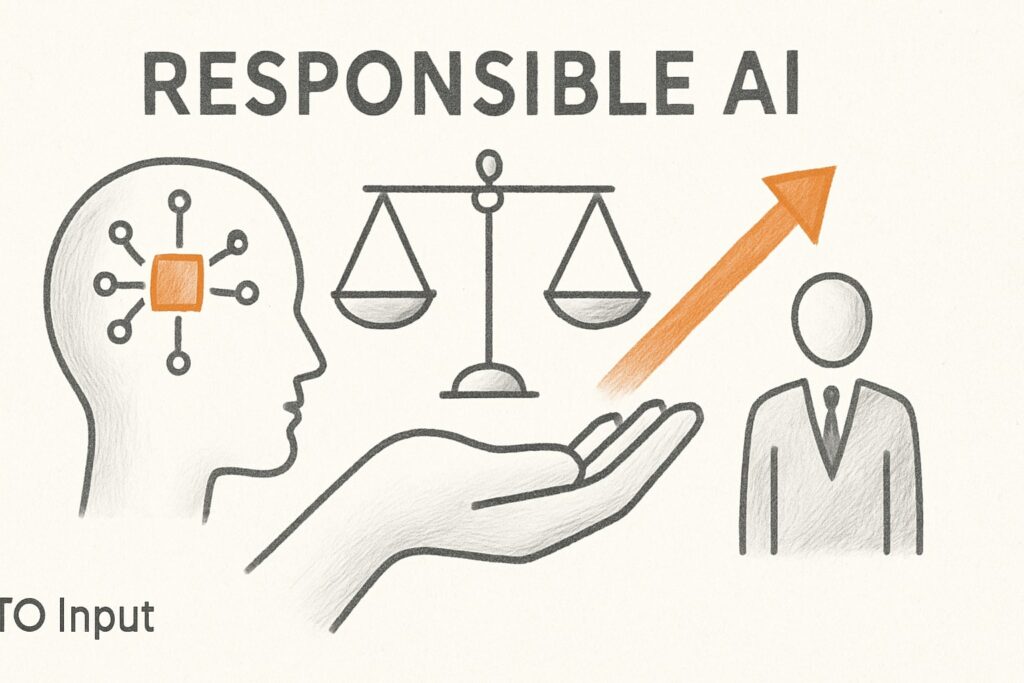
Artificial intelligence is reshaping industries at an unprecedented pace, unlocking new opportunities and efficiencies. As organizations accelerate adoption, concerns around ethical dilemmas, societal impact, and regulatory compliance are mounting. Responsible ai is essential for building trust, supporting compliance, and ensuring innovation benefits everyone.
This 2026 responsible ai guide is designed to offer a comprehensive overview of responsible ai best practices. You will discover clear definitions, guiding principles, implementation strategies, governance frameworks, risk management techniques, real-world case studies, and emerging trends.
Visit https://www.ctoinput.com to learn more and connect with a member of the CTO Input team.
Spend a few minutes exploring the rest of the articles on the CTO Input blog at https://blog.ctoinput.com.
Understanding Responsible AI: Definition and Importance
What is Responsible AI?
Responsible ai refers to the design, development, and deployment of artificial intelligence systems in ways that are ethical, transparent, and aligned with human values. Leading organizations such as the OECD and IEEE define responsible ai as more than just ethical ai, as it also encompasses accountability, governance, and ongoing oversight.
Unlike general ai, which focuses on performance or automation, responsible ai ensures that innovation does not compromise safety, fairness, or privacy. For example, in healthcare, responsible ai enables advanced diagnostics while safeguarding patient data and privacy. For a deeper dive into how organizations are shaping responsible ai practices and standards, refer to MIT Sloan’s Responsible AI Initiative.
Why Responsible AI Matters
The adoption of responsible ai is crucial for building trust among users and stakeholders. When organizations prioritize responsible ai, they enhance their reputation and increase user adoption, as people are more likely to engage with systems they consider trustworthy.
Regulatory pressures are mounting worldwide, with frameworks like GDPR and the AI Act setting new compliance standards. According to Deloitte, 72% of consumers express concern about ai transparency, highlighting the urgent need for responsible ai initiatives. Organizations that proactively address these concerns are better positioned to meet regulatory requirements and avoid costly penalties.
Key Stakeholders and Their Roles
Responsible ai requires collaboration across multiple stakeholders, each playing a unique role throughout the ai lifecycle. Developers are responsible for designing unbiased algorithms, while business leaders must ensure ethical objectives align with organizational goals.
Regulators provide the legal framework that shapes responsible ai practices, and end-users offer feedback that drives continuous improvement. For instance, data scientists often work closely with compliance teams to identify and mitigate risks during model development, ensuring responsible ai principles are upheld at every stage.
Visit https://www.ctoinput.com to learn more and connect with a member of the CTO Input team.
Spend a few minutes exploring the rest of the articles on the CTO Input blog at https://blog.ctoinput.com

Guiding Principles of Responsible AI
Establishing guiding principles is essential for building responsible ai systems that are ethical, trustworthy, and robust. These principles serve as a foundation for organizations seeking to maximize the benefits of artificial intelligence while minimizing risks. Let us explore the core tenets that underpin responsible ai across industries.

Fairness and Non-Discrimination
Responsible ai demands that systems are designed and deployed to treat individuals fairly. This means actively working to prevent bias from entering datasets, algorithms, or outputs. Bias can arise from historical data, model design, or unintentional human inputs.
Organizations use a combination of approaches to detect and mitigate bias, including:
- Regular audits of training data for skewed representation
- Applying fairness metrics during model evaluation
- Implementing bias mitigation techniques such as re-sampling or re-weighting
A notable example is the case of facial recognition systems. Early versions exhibited significant bias against minority groups due to unbalanced training data. By applying responsible ai principles, teams identified these issues and refined their models, leading to more equitable outcomes.
Transparency and Explainability
Transparency is another cornerstone of responsible ai. It ensures that stakeholders understand how decisions are made, which models are used, and what data drives outcomes. Explainability is critical for building trust, especially in high-stakes applications.
Organizations leverage interpretability tools such as LIME and SHAP to help explain model predictions. These tools provide insights into which features influenced a particular decision. According to a recent study, 84% of executives believe that explainability is essential for responsible ai adoption.
Clear communication about how systems work not only supports compliance, but also empowers users to question and challenge outcomes when necessary.
Accountability and Governance
Assigning responsibility for ai outcomes is central to responsible ai. Accountability requires organizations to define roles and processes for ethical oversight. This often includes forming internal ethics boards, conducting regular audits, and setting up escalation paths for concerns.
The financial sector offers a strong example. Many banks have adopted comprehensive governance frameworks to monitor ai systems, ensure compliance, and address ethical dilemmas. For organizations seeking to strengthen their oversight, adopting AI governance best practices can provide a structured approach to managing responsible ai initiatives.
Robust governance helps organizations respond quickly to incidents and reinforces public trust in their ai solutions.
Privacy and Security
Protecting sensitive data is a non-negotiable aspect of responsible ai. Compliance with privacy regulations such as HIPAA and CCPA is required to safeguard user information. Organizations must ensure that data is handled securely throughout the ai lifecycle.
Implementing strong access controls, data encryption, and privacy-preserving technologies is essential for maintaining user trust and meeting legal obligations.
Visit https://www.ctoinput.com to learn more and connect with a member of the CTO Input team.
Spend a few minutes exploring the rest of the articles on the CTO Input blog at https://blog.ctoinput.com
Steps to Implement Responsible AI in Your Organization
Building a culture of responsible ai requires practical action. Organizations must move beyond theory and set clear expectations at every level. The following steps offer a roadmap for embedding responsible ai in daily operations and long-term strategy.

Step 1: Establish Clear Ethical Guidelines
The foundation for responsible ai begins with a clear, documented ethics policy. This policy should align with industry standards and regulatory frameworks. Leading companies, such as Microsoft, have set the benchmark with detailed responsible ai standards.
Key actions include:
- Defining organizational values for AI use
- Aligning with global regulations and internal policies
- Communicating guidelines across all teams
For practical actions and a global perspective, review the World Economic Forum’s Responsible AI Steps, which outlines essential steps for building trust and ethical AI adoption.
A robust policy not only guides technical teams but also demonstrates a commitment to responsible ai for partners and customers.
Step 2: Build Diverse, Cross-Functional Teams
Responsible ai thrives when diverse voices are involved throughout the AI lifecycle. Organizations should gather stakeholders from technical, legal, business, and user backgrounds. This diversity helps reduce bias and uncovers blind spots.
Benefits of diverse teams:
- Broader perspectives on ethical issues
- Enhanced ability to spot and address unintended consequences
- Greater innovation in problem-solving
A McKinsey study found that diverse teams are 35 percent more likely to outperform less diverse peers. By embedding responsible ai into team composition, organizations foster ethical awareness and improve decision-making.
Step 3: Integrate Responsible AI into the Development Lifecycle
Responsible ai must be built into every stage of development, from data collection to model deployment. This means introducing ethics reviews, impact assessments, and transparency initiatives at each step.
Practical steps include:
- Using AI ethics checklists before model release
- Conducting regular impact assessments
- Leveraging transparency tools like model cards
For example, Google’s Model Cards provide clear documentation about model limitations and intended use. Integrating responsible ai into these workflows ensures that ethical considerations are not an afterthought but a core part of product delivery.
Step 4: Monitor, Audit, and Improve Continuously
Embedding responsible ai is an ongoing commitment. Organizations should establish feedback loops, conduct regular audits, and use automated tools to track compliance and performance.
Key practices:
- Continuous monitoring for bias and drift
- User and stakeholder feedback collection
- Regular updates to policies based on new findings
Automated compliance tracking can alert teams to potential issues early. By making responsible ai a living process, organizations remain agile and responsive to emerging challenges and opportunities.
Visit https://www.ctoinput.com to learn more and connect with a member of the CTO Input team.
Spend a few minutes exploring the rest of the articles on the CTO Input blog at https://blog.ctoinput.com.
Governance, Risk Management, and Compliance for Responsible AI
Establishing a strong foundation for governance, risk management, and compliance is essential for organizations aiming to deliver responsible ai. These pillars not only safeguard your business but also help foster trust among stakeholders and the public.

Building Effective AI Governance Structures
Effective governance is the backbone of responsible ai. Organizations should set up dedicated AI oversight committees that include stakeholders from technical, legal, and ethical backgrounds. These committees define clear roles and responsibilities, ensuring accountability throughout the AI lifecycle.
A typical governance structure may look like this:
| Role | Responsibility |
|---|---|
| AI Ethics Board | Policy setting and ethical review |
| Compliance Team | Regulatory alignment and documentation |
| Data Scientists | Model development and bias checks |
| Business Leaders | Strategic oversight and resource allocation |
To learn more about oversight mechanisms essential for responsible ai, see AI oversight and compliance. Collaboration and escalation paths help organizations address issues proactively and maintain transparency.
Managing AI Risks Proactively
Managing risk is a continuous process in responsible ai. Identify and assess risks such as model drift, adversarial attacks, and unintentional bias early. Regular audits and scenario planning are vital for minimizing negative impacts.
Key practices include:
- Ongoing performance monitoring
- Automated risk detection tools
- Incident response strategies
- Engaging affected users for feedback
According to recent studies, 60% of companies report experiencing AI-related incidents every year. Proactive risk management ensures your responsible ai initiatives remain robust and resilient.
Navigating Regulatory and Legal Requirements
Regulatory compliance is central to successful responsible ai adoption. Organizations must keep pace with evolving global laws such as GDPR and the AI Act, as well as sector-specific regulations.
Prepare for audits by documenting data sources, model decisions, and impact assessments. In regulated domains like healthcare, aligning with standards such as FDA guidelines is critical. Staying informed and responsive to legal changes protects your organization and builds public trust in your responsible ai solutions.
Technology Alignment for Responsible AI Success
Aligning your technology strategy with responsible ai principles is a proven way to drive business value. Strategic advisors can help bridge the gap between ethics, compliance, and innovation, ensuring your responsible ai efforts support both regulatory requirements and organizational goals.
Visit https://www.ctoinput.com to learn more and connect with a member of the CTO Input team.
Spend a few minutes exploring the rest of the articles on the CTO Input blog at https://blog.ctoinput.com
Real-World Examples and Case Studies of Responsible AI
Real-world examples showcase how responsible ai moves from theory to practice, illustrating both successful implementations and important lessons learned. Examining these cases helps organizations understand the tangible impact of responsible ai on trust, compliance, and innovation.
Success Stories: Organizations Getting Responsible AI Right
A leading global retailer implemented responsible ai to personalize customer experiences while maintaining strict privacy standards. By leveraging data responsibly, the retailer increased customer trust and minimized regulatory risk. According to AI use cases in retail, responsible ai enabled tailored recommendations without compromising data protection.
Key outcomes included:
- Higher customer satisfaction and loyalty
- Transparent data practices
- Reduced incidents of bias in product suggestions
These results highlight how responsible ai, when embedded into business processes, drives measurable business value and fosters lasting customer confidence.
Lessons Learned from AI Failures
Not all responsible ai initiatives succeed on the first attempt. High-profile failures, such as biased recruitment algorithms and discriminatory lending models, highlight the consequences of neglecting fairness and oversight. For instance, one major technology firm faced backlash when its recruitment tool favored certain demographics, exposing a lack of diverse training data.
Root causes often include:
- Insufficient bias detection during development
- Lack of cross-functional review
- Inadequate user feedback mechanisms
Organizations responded by retraining models, increasing transparency, and establishing stronger ethical guidelines. These experiences reinforce the critical importance of responsible ai throughout the lifecycle.
Industry-Specific Applications and Challenges
Responsible ai presents unique opportunities and obstacles across sectors. In healthcare, organizations strive to balance innovation with patient safety and data privacy. Financial institutions face challenges ensuring fairness in credit scoring, requiring ongoing audits to prevent bias. The public sector increasingly relies on responsible ai for transparent decision-making in social services.
Key challenges include:
- Managing sensitive data responsibly
- Meeting evolving regulatory requirements
- Ensuring explainability for end-users
By prioritizing responsible ai, each industry can address its specific needs, build trust, and deliver ethical, effective solutions.
Visit https://www.ctoinput.com to learn more and connect with a member of the CTO Input team.
Spend a few minutes exploring the rest of the articles on the CTO Input blog at https://blog.ctoinput.com
Future Trends and Evolving Best Practices in Responsible AI
The landscape of responsible ai is rapidly evolving, shaped by technological innovation and rising expectations from both regulators and society. Staying ahead requires organizations to anticipate change and proactively adapt their practices. In this section, we explore the emerging technologies, shifting regulatory frameworks, and actionable steps to prepare your organization for the future of responsible ai.
Emerging Technologies and Their Impact
Cutting-edge technologies are redefining how responsible ai is implemented across industries. Explainable AI tools are making model decisions more transparent, empowering organizations to understand and justify outputs. Federated learning enables collaborative model training without sharing raw data, thus strengthening data privacy and compliance.
Privacy-preserving techniques, such as differential privacy, are gaining traction, allowing organizations to extract value from data while minimizing exposure risks. These advancements support the foundational goals of responsible ai by addressing transparency, accountability, and privacy concerns. For a deeper look at how industry leaders are integrating these innovations, see Google’s 2024 Responsible AI Report, which details ongoing progress and best practices.
Shifting Regulatory and Societal Expectations
The regulatory landscape for responsible ai is in constant motion. Governments worldwide are introducing new laws and standards, reflecting the growing demand for ethical and transparent AI systems. Organizations must stay alert to evolving requirements, such as those predicted in Gartner’s AI Regulations Forecast, which highlights the trend toward stricter oversight.
Societal expectations are also rising as consumers and investors increasingly prioritize ethical AI practices. Transparency, fairness, and accountability are no longer optional but essential for maintaining trust and competitive advantage. Adapting to these expectations is critical for any organization committed to responsible ai.
Preparing Your Organization for the Future of Responsible AI
Building organizational readiness for responsible ai involves more than adopting new tools. It requires fostering a culture of continuous learning and ethical awareness among all stakeholders. Investing in AI literacy programs and upskilling teams ensures your workforce can navigate the complexities of responsible ai.
Collaborating with academic institutions and industry groups can also provide valuable insights and access to evolving best practices. By prioritizing transparency and ethical standards, organizations position themselves to thrive in an increasingly regulated and scrutinized environment.
Visit https://www.ctoinput.com to learn more and connect with a member of the CTO Input team.
Spend a few minutes exploring the rest of the articles on the CTO Input blog at https://blog.ctoinput.com.
As you reflect on the importance of responsible AI—from building trust and meeting regulatory demands to unlocking innovation—you might be wondering where your organization stands today. Responsible AI isn’t just about having the right intentions; it’s about ensuring your technology truly supports your business goals while minimizing risk. If you’re looking for clarity on how your systems measure up or where to start improving, we’re here to help. Take the first step toward aligning your technology with best practices for responsible AI—Get Your Technology Health Check.