
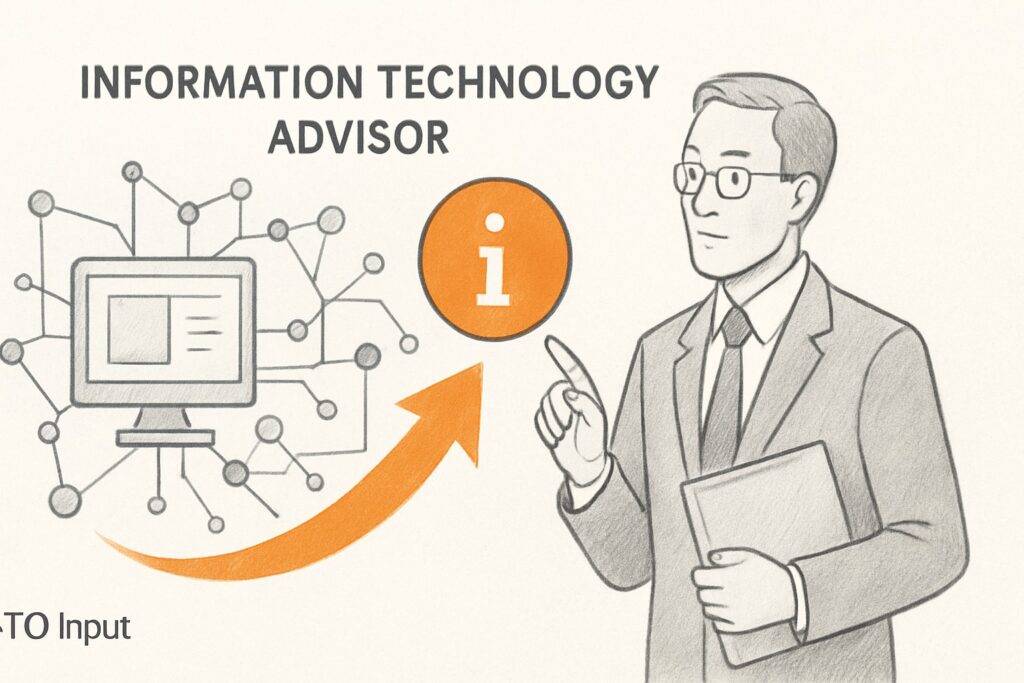
Modern organizations face rapid changes and growing complexity in information technology. As digital systems become the backbone of every industry, leaders encounter new challenges in security, innovation, and efficiency.
This expert guide provides clarity for anyone seeking to understand the role of an information technology advisor. You will discover how these professionals help businesses align IT with strategy, manage risks, and drive transformation.
Explore the evolving responsibilities, essential skills, and strategic impact of IT advisors. Learn how to select the right partner, anticipate future trends, and take actionable steps to unlock technology’s full potential.
To learn more and connect with a member of the CTO Input team, visit https://www.ctoinput.com.
Spend a few minutes exploring more expert articles on the CTO Input blog at https://blog.ctoinput.com.
The Evolving Role of the Information Technology Advisor
The role of the information technology advisor has undergone a remarkable transformation. No longer confined to troubleshooting and maintenance, these experts now influence enterprise-wide strategies and help organizations thrive in a digital-first world.

Shifting from Technical Support to Strategic Leadership
Modern organizations expect much more from an information technology advisor than technical support. Advisors are now critical partners in business transformation, guiding leadership through complex decisions. For example, they often lead cloud migration projects or design digital workplace strategies that shape how teams collaborate and innovate.
By aligning IT initiatives with organizational goals, advisors help companies stay agile and resilient. Their influence extends far beyond the server room, touching every aspect of business operations.
Core Responsibilities and Deliverables
An information technology advisor is responsible for developing technology roadmaps, ensuring these align with business objectives. Duties include:
- Conducting risk assessments and shaping cybersecurity plans
- Overseeing compliance and regulatory requirements
- Managing vendor relationships and procurement
- Advising on data governance and privacy
For practical guidance on this process, review the Technology roadmap development guide. Advisors also monitor emerging risks and recommend proactive solutions, keeping organizations future-ready.
Key Skills and Competencies
The information technology advisor blends deep technical expertise with sharp business acumen. They must understand cloud platforms, AI, and automation tools, and communicate effectively with both technical and non-technical stakeholders.
Success in this role requires:
- Leadership in change management
- Strong analytical and problem-solving skills
- Ability to foster stakeholder engagement
Demand for knowledge in AI and data analytics continues to rise, making continuous learning essential.
Value Proposition for Organizations
Organizations gain measurable value when partnering with an information technology advisor. Benefits include improved efficiency, security, and innovation.
| Benefit | Impact |
|---|---|
| Operational Efficiency | Streamlined systems, reduced redundancies |
| Enhanced Security | Stronger risk management, compliance |
| Innovation & Competitive Edge | Faster adoption of new technologies |
| Cost Optimization | Smarter investments, vendor consolidation |
This partnership helps companies optimize spending and stay ahead of industry trends.
Example Use Cases
Consider real-world scenarios where an information technology advisor makes a difference. Advisors have enabled remote workforces, secured hybrid environments, and supported seamless cloud adoption.
Their expertise ensures organizations respond quickly to market changes, protect sensitive data, and maintain a robust technology backbone.
To learn more and connect with a member of the CTO Input team, visit https://www.ctoinput.com.
Spend a few minutes exploring more expert articles on the CTO Input blog at https://blog.ctoinput.com
Essential Qualities and Certifications of a Modern IT Advisor
Modern organizations expect more from an information technology advisor than ever before. The role demands a unique blend of technical depth, business understanding, and interpersonal finesse. To deliver measurable value, today’s advisors must excel across several critical qualities and credentials.

Technical Proficiency and Continuous Learning
An information technology advisor must demonstrate mastery across a range of current technologies. Expertise in cloud platforms, cybersecurity frameworks, and automation tools is essential. Advisors are expected to stay ahead of rapid advancements, regularly updating their knowledge through online courses, industry events, and hands-on projects.
Continuous learning is not optional. Advisors who hold certifications in platforms like AWS, Azure, or Google Cloud set themselves apart. They deliver real-world solutions that align with evolving business needs and technology landscapes.
Business and Industry Acumen
It is not enough to be technically skilled. A successful advisor understands the unique challenges and regulatory requirements of an organization’s sector. This business acumen enables the translation of technical options into strategic business value.
Advisors who grasp sector-specific pain points can recommend solutions that deliver compliance, efficiency, and competitive advantage. They bridge the gap between IT and business objectives.
Communication and Leadership Skills
The ability to communicate complex technical concepts in clear, plain language is a defining trait of an effective information technology advisor. Advisors must tailor their communication style to suit diverse audiences, from executive leadership to frontline staff.
Leadership is equally important. Advisors often lead cross-functional teams and manage organizational change. They foster collaboration, mitigate resistance, and build consensus for technology initiatives.
Recognized Certifications and Credentials
Professional certifications validate an advisor’s expertise and commitment to the field. Credentials such as CISSP, CISM, CompTIA, PMP, and ITIL are widely recognized. Sector-specific certifications can further elevate credibility.
| Certification | Area of Expertise | Value for Advisors |
|---|---|---|
| CISSP | Cybersecurity | Security leadership |
| CISM | Information Security | Risk management |
| CompTIA | General IT | Foundational knowledge |
| PMP | Project Management | Delivery and execution |
| ITIL | Service Management | Process optimization |
Staying up to date with evolving standards is vital. For a deeper look at the skills and trends shaping IT advisory roles, explore Key IT operations trends to watch in 2026.
Ethical Standards and Professionalism
Integrity is the foundation of trusted advisory. An information technology advisor must adhere to ethical practices, prioritizing data privacy and client interests at all times.
Upholding industry codes of conduct and best practices is non-negotiable. Clients rely on advisors who act with professionalism and demonstrate accountability in every engagement.
To learn more and connect with a member of the CTO Input team, visit https://www.ctoinput.com.
Spend a few minutes exploring more expert articles on the CTO Input blog at https://blog.ctoinput.com
How Information Technology Advisors Drive Business Success
Today, an information technology advisor plays a pivotal role in driving business outcomes. Their expertise is not limited to troubleshooting or routine maintenance. Instead, they orchestrate technology initiatives that directly impact growth, security, and innovation. Let us explore how these advisors deliver measurable value across every facet of business success.

Aligning Technology with Business Strategy
An information technology advisor ensures technology initiatives are fully aligned with your business objectives. They analyze existing workflows and identify opportunities to leverage IT for competitive advantage. By developing a tailored roadmap, they help organizations prioritize investments that support long-term vision and agility.
For organizations seeking guidance, following strategic IT planning best practices is essential to maximize technology’s impact on business growth.
Risk Management and Cybersecurity
Protecting digital assets is a top priority for any business. An information technology advisor assesses vulnerabilities across networks, systems, and processes. They design and implement security frameworks that address evolving threats while ensuring compliance with industry regulations.
This proactive approach minimizes risk exposure and builds stakeholder confidence. Advisors also facilitate regular reviews of policies and incident response plans.
Enabling Digital Transformation
Digital transformation is more than adopting new tools; it is about changing how an organization delivers value. An information technology advisor leads the way by identifying the right technologies for automation, cloud migration, and seamless system integration.
For example, advisors may oversee enterprise resource planning or customer relationship management implementations. Their guidance ensures these projects deliver measurable improvements in efficiency and service quality.
Optimizing Costs and Resources
An information technology advisor helps organizations streamline IT infrastructure and eliminate redundancies. They assess current expenditures and recommend solutions that optimize budgets without sacrificing performance. This includes negotiating with vendors for better pricing and consolidating underutilized resources.
Through strategic planning, organizations can achieve greater value from every technology investment.
Fostering Innovation and Agility
To stay ahead in a rapidly changing marketplace, innovation is key. An information technology advisor nurtures a culture of experimentation and continuous improvement. They encourage teams to explore new ideas and quickly adapt to shifting market demands.
By facilitating collaboration across departments, advisors enable organizations to respond to challenges and seize opportunities with greater agility.
Measuring Impact and ROI
Success in technology initiatives must be measurable. An information technology advisor establishes clear key performance indicators for every project. They leverage analytics to track outcomes, demonstrating how specific actions contribute to business goals.
This results-driven approach ensures that IT investments consistently deliver value and support ongoing growth.
To learn more and connect with a member of the CTO Input team, visit https://www.ctoinput.com.
Spend a few minutes exploring the rest of the articles on the CTO Input blog at https://blog.ctoinput.com.
Step-by-Step Guide to Selecting the Right IT Advisor
Selecting the right information technology advisor is a critical decision for any organization aiming to maximize technology’s impact. Taking a structured approach ensures you find an advisor who aligns with your unique needs and long-term goals.

Define Your Organization’s Needs and Goals
Begin by assessing your organization’s current technology landscape. Identify pain points, bottlenecks, and strategic objectives.
List your most pressing technology challenges and clarify the outcomes you expect from an information technology advisor. This step helps focus your advisor search and sets the foundation for a productive relationship.
- Conduct an internal audit of existing systems
- Gather input from key stakeholders
- Prioritize goals such as security, innovation, or cost savings
Evaluate Advisor Expertise and Track Record
Next, review the background and experience of potential advisors. Look for a proven track record in your industry or with organizations of similar size and complexity.
Request case studies or client testimonials that demonstrate the advisor’s ability to deliver results. An effective information technology advisor should have experience managing projects like digital transformation, cloud migration, or cybersecurity improvements.
- Assess alignment with your business sector
- Examine past project outcomes
- Check for industry awards or recognitions
Assess Communication and Cultural Fit
Clear communication is essential when working with an information technology advisor. During initial conversations, evaluate the advisor’s ability to explain technical concepts in accessible language.
Determine if their working style and values align with your organizational culture. A strong cultural fit ensures smoother collaboration and long-term success.
- Look for responsiveness and clarity in communication
- Discuss preferred tools and meeting cadence
- Involve team members in early discussions
Verify Certifications and References
Certifications validate an advisor’s expertise and commitment to best practices. Confirm that your chosen information technology advisor holds relevant credentials such as CISSP, CISM, or PMP.
Reach out to provided references to gain insight into the advisor’s reliability, professionalism, and impact on previous clients.
- Ask about specific certifications and affiliations
- Request contact information for recent clients
- Inquire about measurable improvements delivered
Establish Clear Engagement Terms
Before finalizing your choice, define the scope of work, deliverables, timelines, and key performance indicators. Decide whether you need a full-time or fractional advisor, as each model offers distinct advantages. For a detailed comparison, see Fractional CTO versus full-time CTO.
Clarify expectations regarding ongoing support and reporting to ensure transparency throughout the engagement.
- Set milestones and review periods
- Agree on reporting formats and frequency
- Outline escalation procedures for challenges
Onboarding and Integration
Smooth onboarding is crucial for a successful partnership with your information technology advisor. Integrate the advisor into your internal teams quickly and provide access to necessary tools and documentation.
Aim for early wins by assigning manageable projects that build trust and momentum. Foster open communication to support a collaborative working relationship.
- Schedule introductory meetings with key staff
- Share relevant policies and processes
- Celebrate initial milestones to reinforce value
By following these steps, your organization will be well positioned to select an information technology advisor who delivers measurable results. To learn more and connect with a member of the CTO Input team, visit https://www.ctoinput.com.
Spend a few minutes exploring more expert articles on the CTO Input blog at https://blog.ctoinput.com
Future Trends and Challenges for IT Advisors
Staying ahead in the field of information technology advisor requires awareness of rapid shifts in technology, security, and business strategy. The landscape is changing, bringing both opportunities and complex challenges. Organizations must look to the future and adapt their advisory approach to maintain resilience and innovation.
Emerging Technologies and Their Impact
The rise of artificial intelligence, machine learning, and automation is reshaping the role of the information technology advisor. These technologies enable real-time decision-making and powerful analytics, demanding that advisors stay ahead of the curve. Advisors must evaluate which innovations can drive business value and how to integrate them safely and effectively.
Understanding these shifts is essential, and resources like Gartner’s top strategic technology trends for 2026 provide expert predictions on which technologies will become most influential. Advisors who master these trends will help organizations unlock new levels of agility and competitiveness.
Evolving Security Threats and Compliance Demands
Cybersecurity threats are growing more sophisticated, and regulatory landscapes are becoming increasingly complex. The information technology advisor must be vigilant in proactive threat detection and rapid response. Advisors are responsible for designing security frameworks that protect sensitive data and keep organizations compliant.
Staying updated on forward-looking strategies is critical. For deeper insights, visit Cybersecurity strategy insights for advisors, which explores emerging tactics and compliance approaches. Advisors who excel in this area build trust and resilience for their clients.
Remote and Hybrid Work Environments
Remote and hybrid work models are now a permanent feature for many organizations. The information technology advisor plays a central role in adapting IT strategies to support these flexible arrangements. Advisors must ensure collaboration tools are secure, scalable, and user-friendly, maintaining productivity without compromising security.
Balancing accessibility with robust protection is a key challenge. Advisors guide organizations as they select, implement, and optimize platforms that connect distributed teams. This shift requires ongoing evaluation of both technology and policy.
Sustainability and Green IT Initiatives
Sustainable technology choices are becoming a top priority. Advisors now guide organizations to adopt energy-efficient infrastructure, support responsible sourcing, and minimize environmental impact. The information technology advisor helps clients align technology investments with sustainability goals.
Green IT initiatives not only reduce costs but also improve reputation and compliance. Advisors assess the lifecycle impacts of technology assets and recommend eco-friendly alternatives that support long-term business success.
Talent Shortages and Skills Gaps
The demand for skilled IT professionals continues to outpace supply. Information technology advisor roles are evolving to address this talent gap, both by upskilling internally and helping clients develop effective talent strategies.
Advisors must stay current through continuous education and certifications. They also support organizations in building resilient, adaptable teams. Addressing skills shortages ensures organizations remain competitive in a rapidly changing market.
Measuring Success in a Rapidly Changing Landscape
Success metrics for technology initiatives are shifting. The information technology advisor must develop and track new KPIs that reflect innovation, risk management, and compliance. Traditional metrics like uptime and cost savings are now joined by measures of agility, user satisfaction, and sustainability.
Advisors use analytics to demonstrate the business value of technology investments. They help organizations adapt their measurement frameworks as new challenges and opportunities emerge.
To learn more and connect with a member of the CTO Input team, visit https://www.ctoinput.com.
Spend a few minutes exploring more expert articles on the CTO Input blog at https://blog.ctoinput.com.
How CTO Input Empowers Organizations Through Strategic IT Advisory
CTO Input transforms technology from a source of frustration into a true strategic asset. As an information technology advisor, CTO Input bridges the gap for organizations lacking dedicated tech leadership by offering fractional CTO, CIO, and CISO services. This empowers nonprofits and funders to access executive-level expertise without the overhead of full-time hires.
The approach centers on aligning technology strategy directly with business outcomes. CTO Input’s team brings deep experience in both technology and sector-specific challenges. Services include:
- Technology backbone health checks
- Roadmap design tailored to organizational goals
- System consolidation for efficiency
- Security upgrades and risk management
By staying ahead of trends like AI and automation, CTO Input ensures organizations are future-ready. This commitment to innovation reflects industry insights, such as those found in Deloitte’s 2026 TMT predictions, emphasizing the need for every information technology advisor to drive digital transformation.
Clients benefit from actionable, plain-language guidance and ongoing partnership. Proven results include reduced reporting time, improved data quality, lower technology spend, and a stronger security posture.
To learn more and connect with a member of the CTO Input team, visit https://www.ctoinput.com.
Spend a few minutes exploring more expert articles on the CTO Input blog at https://blog.ctoinput.com.
As you’ve seen throughout this guide, aligning technology with your organization’s goals unlocks new growth, greater efficiency, and real peace of mind. If you’re ready to turn insight into action—whether you need a fresh technology roadmap, want to stop second guessing your next steps, or simply crave calm, clear leadership—you don’t have to do it alone. Let’s talk through your top challenges and put a plan in place for the next 12 to 24 months. Start moving forward with expert support and confidence:
Build a technology roadmap, Stop guessing and start evolving, Get a 12 to 24 month plan, Calm, clear technology leadership, Talk through your top three challenges.