

Your company usually does not wake up one day and decide it needs senior technology leadership. The signs show up first as friction. Projects slip. Reporting gets harder to trust. Vendors start shaping decisions. The board asks sharper questions, and the answers are not clean enough.
That is the real signal. Not a title problem. A control problem.
If technology now affects growth, risk, customer experience, or board confidence, you need more than capable IT support. You need someone who can connect business priorities, execution, and risk into a clear plan. Here is how to tell when that point has arrived.
Key takeaways
- You probably need stronger technology leadership when ownership is blurry and decisions keep drifting back to the same unresolved issues.
- The biggest warning sign is not more work. It is more activity without more clarity, especially around spend, vendors, and reporting.
- The right answer may be a fractional CTO, interim CTO, or a tighter governance model, not a rushed full-time hire.
When growth outruns your current setup
The first clue is usually pace. Your business grows faster than the way technology is being led.
Maybe founder-led technology decisions worked when the company was smaller. Maybe a strong IT manager kept things moving. That can hold for a while. Then the company gets more complex, and informal judgment stops being enough.
You start seeing the same issues over and over. Priority calls take too long. Teams wait for direction. Tool sprawl creeps in. Technical debt piles up. Shadow IT appears because people are tired of waiting. None of that looks dramatic on its own. Together, it tells you the current setup is too loose for the business you have become.
This is common in growing mid-market firms, where the company has outgrown the old way of making decisions but has not yet installed a real operating rhythm for technology. If that sounds familiar, a better read on technology leadership for mid-market companies can help you name what is happening.

The signals you can feel in the business
You do not need a technical background to spot the pattern. You can usually feel it in the business long before you can explain it.
| What you are seeing | What it often means | What senior leadership changes |
|---|---|---|
| Reports exist, but nobody trusts them | You have data, but not board-ready reporting | Better executive reporting and clearer decision rights |
| Projects keep slipping | The roadmap is not tied to business priorities | A real technology roadmap and stronger execution cadence |
| Vendors are pushing key choices | Vendor management is replacing leadership | Tighter vendor risk management and vendor due diligence |
| Spend keeps rising without better results | You have a tech spending ROI problem | Technology spend optimization and cost-per-outcome reporting |
| Security updates sound vague | Cyber risk is not being translated into business terms | Cyber risk reporting to the board and stronger cybersecurity oversight |
If you recognized two or three rows, do not brush that off. That is not noise. That is your operating model talking to you.
If the work keeps moving but the company still feels stuck, the problem is usually leadership, not effort.
This is also where the conversation shifts from IT to the business. You are no longer asking whether a system is up or down. You are asking whether the company can make good decisions fast enough to keep up with growth, risk, and board pressure.
What senior technology leadership actually changes
Good technology leadership does not add drama. It lowers it.
It gives you a clearer operating picture. It brings order to the mess of tools, vendors, projects, and priorities. It helps you move from scattered opinions to a technology strategy that leaders can defend.
That work often includes a business-aligned technology strategy, a practical IT strategy and roadmap, and a usable 12-month technology roadmap instead of a slide deck nobody opens twice. It also includes the unglamorous work of building a decision rights map, improving technology governance for CEOs, and giving the board enough visibility to govern without guessing.
For many leadership teams, that means the difference between reacting and leading. If you want a more direct view of that shift, this piece on executive technology leadership for CEOs is a helpful companion.
A strong leader in this seat helps you:
- Clarify who owns what.
- Translate risk into business language.
- Reduce noise from vendors and internal side conversations.
- Turn a long list of requests into a usable one-page technology strategy.
And if the board is asking harder questions, that same leader should improve board technology reporting, board-ready reporting, and board cybersecurity reporting so the discussion stays grounded in facts, not anxiety.
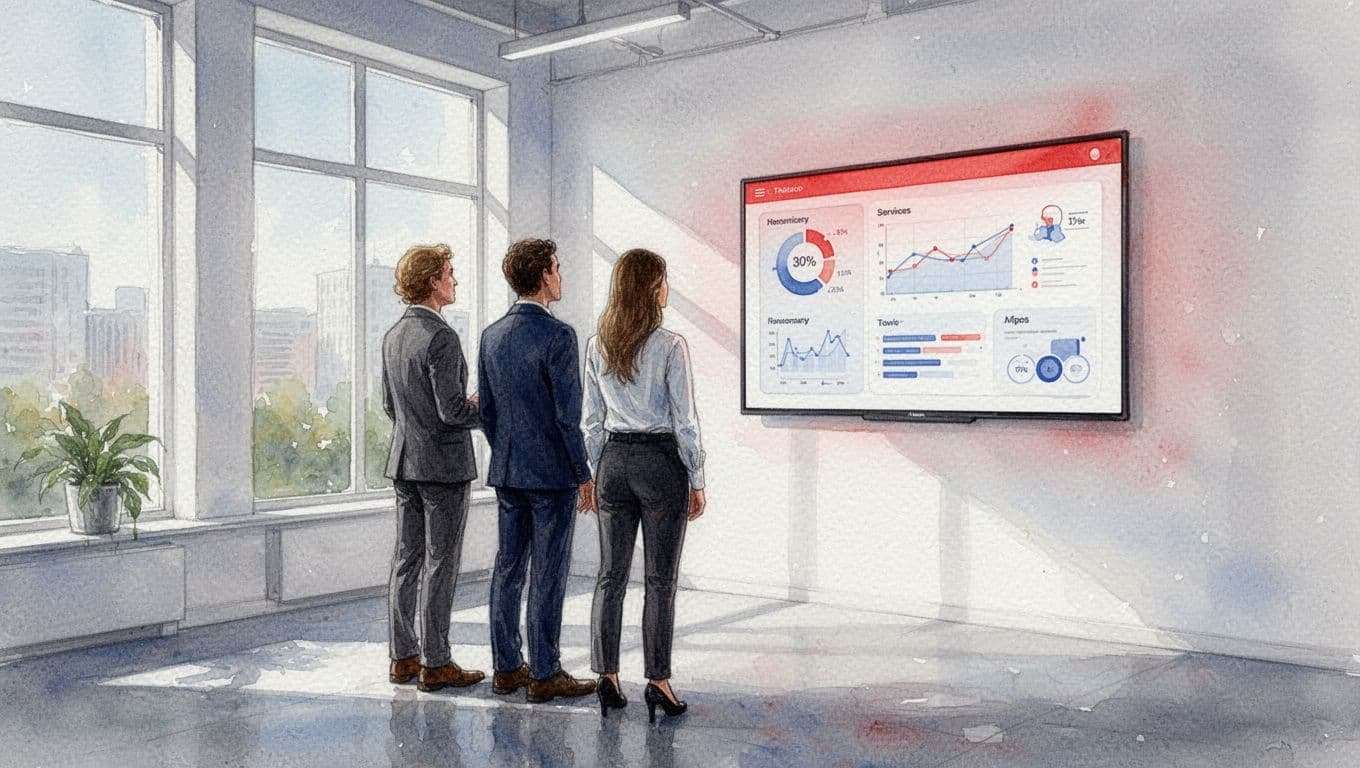
The best version of this work also sharpens technology risk oversight and technology risk management. When the board wants to know your cyber risk appetite, your exposure to third-party risk, or whether the company is ready for a bad week, you should have an answer that is calm and defensible.
The kind of gap you actually have matters
Not every gap needs the same fix.
If your company needs steady executive guidance, but not a full-time hire, a fractional CTO, fractional CTO services, or a part-time CTO may fit. If the situation is urgent, an interim CTO or interim CTO services makes more sense. If you are getting pulled into security, the right answer may be a virtual CISO or interim CISO. If the business is struggling more with data, reporting, or finance systems, a fractional CIO may be the better match.
You may also hear people throw around terms like outsourced CTO or virtual CTO. Those can work as labels, but the label is not the point. The point is whether you need a real technology leader for growing companies, or just more task-level help.
If you are not sure where you land, a short read on technical leadership guidance for non-technical CEOs can help you separate business ownership from technical detail.
The question you want to answer is simple. Is this a leadership gap, a reporting gap, a vendor control issue, or a deeper technology leadership gap? Once you know that, the next step gets easier.
What the right leader helps you do next
When the fit is right, senior technology leadership makes the business easier to run.
It supports technology strategy consulting, but in a practical way. It turns judgment into action. It aligns business technology strategy with growth priorities. It makes strategic technology planning real enough to use on Monday morning. It also helps with the work leadership teams often postpone, like third-party risk management, vendor risk management, vendor management, vendor offboarding, and a credible vendor incident response plan.
That same leader can help you think through the rest of the stack:
- Technology spend optimization, IT cost optimization, and IT cost reduction when the budget feels out of control.
- Application portfolio rationalization when tools are duplicating each other.
- Technology vendor selection and software platform evaluation when you are choosing what to keep.
- Technology due diligence and technical due diligence when acquisition readiness matters.
- Cybersecurity due diligence, acquisition readiness, and post-merger technology integration when a transaction is in play.
- AI governance, AI adoption strategy, AI transformation strategy, and responsible AI when teams are moving faster than policy.
- Business continuity planning, disaster recovery planning, incident response readiness, and ransomware readiness when resilience matters.
- Data governance framework, data strategy, data quality, data privacy, and information governance when reporting is only as good as the data underneath it.
That is the point. Senior technology leadership is not about making tech busier. It is about making the business clearer.
How to decide before the problem gets more expensive
You probably need to act if these three things are true.
First, the business now depends on technology for growth, execution, reporting, or customer trust.
Second, you cannot get a straight answer on ownership, priorities, or risk.
Third, the cost of waiting is starting to show up in missed deadlines, wasted spend, board friction, or avoidable stress.
If that is where you are, do not default to another dashboard, another vendor, or another meeting. Start with clarity. A focused conversation can tell you whether you need a fractional CTO vs full-time CTO decision, an interim CTO because the seat is empty, or a simpler technology operating rhythm that makes the current team more effective.
If you want a clean read on what is slowing growth and where the risk is building, Get an Executive Technology Clarity Check. You will leave with sharper priorities, clearer ownership, and a practical next step.
Conclusion
You do not need senior technology leadership because the org chart looks incomplete. You need it when the business has outgrown informal control.
When reporting is weak, vendors carry too much weight, and technology decisions keep showing up in board meetings, the issue is no longer just technical. It is leadership.
The good news is that this is fixable. Once you see the gap clearly, you can choose the right kind of support and get back to making confident decisions.
FAQ
How do I know if I need a fractional CTO instead of a full-time hire?
If you need executive-level judgment now, but not a permanent seat yet, a fractional CTO is often the better move. It gives you structure, strategy, and accountability without forcing a rushed hire.
When does an interim CTO make more sense?
Use an interim CTO when the current leader has left, the company is in transition, or a major initiative has stalled and needs immediate control. The goal is stabilization first, then the longer-term plan.
Is this really a technology problem, or a leadership problem?
Usually both. The technology may be messy, but the deeper issue is often unclear ownership, weak governance, and poor visibility. That is why the right answer is executive technology leadership, not just more IT activity.