

A $5 million cyber insurance policy does not automatically provide $5 million in usable protection. Sublimits, retentions, waiting periods, exclusions, and recovery time can reduce available funds when your business is under pressure.
If you are asking, “how much cyber insurance coverage do i need,” start with a modeled loss your organization could actually face. For CEOs, COOs, founders, CFOs, and boards, the appropriate limit depends on likely disruption, recovery time, policy structure, and retained risk, not revenue alone.
Cyber insurance is one part of technology risk management. It doesn’t replace business continuity planning, disaster recovery planning, tested backups, or incident response readiness.
Key Takeaways for Sizing Your Cyber Insurance Limit
Your coverage target should come from realistic loss scenarios, not annual revenue or a number a peer company bought.
- Model business interruption around system recovery time, lost transactions, payroll, emergency labor, and customer disruption.
- Distinguish first-party cyber insurance from third-party liability. The first covers your response, restoration, privacy, and interruption costs. The second addresses claims from customers, regulators, vendors, or other affected parties.
- Don’t assume a small business insurance package provides adequate standalone cyber protection. Check its exclusions, limits, and coverage triggers.
- Read the cyber insurance policy wording before comparing premiums. Pay close attention to what activates coverage and which losses are excluded.
- Compare insurance coverage limits, including sublimits, retentions, waiting periods, and the overall policy limit.
- Check the per-occurrence limit against separate events and the aggregate limit against total annual losses.
- Include dependent vendors such as payment processors, payroll systems, cloud providers, logistics platforms, and customer-support tools.
- Compare the uninsured portion of each scenario with your defined cyber risk appetite.
- Treat state requirements and NAIC cybersecurity resources as floor checks, not a mid-market coverage recommendation.
Underwriters assess whether security controls operate consistently across the business. They look for multi-factor authentication, endpoint detection, patching, protected backups, access controls, and tested recovery, not just a tool list or written policy.
How Much Cyber Insurance Coverage Do I Need? Start With Four Loss Scenarios
Bring finance, operations, IT, legal, and your broker into the same conversation. Model common and severe cyber incidents with low, likely, and severe outcomes. Use ranges, because false precision creates false confidence.
Treat ransomware and breach response as first-party costs. First-party cyber insurance may cover your own response, restoration, and business interruption expenses. Customer, contractual, privacy, and regulatory claims create third-party or regulatory exposure.
Expected financial loss helps leadership compare insurance, security investment, contractual protections, and retained risk. The question is not whether a scenario could happen. It is what it would cost if it did.

Model the full cost of a ransomware shutdown
Start with lost revenue, payroll, overtime, restoration work, outside specialists, customer support, legal work, public relations, and negotiation or extortion costs. Ransomware attacks can create costs far beyond the payment demand.
An outage that lasts one week can create business interruption losses for much longer. ERP, manufacturing, healthcare, logistics, and e-commerce systems may need staged restoration. Orders get delayed, customers wait, and staff fall back to manual work.
Research on cyber business-interruption costs also points to a hard truth: restoring operations can cost more than the extortion demand itself. Don’t assume a universal ransom limit works. Insurers may apply a ransomware sublimit or require a supplemental application.
Add breach response, privacy, and regulatory expenses
A data breach can trigger notification, counsel, forensic investigation, credit monitoring services, call centers, public relations, data restoration, and regulatory defense. These expenses can use meaningful policy capacity before a customer lawsuit begins.
A data breach involving personally identifiable information, payment data, health information, or employee records can create different response burdens. Ask how notification, restoration, and regulatory response costs apply, including regulatory fines where insurable under applicable law and policy wording.
Ask whether claims preparation costs sit inside or outside the main policy limit. Policy wording differs. That detail can affect how much protection remains for later liability claims.
Estimate third-party claims and dependent business interruption
Your own systems may be available while a critical vendor outage stops billing, ordering, fulfillment, payroll, payments, hosting, or customer support. Contingent business interruption coverage addresses some losses from that dependent vendor disruption.
Vendor disruption isn’t the same as third-party liability. Also consider customer contractual disputes, privacy claims, and regulatory investigations after exposed data or a missed service commitment. Review vendor contracts and your third-party risk management process beside the policy.
Your third-party risk reporting should show which vendors could create the largest interruption, who owns each relationship, and what contract protections exist.
Set a financial guardrail for retained cyber risk
Compare each modeled loss with cash, equity, available credit, profit, debt covenants, and planned growth investment. Include business interruption when calculating the uninsured amount the company could actually absorb.
Ask what loss level would force layoffs, emergency funding, delayed hiring, or a broken customer commitment. Compare the cyber insurance cost with retained loss and the cost of stronger controls.
For example, leadership may decide it can absorb a single-event data breach loss between $750,000 and $1.5 million. Another company may set an annual cyber loss threshold tied to cash flow. These are illustrative examples, not benchmarks.
The final answer may combine insurance, stronger controls, tested backups, vendor protections, and formal risk acceptance. That is how much protection the business needs in practical terms.
Look Beyond the Policy Limit: Coverage Details Can Change the Answer
A large headline limit can still leave weak protection. Compare current and renewal cyber insurance coverage line by line, including endorsements, exclusions, and definitions.
Read the cyber insurance policy before comparing premium. Cyber liability insurance may differ from technology errors and omissions coverage for technology-service failures or professional-service allegations. Some brokers use “cyber security insurance” interchangeably with cyber insurance, but the insuring agreements control.
A disciplined cyber insurance renewal begins with last year’s application, policy, endorsements, claims history, and material business changes. Cyber insurance cost comparisons are incomplete without comparing terms and retained risk.
Check sublimits, retentions, waiting periods, and coverage triggers
Review the insurance coverage limits, not just the headline amount. A per-occurrence limit may apply to one event, while an aggregate limit caps total annual recovery.
| Term | What to check |
|---|---|
| Sublimit | A smaller limit for a specific coverage, such as ransomware or business interruption |
| Retention | The amount your company pays before coverage responds |
| Waiting period | The time that must pass before certain losses become covered |
| Period of restoration | The time available to recover covered income or operations |
A $5 million policy can include materially smaller sublimits for ransomware attacks, social engineering, funds-transfer fraud, data restoration, business interruption, contingent business interruption, forensic investigation, or regulatory costs.
First-party response costs and third-party liability claims may erode the same aggregate. Confirm whether the policy provides separate limits for each category.
Retentions and waiting periods can materially reduce usable protection. So can a narrow definition of security failure or a short period of restoration. Get written clarification from the broker or insurance company when language is unclear.
Coverage for regulatory fines depends on applicable law and the policy wording. Don’t assume every regulatory cost or penalty is covered.
A $5 million policy can create false comfort if downtime, ransomware, or fraud coverage sits behind a much smaller sublimit.
Test exclusions, consent rules, and vendor panel requirements
Read prior-acts language, unencrypted-data exclusions, contractual liability limitations, outdated-system exclusions, control-maintenance conditions, and war or infrastructure exclusions. Review privacy-related triggers carefully, including how the policy defines a data breach.
Also ask how the policy treats restrictions on ransom payments. These terms can materially affect recovery after a data breach or ransomware event.
Some policies require carrier consent before you hire breach counsel, forensic teams, negotiators, recovery vendors, or public relations support. Your executive incident response checklist should match those conditions before an incident occurs.
Confirm whether panel-vendor requirements apply to breach response, forensic investigation, and claims preparation. Using an unapproved provider may affect recovery.
Confirm notification duties as well. A delayed notice can create problems even when the underlying event would otherwise be covered.
Match coverage to your real operating environment
Your policy should reflect the company you operate today, not last year’s application. Consider business units, remote workers, acquisitions, cloud services, SaaS applications, sensitive data types, and critical vendors.
General small business insurance or a business owner’s policy may provide limited cyber protection or exclude it entirely. Cyber insurance should be evaluated separately when technology, data, or online operations create material risk.
Retroactive coverage, extended recovery periods, and claims preparation treatment vary by product. Business interruption coverage may use a different period of restoration than contingent business interruption coverage.
Marsh has reported an example with a 365-day business-interruption indemnity period plus a 90-day extended recovery period. It is not a standard recommendation, but it shows why recovery duration deserves careful review.
A cyber liability policy responds according to its wording, triggers, exclusions, endorsements, and policy limits. Review those details before deciding whether the protection matches your business.
Your Security Posture Affects the Coverage You Can Buy
Insurers increasingly assess whether security controls work across the business, not whether a policy says they exist. This operating reality affects cyber insurance availability and pricing.
CISA’s ransomware guidance emphasizes phishing-resistant multi-factor authentication, offline backups, and recovery testing. Those priorities help limit ransomware attacks and align with evidence many underwriters now request.
Underwriting findings can affect the cyber insurance coverage your company can purchase, along with its price and terms.
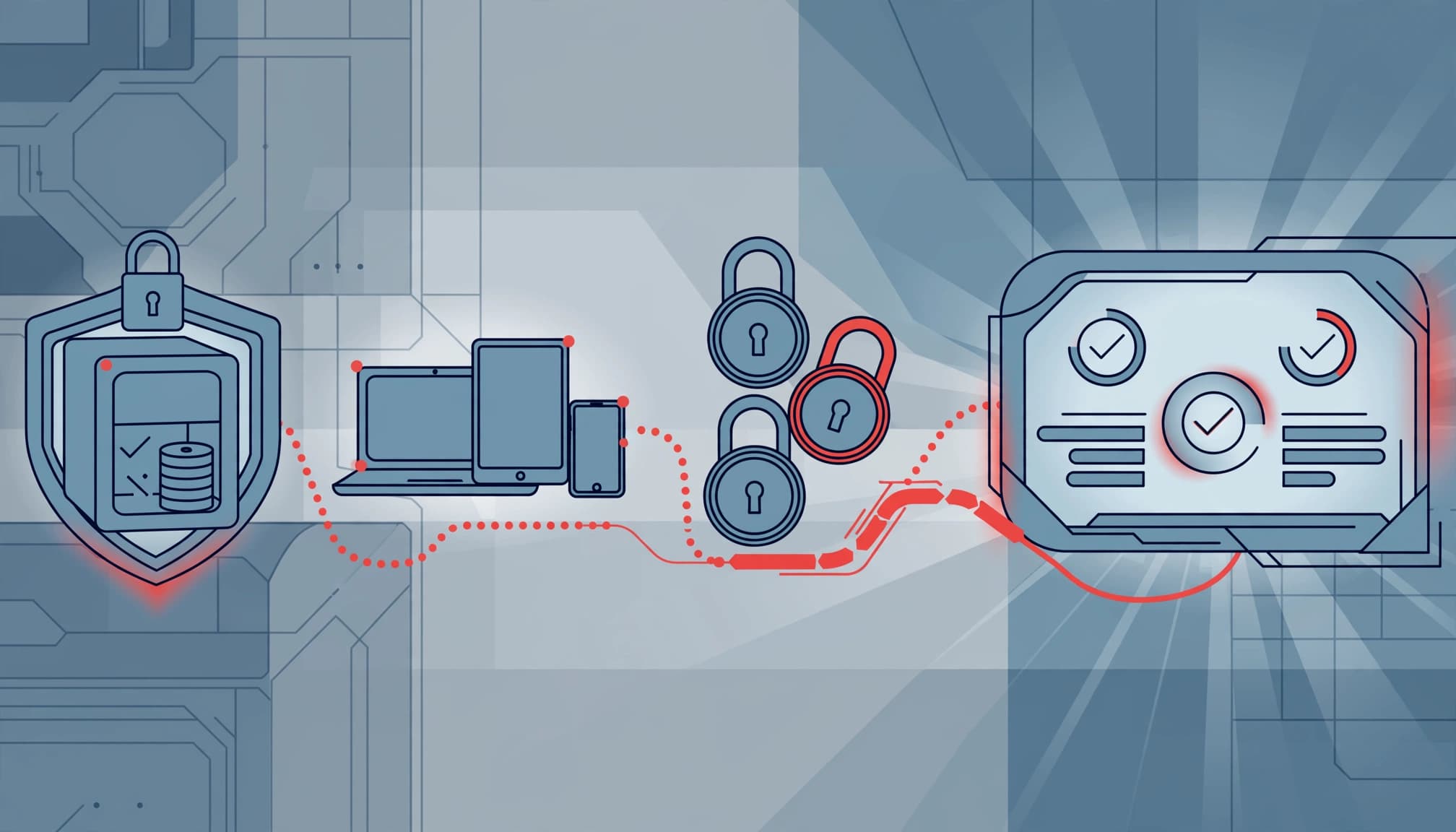
Build evidence for identity, endpoints, patching, and backups
Keep evidence of multi-factor authentication for email, remote access, privileged accounts, cloud administration, and backup access. Maintain EDR coverage reports for endpoints and servers. Keep a systems inventory, patch records, privileged-access reviews, and segmentation documentation. Together, these records show how your team manages cyber incidents and reduces the potential severity of a data breach.
Protected backups matter, but a successful backup job isn’t proof of recovery. CISA recommends organizations test partial and full restores. Record the test scope, date, duration, results, failed tests, and corrective actions.
Be accurate when a control is incomplete
Never represent a control as fully implemented when it’s partial, inconsistent, or only planned. Separate factual application representations from policy conditions or warranties, which may create different obligations after the policy is issued. An unsupported representation can contribute to a coverage dispute or claim denial, depending on the policy and applicable law.
For every material exception, document the affected scope, current protection, compensating controls, named owner, and realistic remediation date. Disclose the exception to the broker or insurance company where appropriate. An honest exception with a plan is more defensible than a claim your team can’t prove, and it supports broader risk management.
Give one executive owner responsibility for the renewal
Start 90 to 120 days before renewal. Assign one accountable leader to coordinate the cyber insurance renewal across IT, security, finance, legal, operations, and major vendors.
A fractional CISO, virtual CISO, interim CISO, fractional CTO, or interim CTO can help when a technology leadership gap leaves no one owning the full risk picture. That adviser coordinates evidence and decisions for the cyber insurance process. They don’t replace legal counsel, the broker, or the carrier.
Use board cybersecurity reporting to show control ownership, material exceptions, recovery readiness, and decisions leadership must make.
Turn Your Estimate Into a Defensible Coverage Decision
Put the decision on one page. Show the four major scenarios, including a data breach, with modeled loss ranges and business impact. Document first-party cyber insurance costs, third-party liability exposure, and the cyber insurance coverage selected.
Include business interruption duration, selected insurance coverage limits, retentions, key sublimits, excluded costs, material control gaps, remediation owners, and formally accepted uninsured risk. Record both headline policy limits and event-specific sublimits.
Review the page at least twice each year. Review cyber insurance again after an acquisition, cloud migration, new data type, major vendor change, or material shift in operations. That is practical technology governance for CEOs and boards.
When a buyer evaluates a target, diligence should cover the policy and applications, claims and breach history, security controls, vendor commitments, privacy and cybersecurity practices, technology and IT infrastructure, intellectual property, open-source software, AI use, and regulatory exposure.
Representations, warranties, covenants, and closing conditions provide different protections. Require disclosure schedules for known technology, privacy, cybersecurity, IP, open-source, AI, and regulatory issues. Negotiate materiality qualifiers rather than assuming they apply.
Indemnification, survival periods, escrow, and representation-and-warranty insurance (RWI) allocate transaction risk differently. They don’t automatically replace cyber insurance or change the policy’s terms. Transaction counsel should tailor the analysis to the deal and jurisdiction.
Use a coverage gap test before you bind the policy
Ask whether the policy covers the likely outage duration and business interruption loss. Compare the per-occurrence limit with the most probable event and the aggregate limit with multiple events.
Check whether sublimits cover the likely loss, dependent vendors are included, and the company can fund the retention and excluded costs. Document how policy limits differ from the protection the business actually needs.
Also ask whether response vendors are approved and policy conditions match actual controls. Compare the desired limit with the affordable limit and the cyber insurance cost. Document the risk-accepted limit and the exposure leadership formally accepts.
If technology decisions feel scattered, risky, or too dependent on the wrong people, Get an Executive Technology Clarity Check. Clearer ownership and a business-aligned technology strategy make the insurance decision easier to defend.
Make cyber risk reporting useful to the board
Report a small set of business measures: modeled loss from top scenarios, critical-system downtime, recovery test results, vendor exposure, material control exceptions, and uninsured risk. This connects risk management to business decisions.
Board-ready reporting should focus on thresholds, ownership, tradeoffs, and decisions. Tool alerts and technical activity belong below that level. Use these board technology reports to build a broader reporting rhythm leaders can trust.
Frequently Asked Questions
Is cyber insurance coverage based on annual revenue?
No. Annual revenue can provide context, but the appropriate limit should come from modeled losses such as ransomware, business interruption, breach response, vendor disruption, and third-party claims.
Is a $5 million cyber insurance policy enough?
Not necessarily. Sublimits, retentions, waiting periods, exclusions, and shared aggregates can reduce the protection available for a specific event or multiple annual losses.
What should a cyber insurance policy cover?
Review first-party coverage for incident response, restoration, privacy expenses, business interruption, and dependent business interruption. Also confirm third-party liability, regulatory response, ransomware, funds-transfer fraud, and claims preparation coverage where relevant.
How does security posture affect cyber insurance?
Insurers may assess multi-factor authentication, endpoint detection, patching, privileged access, protected backups, and tested recovery when setting terms and pricing. Incomplete or inconsistent controls can reduce available coverage or create conditions that affect a claim.
When should a company review its cyber insurance limit?
Review it at least twice each year and before renewal, especially after an acquisition, cloud migration, major vendor change, new data type, or material shift in operations. Recalculate modeled losses when business interruption exposure, recovery time, or retained risk changes.
The Coverage Limit Should Match the Business Risk
How much cyber insurance is enough depends on the realistic loss your business wants to transfer after retaining deductibles, waiting periods, exclusions, sublimits, and uncovered recovery costs. Model scenarios such as a data breach, ransomware, business interruption, vendor dependency, and third-party claims.
No revenue-based rule can replace scenario modeling. Headline policy limits must be adjusted for sublimits, retentions, waiting periods, exclusions, and uninsured costs. Stronger decisions come from accurate control evidence, tested recovery, clear ownership, and a defined cyber risk appetite.
Your broker, carrier, and legal counsel should advise on policy-specific terms. Cyber insurance can transfer some risk, but leadership still needs to decide what level of uninsured risk the business can accept from cyber incidents.