

You may have policies, risk assessments, training records, and signed forms. Protected health information is the information your organization must protect. The harder question is whether those safeguards work on an ordinary Tuesday.
HIPAA compliance for mid sized companies is not a filing exercise. It is an operating healthcare compliance issue, supported by a current risk assessment and a working compliance program. The goal is to identify risks, reduce them, manage responsibilities, review activity, and respond when something goes wrong.
Small business hipaa compliance follows the same risk-based principles as mid-market programs. However, staffing, controls, and documentation may differ. For CEOs, COOs, CFOs, compliance leaders, and boards, the practical test is simple: can you see the gap between documented policy and daily practice, then assign someone to close it?
Key Takeaways for HIPAA Compliance in the Mid-Market
- For healthcare compliance, HIPAA compliance depends on evidence that safeguards operate, not policies alone.
- Keep a current risk analysis and connect every material finding to an active risk-management plan.
- Verify key safeguards through records, tests, and documented follow-up.
- A business associate agreement is only one part of vendor oversight. Hold business associates accountable for how they handle health data.
- Small business HIPAA compliance should scale to risk, not reduce the work to a checklist.
- Give leadership a short view of open risk, overdue remediation, accepted exceptions, and decisions needed to prevent HIPAA violations.
As of September 2026, the current HIPAA Security Rule governs electronic protected health information. The HIPAA Privacy Rule governs permitted uses and disclosures of protected health information by covered entities. The Office for Civil Rights administers the breach notification rule, but data breach response duties depend on the facts and applicable law.
The Office for Civil Rights proposed Security Rule changes on January 6, 2025. The pending proposed rule isn’t current law, and finalization timing has moved into 2027 planning. Don’t treat proposed requirements as active mandates.
HIPAA Compliance for Mid Sized Companies Starts With Evidence, Not Templates
You’re more than paperwork compliant when your HIPAA program matches your real systems, people, vendors, and workflows.
Compared with small business HIPAA compliance, mid-sized companies often have greater scope and resources. Accountability still depends on evidence.
That means a policy on access controls is supported by access reviews. An incident plan is supported by tabletop exercises. A vendor file is supported by current due diligence and a clear escalation path.
The HIPAA Security Rule requires an accurate and thorough risk assessment of potential threats to the confidentiality, integrity, and availability of electronic protected health information (ePHI) under 45 CFR 164.308. That analysis should identify where ePHI lives, the threats it faces, the weaknesses that expose it, and the safeguards already in place.
A completed assessment in a folder doesn’t show that risk has been reduced. It only shows that someone completed an assessment.
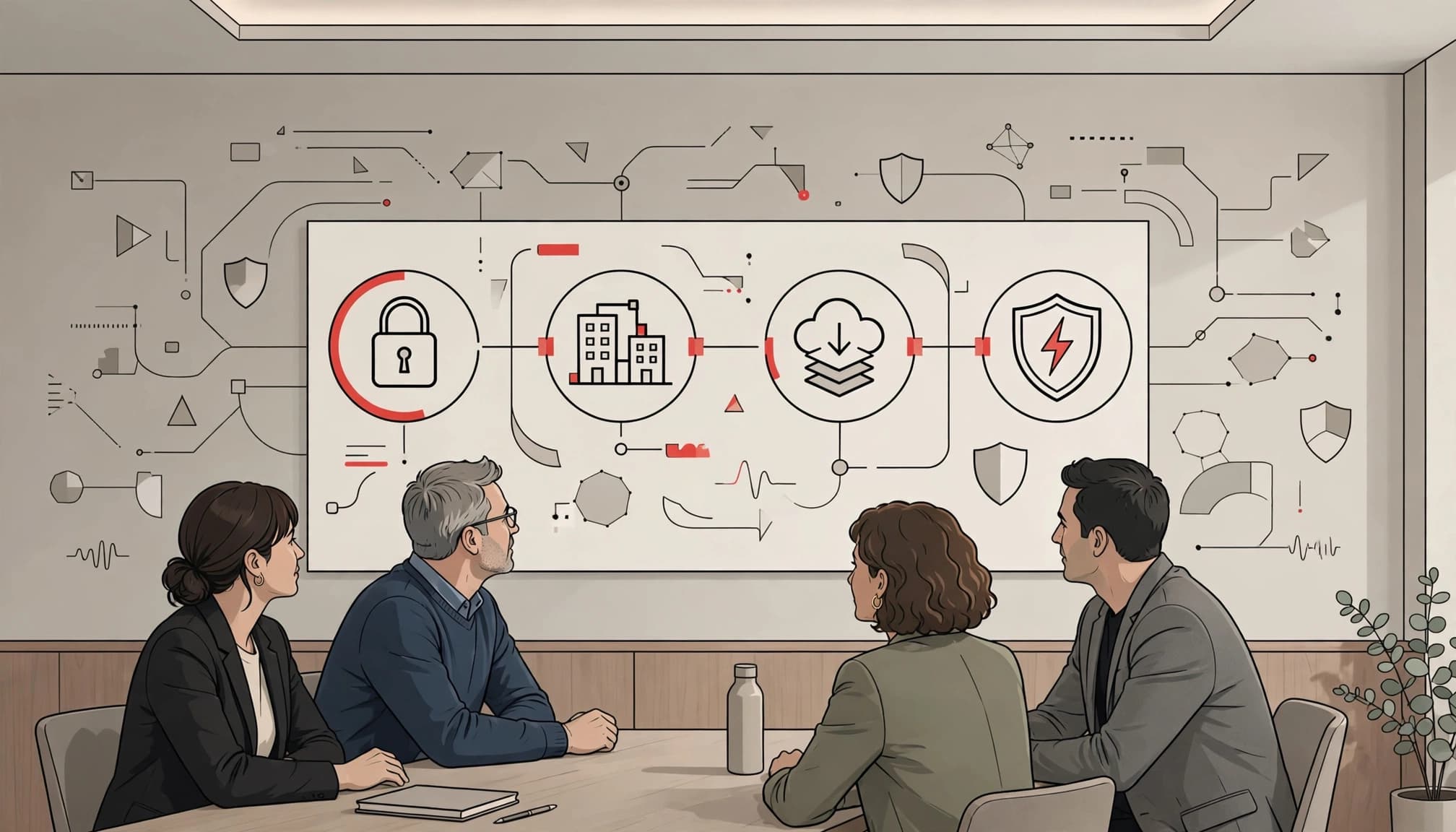
Use a Living Risk Analysis to Find What Your Paperwork Misses
Start with the systems people actually use. That includes EHR platforms, cloud storage, email, endpoints, remote access, backups, mobile devices, shared accounts, integrations, and paper-to-digital workflows.
Then compare that list with what your documentation says is in scope. Shadow IT often appears in the gap, creating cybersecurity concerns. So do old applications, unmanaged file-sharing tools, unapproved AI tools, and vendor connections nobody has revisited.
Review the analysis when you add a major application, acquire a business, change staffing, introduce an AI tool, or expand a vendor relationship. Your systems inventory should move when the business moves.
A broad checklist isn’t enough. Use a second risk assessment to rank each issue by likelihood, business impact, affected ePHI, accountable owner, target date, and remaining risk. This is where a practical technology risk assessment gives executives clearer visibility.
Turn Findings Into a Risk Management Plan With Owners and Deadlines
Compliance becomes operational when findings turn into decisions and work.
Security management should connect those findings to a documented compliance program. Your risk register should record the weakness, the affected information or system, the planned safeguard, the named owner, the target date, current status, and any accepted residual risk. “IT” isn’t an owner. A person with authority to remove blockers is.
The work may include closing stale accounts, requiring multi-factor authentication for critical systems, improving backup coverage, applying encryption to sensitive data, or retiring unsupported software.
Reasonable and appropriate safeguards depend on your size, systems, risks, and resources. But a decision to defer a material safeguard should be documented, time-bound, and approved by the right leader. Unexplained inaction becomes hard to defend when an incident exposes it.
The Controls That Show Whether Your HIPAA Program Works in Practice
The strongest proof of HIPAA compliance for the mid-market is observable behavior. You should be able to verify how protected health information is accessed, how activity is reviewed, how people respond under pressure, and whether recovery plans work.
The HIPAA Security Rule requires administrative safeguards, physical safeguards, and technical safeguards to work together. Administrative safeguards cover policies, workforce training, risk ownership, and contingency procedures. Physical safeguards protect facilities, devices, and workstations. Technical safeguards address authentication, access, audit, and transmission protections.
Leaders don’t need to become security engineers. They do need clear evidence that important controls are working.
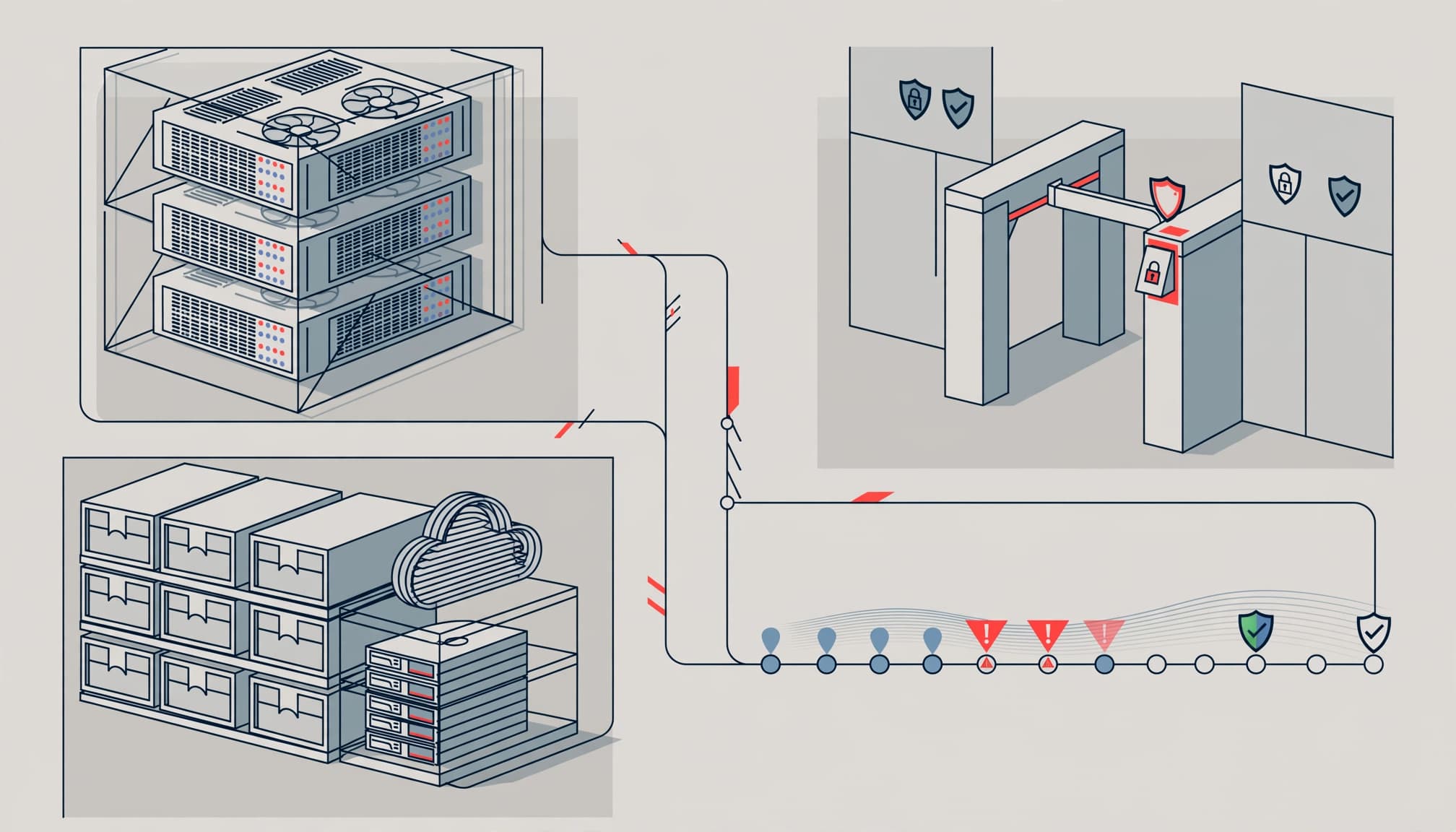
Verify Access Controls Instead of Trusting Access Policies
You should be able to show that users receive only the access they need. Privileged access should be limited. Former employees, contractors, and vendors should lose access quickly. Critical systems should use strong authentication.
Look for unique user IDs, least-privilege roles, multi-factor authentication, controlled remote access, reviewed service accounts, and a documented emergency-access process. Use encryption to protect sensitive data at rest and in transit, but don’t treat encryption alone as proof of compliance.
Useful evidence includes access review records, offboarding tickets, configuration reports, exception approvals, and proof that access was removed after role changes.
Weak access controls create business risk. They can enable insider misuse, unauthorized disclosure, ransomware spread, and long recovery periods. A policy that says access is reviewed monthly isn’t credible if nobody can produce the review.
Make Audit Controls Useful for Detection and Accountability
Audit controls under 45 CFR 164.312(b) are meant to help you record and examine activity in systems containing or using ePHI.
Ask a plain question: if something looks wrong, can you determine who accessed the information, when they accessed it, where they connected from, and what happened next?
Collecting logs without review creates the appearance of control without much protection. Define which systems require logging, how long important records are retained, who reviews alerts, what triggers escalation, and how investigations are documented.
You don’t need a dashboard full of technical noise. You need proof that unusual activity is reviewed, escalated, and assigned to someone who can act.
Test Incident Response, Backups, and Recovery Before a Crisis
An incident response policy isn’t the same as incident response readiness.
In the first hour of a serious event, your team should know who activates the response, who contains affected accounts or devices, who preserves evidence, and who contacts legal counsel and the cyber insurance carrier when required. Decisions and timing should be documented as the facts develop.
Run tabletop exercises for phishing, ransomware, a lost device, and a vendor incident. Test whether backups can be restored and whether business continuity planning and disaster recovery planning work under real constraints. Include cybersecurity dependencies that could affect recovery.
A backup you have never restored is still an assumption.
Breach notification rule duties depend on the facts, applicable law, and advice from counsel after a data breach. Your job as a leader is to make sure the organization can investigate quickly enough to make sound decisions.
Hold Business Associates Accountable for HIPAA Compliance Beyond the Signed BAA
A signed business associate agreement is necessary in many relationships. It is not proof that a vendor protects protected health information.
Business associates may include cloud hosts, managed IT providers, billing companies, transcription services, backup providers, analytics platforms, and support vendors. Each relationship brings a different level of access, dependence, and exposure.
Under 45 CFR 164.308(b)(1), covered entities need appropriate arrangements with business associates. That makes vendor security reviews part of HIPAA compliance, not a task that ends with contract signature.
Review the Real Data and Access Model
For each critical vendor, confirm what data it handles, where it is stored, who can access it, which subcontractors or subprocessors are involved, and what happens when the relationship ends.
Also confirm data ownership, license rights, AI or analytics use, operational dependency, and exit risk. Review contract terms for permitted uses and disclosures under the HIPAA Privacy Rule.
Contracts should address subcontractor obligations, incident notice timing, audit rights, business continuity, data return or destruction, and secure offboarding. Validate the vendor’s cybersecurity claims with evidence such as encryption, access controls, and a SOC 2 Type II report when available.
A report can inform the review, but it doesn’t replace your judgment about the vendor’s role in your operations. A vendor’s controls should match the exposure and importance of its service.
Classify business associates by risk. A public website analytics tool doesn’t need the same scrutiny as a provider supporting cloud storage for patient records or hosting your core billing platform.
Keep Oversight Going After Onboarding
Critical vendors need a review rhythm. Reassess them when their role expands, a data breach occurs, a renewal approaches, or a major business change alters the dependency.
Assign a business owner for every critical relationship. That person should understand the service outcome, data exposure, and cost of failure. Vendor offboarding also needs a plan for access removal, data disposition, and transition support.
Smaller organizations may rely more heavily on vendors, but small business hipaa compliance still requires documented oversight.
A clear third-party risk reporting process helps leadership see which vendors create material exposure before the issue becomes a board surprise.
Give Leaders and Boards a Clear View of Cyber Risk
HIPAA compliance and healthcare compliance are leadership and operating issues. Compliance, IT, security, finance, legal, and operations may each own part of the work. Someone still needs to own the full picture.
Technology governance for boards should connect the top risks to ePHI with remediation, spend, vendor exposure, and business impact. A compliance program should connect owners, budgets, exceptions, and remediation. A board-ready risk summary should show trends, thresholds, named owners, overdue actions, accepted risk, and decisions required.
Report Decisions, Not Technical Activity
Board cybersecurity reporting should not be a stack of control percentages. It should answer whether management knows where the business is exposed and whether the right work is funded.
Useful reports show open high-priority findings, backup and encryption results, access controls, and protected health information risk exposure. They should also track vendor dependencies, business associates, incident response, data breach history, and the organization’s cyber risk appetite.
For a stronger reporting model, use board-ready technology reporting that translates risk, ownership, delivery status, and spending into business terms.
Before a transaction begins, leadership should assemble a diligence file covering systems and data inventories, protected health information flows, HIPAA and privacy policies, risk findings, business associate agreements, and vendor and subprocessor terms. It should also include incident and data breach history, OCR correspondence, cybersecurity testing, access-controls evidence, encryption and backup results, cloud and IT infrastructure dependencies, data privacy and regulatory obligations, intellectual-property ownership, open-source software inventories and license compliance, plus AI tools, training-data rights, model-use restrictions, and vendor terms.
In the purchase agreement, representations describe stated historical or present facts. Warranties allocate contractual risk when those statements are inaccurate. Covenants require future conduct, such as remediation and incident reporting. Closing conditions are prerequisites that must be satisfied before closing. Buyers should use disclosure schedules for known exceptions and negotiate indemnification, caps, baskets, survival periods, and specific treatment of known HIPAA or cybersecurity issues. They should also evaluate whether escrow or RWI is available, including applicable exclusions and retentions. The right allocation depends on the transaction, facts, and jurisdiction.
Use Executive Technology Leadership When Ownership Is Unclear
Growing organizations often have capable internal IT teams, a compliance officer, an MSP, and security vendors. They may still have a technology leadership gap.
A fractional CTO, interim CTO, virtual CTO, or part-time CTO can connect HIPAA risk, vendor decisions, budgets, systems, and business priorities. If security is the immediate pressure point, fractional CISO, virtual CISO, or interim CISO support may be the better fit.
This is not a reason to buy more tools. It is a decision-rights issue. You need business-aligned technology strategy and an owner who can turn evidence into priorities.
If technology decisions feel scattered or too dependent on the wrong people, Get an Executive Technology Clarity Check.
Frequently Asked Questions
What does HIPAA compliance require from a mid-sized company?
HIPAA compliance requires a risk-based program that protects ePHI through administrative, physical, and technical safeguards. Mid-sized companies should be able to show current risk analysis, active remediation, working controls, accountable vendors, and executive oversight.
Is a signed business associate agreement enough for HIPAA compliance?
No. A business associate agreement is an important contract, but it does not prove that a vendor protects ePHI in practice. Review the vendor’s access, safeguards, subcontractors, incident response, continuity plans, and offboarding process based on the risk of the relationship.
How often should a HIPAA risk assessment be updated?
A risk assessment should be reviewed when systems, staffing, vendors, acquisitions, workflows, or regulations materially change. It should also connect identified weaknesses to named owners, target dates, remediation status, and any accepted residual risk.
What evidence shows that a HIPAA program works?
Useful evidence includes access reviews, offboarding records, audit-log reviews, configuration reports, training records, tabletop exercises, backup restoration tests, vendor due diligence, and documented remediation. The evidence should show that safeguards operate in daily practice, not merely that policies exist.
What should leaders report about HIPAA risk?
Leadership and boards should see high-priority findings, overdue remediation, accepted exceptions, vendor exposure, incident readiness, and decisions that require funding or escalation. Reporting should translate technical activity into business impact, ownership, and risk to ePHI.
Keep HIPAA Connected to Daily Practice
Your HIPAA compliance program should show a current risk analysis, active remediation, working access and audit controls, accountable vendors, tested incident response plans, and clear executive oversight.
There is no permanent finish line. Systems change. Threats change. Vendors change. Regulations change. Weak evidence can increase legal, operational, and transaction risk after a data breach or suspected HIPAA violations.
Healthcare compliance depends on a compliance program that operates as a living system, not a static binder. The same evidence-based model supports small business HIPAA compliance, scaled to the organization’s size without eliminating accountability.
When HIPAA compliance connects to technology strategy, ownership, and risk decisions, it becomes part of how you protect patients and run the organization. Assign owners, document accepted risk, test critical controls, and revisit the program after material system, vendor, acquisition, or regulatory changes.