
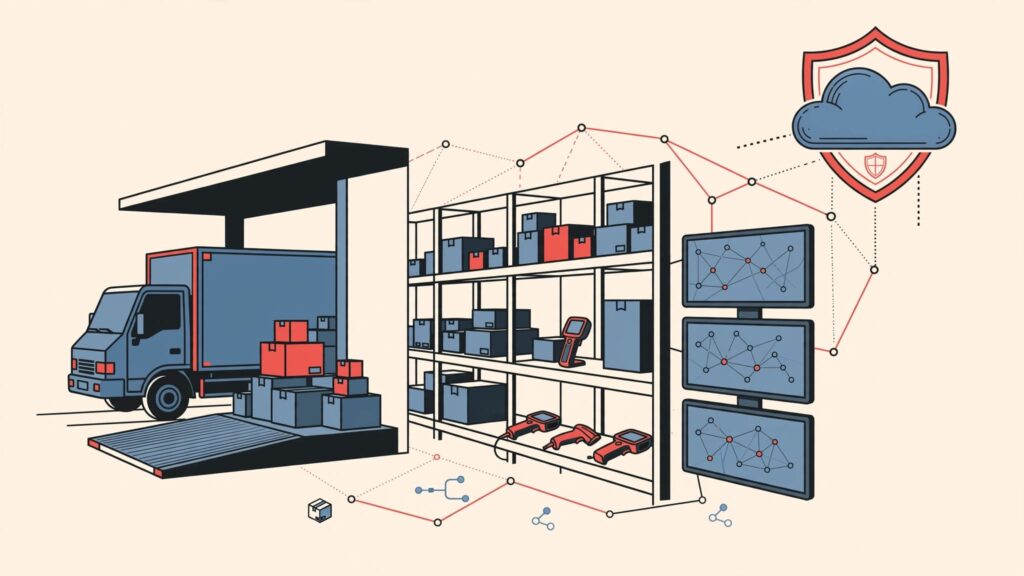
Your warehouse, fleet systems, scanners, routing tools, EDI connections, carriers, and software vendors all help move product. Cybersecurity for distribution and logistics companies is about protecting that operating chain without slowing down the business.
A single incident involving cyber attacks or ransomware attacks can interrupt receiving, picking, shipping, dispatch, invoicing, or customer updates. The disruption may start in one system, but customers experience it as your problem.
You don’t need perfect security or a giant compliance program. Practical cybersecurity in logistics starts with understanding your cyber risks across systems, vendors, and operational dependencies. You need a clear view of what matters, who owns it, and how operations will continue when a system or supplier fails. That visibility supports practical risk mitigation.
Key Takeaways for Protecting Supply Chain Systems
For cybersecurity in logistics, start with a live systems inventory. It should cover warehouse, transportation, cloud, mobile, fleet, payment, and partner systems, plus the integrations that connect them.
- Use the inventory to guide risk mitigation and assign clear ownership.
- Apply least privilege and multifactor authentication. Build security awareness among employees, drivers, contractors, carriers, and vendors, and offboard them promptly.
- Separate warehouse and logistics networks from office IT, third-party access, and administrative systems.
- Classify vendors by business impact, data access, and replaceability to strengthen supply chain resilience. Put security, notification, recovery, subcontractor, and exit terms in their contracts.
- Plan for manual operations during an outage. Test restoration rather than assuming a backup will work.
- Give executives a short view of risk, ownership, open decisions, and recovery readiness.
The NIST Cybersecurity Framework 2.0 organizes cyber work into Govern, Identify, Protect, Detect, Respond, and Recover to support cyber resilience. Its GV.SC category treats supply chain security as an enterprise governance issue. That matters because logistics risk isn’t owned by IT alone.
How Cybersecurity in Logistics Starts With Visibility
You can’t protect systems you can’t see. A useful systems inventory connects technology to the work it supports, the data it holds, and the people who can make decisions when it fails.
This is technology risk management in practical terms. It gives leadership a shared picture instead of a pile of vendor reports, tickets, and vague assurances.
Map the Systems That Keep Orders Moving
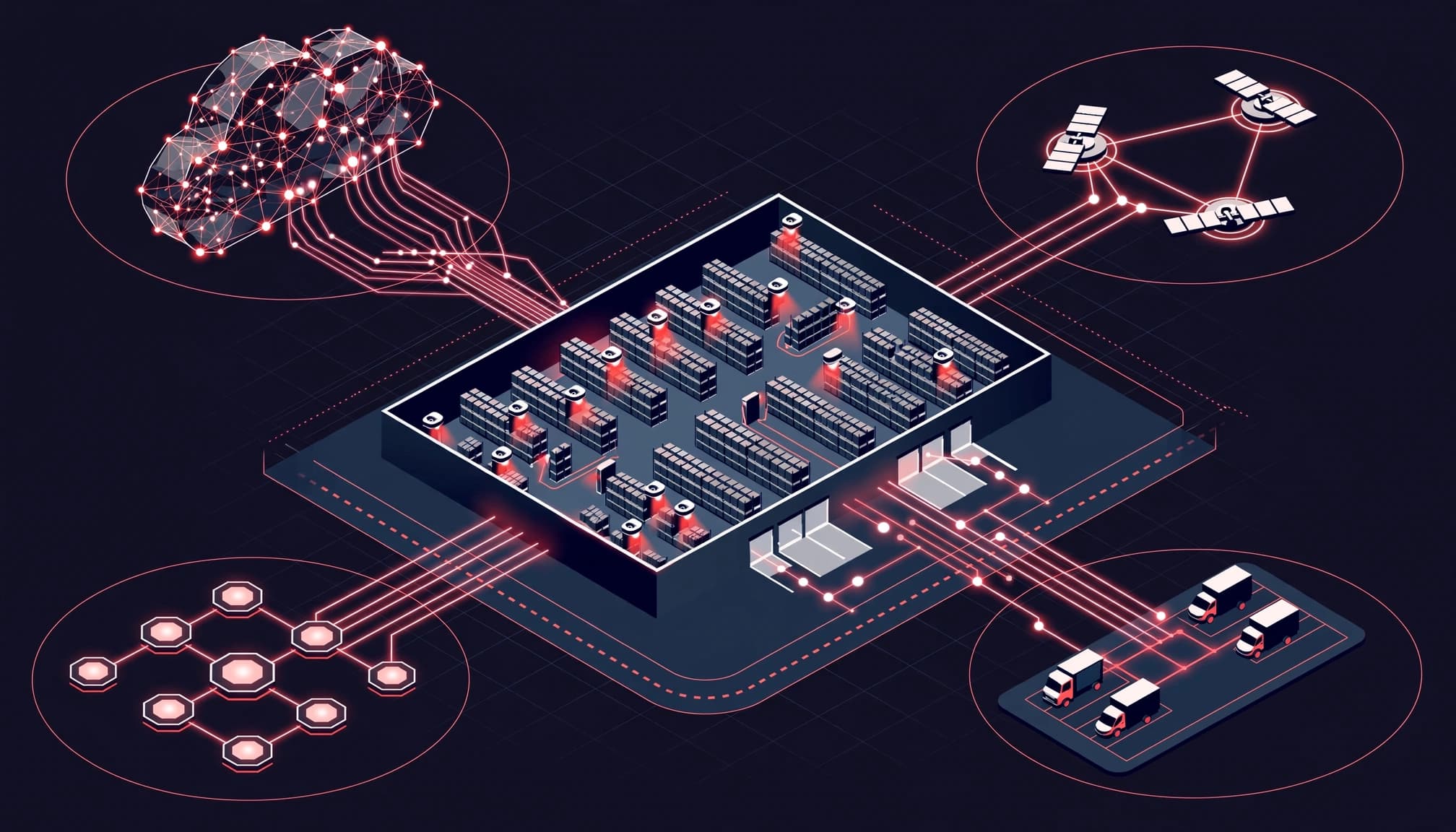
Trace the path from order entry through inventory, picking, packing, shipping, delivery, billing, and customer notification. Include warehouse management systems, transportation platforms, fleet systems, ERP, EDI connections, carrier portals, and mobile devices.
Then look for dependencies that rarely make the first draft. Identity services, DNS, internet providers, real-time tracking, carrier APIs, cloud hosting, payment connections, and file-transfer services can all stop work. Warehouse-control systems, scanners, label systems, and other operational technology can create additional dependencies.
For every critical process, record the recovery time objective, recovery point objective, manual workaround, and single point of failure. Ask a simple question: “What stops in the next 48 hours if this service disappears?”
Buyers should request an application and infrastructure inventory, architecture diagrams, cloud and hosting details, identity dependencies, data flows, and recovery objectives. They should also review vendor contracts, incident history, penetration-test results, and evidence of remediation.
The review should cover technology, data privacy, cybersecurity, intellectual property, open-source software, AI tools and data use, IT infrastructure, and applicable regulatory requirements. Specific requirements vary by transaction and jurisdiction, but visibility helps buyers identify risks before closing.
Give Every Critical System a Clear Owner and Risk Tier
Not every system deserves the same review. A warehouse control system, identity provider, payment connection, or TMS needs deeper attention than a low-risk office application.
Assign critical, high, medium, or low-impact tiers. Record the business owner, technical owner, vendor, data types, access paths, recovery commitments, escalation contacts, and renewal date. This creates a practical basis for risk mitigation.
A technology risk management playbook for executives helps turn that inventory into a board-ready risk summary. If you have a technology leadership gap, an interim CTO, fractional CTO, or fractional CISO can help establish the ownership and technology operating rhythm that internal teams need.
Control Access and Limit the Blast Radius of an Attack
Cybersecurity in logistics starts with identity safeguards and clear boundaries around operational systems. Attackers look for access that is shared, excessive, forgotten, or poorly monitored. In logistics operations, that access may belong to a seasonal worker, carrier, outsourced support firm, or warehouse software provider.
Cyber threats gain a wider blast radius when one compromised account can reach too many systems. Strong access controls aren’t about making work harder. They’re about limiting how far that account can reach.
Strengthen Identity for Employees, Drivers, Vendors, and Temporary Staff
Give every person a unique account. Require multi-factor authentication for remote access, email, administrative tools, cloud systems, and vendor connections. Match permissions to the role, then remove them when the work ends.
Use device checks and session limits for higher-risk access. Review privileged accounts often. Teach employees, drivers, and vendors how to spot phishing through practical security awareness.
Vendor access should be approved, time-limited, logged, and separate from your own administrator accounts. Vendor offboarding deserves the same discipline as onboarding. When a contract ends, confirm that accounts, API keys, remote tools, and shared credentials are gone.
Segment Warehouse, Fleet, Office, and Partner Connections
Network segmentation limits damage when ransomware hits a workstation or an integration is compromised. Handheld scanners shouldn’t have a clear path to finance systems. Telematics shouldn’t have broad access to the ERP. Carrier portals shouldn’t share internal administration rights.
Use firewalls, controlled jump hosts, brokered access, and monitored APIs to separate those environments. Pair these measures with patch management for warehouse devices, fleet systems, and externally accessible services.
The point isn’t to build a perfect diagram. Isolation, monitoring, and least privilege support risk mitigation by reducing the consequences of a compromised account.
A compromised label system should be a shipping disruption you can manage, not a route into payroll, finance, and every warehouse.
Monitor the Changes That Signal Trouble
In cybersecurity in logistics, detection should prioritize changes that affect business exposure, not merely technical alerts. Alert on unusual vendor logins, impossible travel, phishing, business email compromise, bulk data access, new privileged accounts, disabled security tools, unexpected API activity, and changes to routing, payment, shipping, or vendor instructions.
Security ratings and automated monitoring tools can help identify questions about bulk access, unusual exports, and vendor activity that may signal data breaches. They don’t replace evidence, named ownership, direct vendor conversations, or security awareness that helps employees and finance teams escalate suspicious requests.
Your board doesn’t need a technical event log. It needs board cyber risk reporting that connects alerts to threat mitigation, business impact, decisions required, accountable owners, and current recovery status. That is technology governance for boards, not technical noise.
Manage Third-Party Risk Before a Vendor Outage Becomes Your Crisis
A supplier can meet a service-level agreement and still create serious operational risk. Trust starts to thin when teams keep building workarounds, support answers stay vague, or the vendor controls knowledge and credentials that you cannot replace.
Your third-party technology risk process should use vendor management to connect delivery, access, data, cost, concentration, and exit options. In networks that depend on 3PLs, broader supply chain risk practices for logistics providers can also inform continuity planning.
Write Security Requirements Into Supplier Contracts
Contracts cannot transfer your responsibility for customer service, data protection, or business continuity. They can set expectations, create evidence rights, and make recovery obligations clear.
Match requirements to the vendor’s access and business impact. Critical contracts should address:
- Incident notification timelines, audit rights, security baselines, encryption, access control, and patching.
- Subcontractor disclosure, data return or destruction, recovery commitments, and cooperation during an investigation.
- Escalation paths, transition support, and practical vendor offboarding terms.
Review critical suppliers quarterly. Monitor major changes between reviews, then track corrective actions with named owners and deadlines as part of ongoing risk mitigation.
Buyer-focused M&A diligence and transaction allocation: Buyers should review technology, data privacy, cybersecurity, intellectual property, open-source software, AI, IT infrastructure, and regulatory provisions. Request incident records, breach notices, penetration tests, security assessments, data maps, privacy compliance materials, IP ownership and license records, open-source inventories or SBOMs, AI-use and training-data information, cloud and OT dependencies, vendor contracts, and regulatory correspondence.
The legal mechanisms serve different purposes. Representations state transaction facts that induce the buyer to proceed. Warranties provide contractual assurances about the target’s condition or compliance, although U.S. agreements often combine the terms. Covenants are promises to take or refrain from actions before or after closing. Closing conditions are prerequisites that must be satisfied before the transaction closes.
Disclosure schedules identify exceptions to the representations and warranties. They may include known incidents, privacy issues, vendor dependencies, IP or open-source exceptions, and regulatory matters. Buyers should compare these disclosures with diligence findings and requested records.
Negotiations often address materiality and knowledge qualifiers. They may also cover indemnification for breaches or specially identified privacy, cybersecurity, or IP exposures. Survival periods, baskets, caps, escrow, and representations-and-warranties insurance can shape how recovery works after closing.
RWI may exclude known issues or require specific underwriting. Escrow or a special indemnity may fit identified risks more appropriately. Allocation depends on the transaction, agreement, facts, and jurisdiction. Contractual protections don’t replace operational remediation or diligence.
Plan for Fourth-Party and Concentration Risk
Fourth-party risk is the risk created by your vendor’s vendors. Your warehouse platform may depend on a cloud provider. Your file-transfer service may depend on another software provider. Your carrier integration may rely on a subcontractor you never selected.
Ask critical vendors about shared infrastructure, substitute providers, geographic concentration, data export, and what happens if a key supplier becomes unavailable. One outage can affect many facilities or customers at once when too much work runs through the same provider. Mapping these dependencies strengthens supply chain resilience.
If you cannot clearly see which vendors and systems create the most exposure, Get an Executive Technology Clarity Check. You should leave with sharper priorities, clearer ownership, and a practical next step.
Practice Response and Recovery Before Operations Stop
Business continuity planning, disaster recovery planning, incident response readiness, and ransomware readiness belong together because ransomware attacks can disrupt systems, data, and manual operations. A backup is not proof of recovery until you restore it under realistic conditions.
Track test results, unresolved gaps, vendor response times, and the limits of manual work. A short board-ready report should show business impact, decisions needed, ownership, and recovery status.
Build Playbooks for Vendor and Warehouse Disruptions
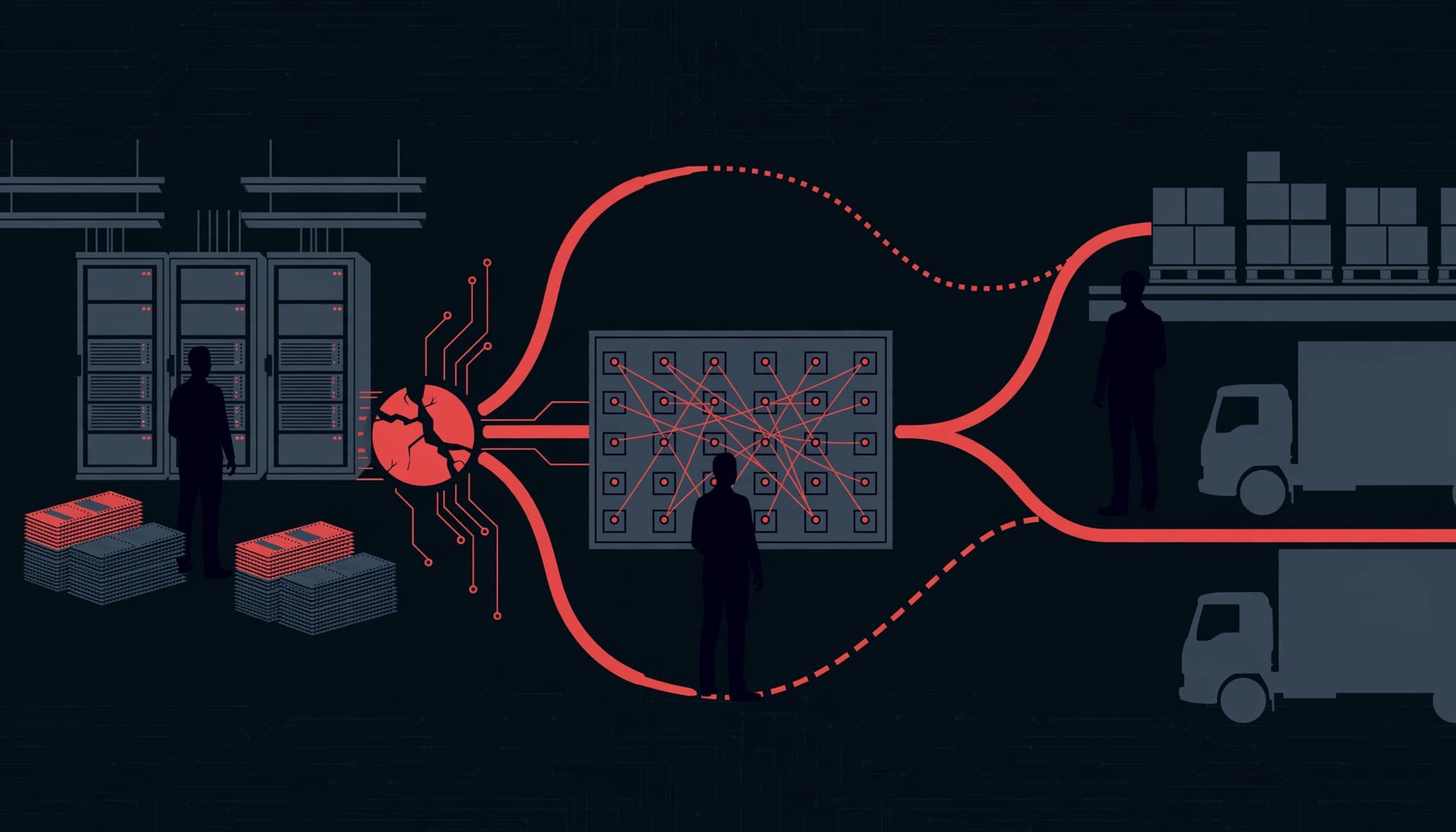
Your playbook should state the first actions: isolate affected systems, contact the supplier, preserve logs, confirm scope, switch to manual work, and communicate with employees and customers.
It should also name 24/7 contacts for operations, technology, legal, insurance, communications, and vendor management. Define who can shut down a system, approve a workaround, notify customers, or accept extended downtime. Include role-based security awareness training for warehouse staff, dispatchers, executives, legal, communications, and vendor-management personnel.
CISA’s ransomware response checklist recommends identifying affected systems and isolating them quickly. Test the playbook with key external partners. A document nobody has rehearsed is not a response plan.
Test Restoration, Manual Workarounds, and Alternate Routes
Run controlled restoration tests. Validate inventory and order data after recovery. Check label and manifest creation. Confirm that warehouse staff can work safely when core systems are unavailable.
Ask how long you can ship manually, which customers receive priority, and whether alternate carriers or facilities can take over. Test real-time tracking for dispatch visibility, shipment status, customer updates, and alternate operating procedures during an outage. Test your ability to export data from critical vendors before an incident forces the issue.
CISA also recommends rebuilding critical services and restoring from offline, encrypted backups in its ransomware recovery guidance. Record what failed during each exercise, then assign owners and deadlines for risk mitigation. Retest after each gap is closed.
Frequently Asked Questions
What should logistics companies protect first?
Start with the systems that keep orders moving, including warehouse management, transportation, fleet, ERP, EDI, carrier, identity, and payment systems. Prioritize them by business impact, data access, recovery requirements, and replaceability.
How can a logistics company reduce the impact of ransomware?
Use multifactor authentication, least privilege, network segmentation, monitored vendor access, and tested offline backups. Practice manual operations and restoration so employees know how to keep shipping when core systems are unavailable.
How should companies manage cybersecurity risk from vendors?
Classify vendors by operational impact, access, data handled, concentration, and exit options. Put incident notification, subcontractor disclosure, security requirements, recovery commitments, data return, and transition support into critical supplier contracts.
Why is network segmentation important in logistics?
Segmentation limits how far an attacker can move after compromising a workstation, scanner, fleet system, or vendor connection. Warehouse, fleet, office, finance, and partner environments should have controlled paths, monitored access, and appropriate isolation.
What should executives include in cybersecurity reporting?
Executives need a short view of the systems, vendors, and dependencies that create the greatest business exposure. Reporting should connect open risks to accountable owners, decisions required, business impact, and recovery readiness.
Keep Product Moving Under Pressure
The practical answer is straightforward. Map the systems and dependencies that move product. Assign ownership. Secure identities. Separate critical environments. Manage vendors and fourth parties. Test response and recovery.
Your goal isn’t zero supplier risk. It’s risk that leaders can actually see, a smaller blast radius, and operations that can continue under pressure.
Over the next 30 days, logistics companies should review their highest-impact systems, vendors, access paths, and recovery tests. That work gives leadership better information for the next decision, before an outage makes the decision for you.