
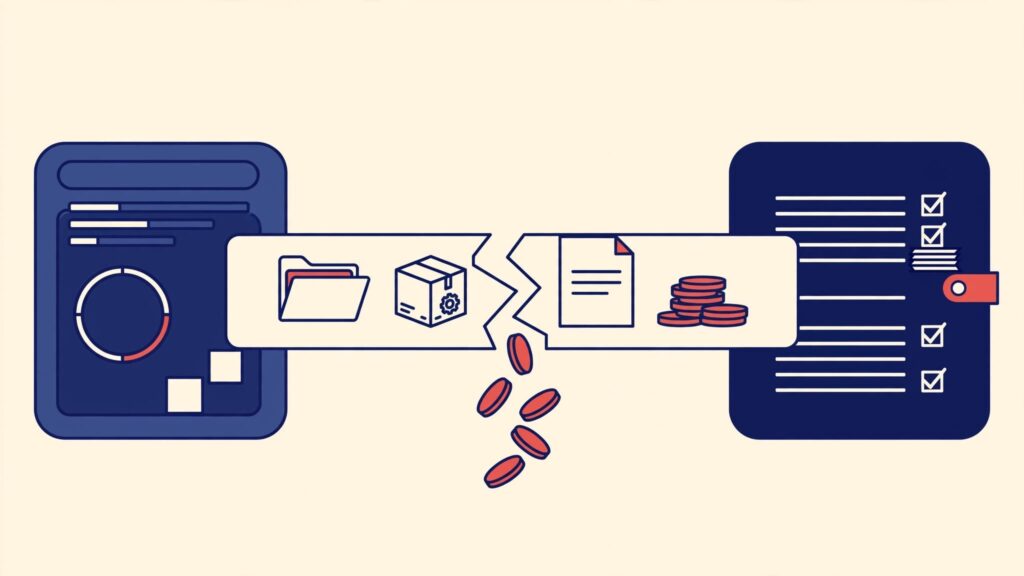
Your sales dashboard can show growth while your billing system leaves money uncollected. Revenue leakage often sits between those two views, hidden by manual handoffs, inconsistent records, and unclear ownership.
You need contract-to-cash visibility: proof that CRM sales were delivered, invoiced, and collected, so lost revenue can’t hide between those views. Start by tracing the handoffs before approving another system replacement.
Key Takeaways
- Find revenue leakage by matching contract terms, CRM records, delivered services, invoice lines, and payments.
- Separate underbilling, unbilled work, overdue receivables, and churn. Each needs a different response.
- Give every exception an owner, a dollar value, and a resolution date. Report recovered cash separately from future losses prevented.
What Revenue Leakage Means for Your Business
Revenue leakage is income missed because of gaps in commercial terms, delivery, billing, or collection. This revenue loss can reduce cash available for hiring, investment, and growth, though teams may still recover some missed revenue.
MGI Research’s State of Monetization research found that 42% of companies experience revenue leakage. That establishes the problem’s reach, not a benchmark for your business.
Separate leakage from churn
Churn measures customers or recurring revenue lost when relationships end or contracts expire. Leakage concerns revenue you could have earned or retained under the agreed terms.
An active customer on the wrong pricing tier creates a billing exception. A customer who cancels creates churn. Failed payments can cause both, but your dashboard should preserve the distinction.
Look harder where billing is complex
Telecom, SaaS, finance, and logistics are especially exposed because billing can depend on usage, service levels, transaction volumes, or negotiated terms.
Watch average revenue per account and billing trends. An unexplained decline, alongside repeated customer complaints about billing errors, warrants investigation. Segment the trend by product, cohort, and pricing plan before drawing conclusions. These conditions can make revenue leakage harder to spot.
Where CRM and Billing Stop Agreeing
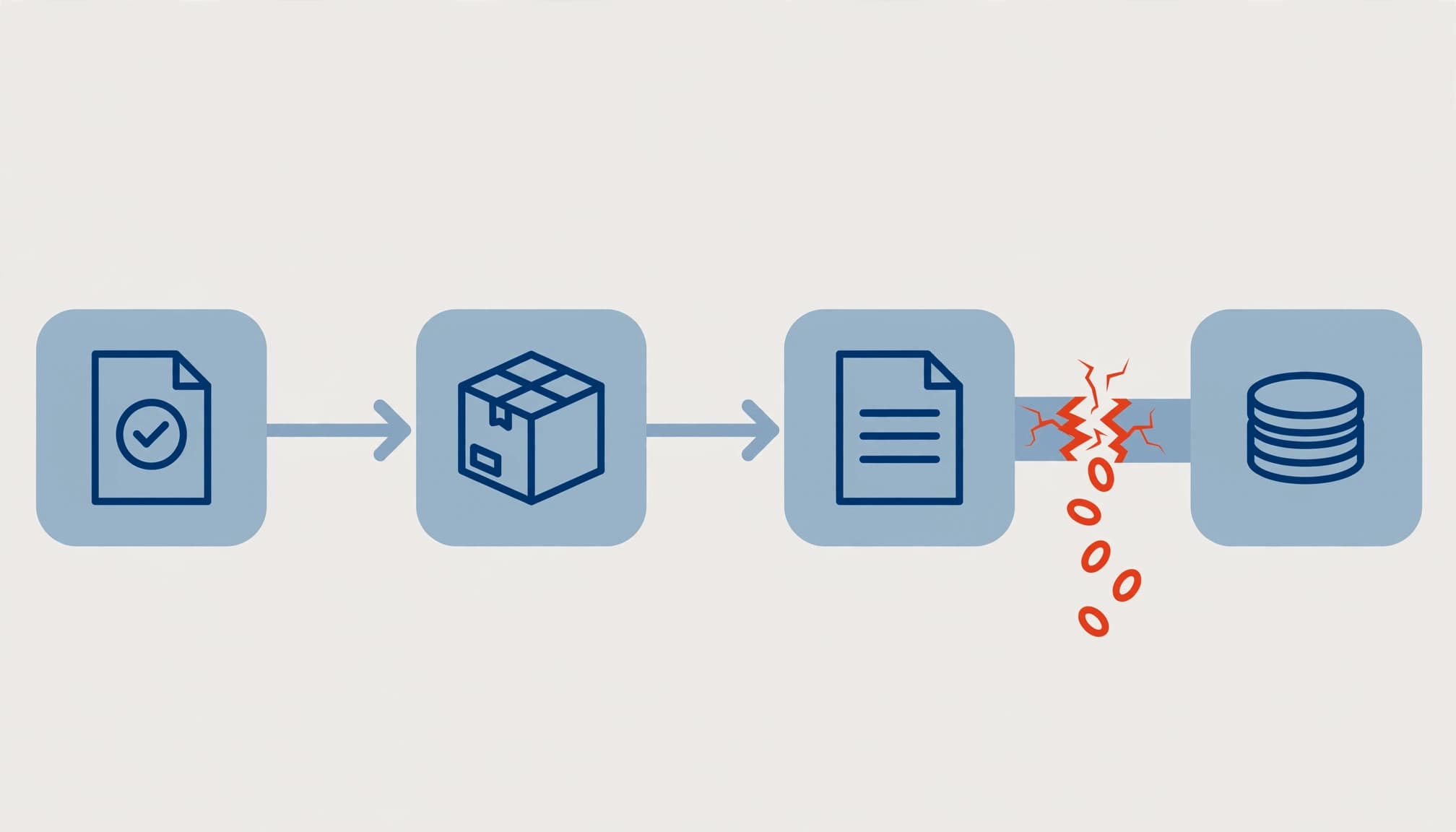
The failure usually occurs at the handoff between CRM and billing, creating revenue leakage. Sales records an agreement. Operations delivers it. Finance invoices from a different version of the customer record.
Contract terms never reach billing
Temporary promotional discounts become permanent when nobody records an expiry date or enforces it. Missed renewals and unimplemented contractual price increases are leading contract-related causes.
Contract management must carry signed terms and version updates into the billing configuration. Compare the signed agreement with the configured account. Include pricing tiers, minimum commitments, add-ons, discount expiry dates, and escalation clauses.
Scope creep creates another gap. Your team delivers additional hours, services, or products without an approved change order. Time-based services and customer-requested add-ons deserve particular attention.
Disconnected records create hidden exceptions
PDF contracts, disconnected spreadsheets, and unintegrated systems leave different teams working from different commercial facts.
Duplicate customer records, inconsistent product codes, failed transfers, and incorrect date filters can cause billing errors or ledger posting problems. Failed or incorrect transfers can also interrupt invoicing, while a mapping rule can transform a valid source transaction incorrectly.
Build a systems inventory that includes spreadsheet workarounds. Identify which record governs each field and who can change it.
Before buying another platform, use a process-first CRM replacement strategy. Replacing software won’t resolve an undefined handoff.
Calculate Revenue Leakage Without Mixing Measures
Your billing calculation needs a consistent period and a defensible expected amount. Pipeline value isn’t earned revenue, and bookings, billings, cash receipts, and recognized revenue answer different questions. Revenue recognition follows accounting rules, so don’t conflate it with invoicing or cash received.
Establish the amount you should have billed
The basic formula is:
Potential Revenue minus Actual Revenue equals Revenue Leakage.
Define potential revenue as the amount contractually billable for delivered goods or services in the period. Define actual revenue consistently with that measurement.
If $500,000 was billable but only $475,000 was billed correctly, the gap is $25,000. The billing leakage rate is $25,000 divided by $500,000, or 5%.
Your financial data integrity controls should preserve those definitions across systems. Invoice date, service period, and ledger posting date aren’t interchangeable.
Build a separate cash bridge
This simplified cash flow illustration separates missing invoices from collection problems.
| Cash bridge | Amount |
|---|---|
| Software sold and due for collection | $50,000 |
| Not invoiced | $5,000 |
| Underbilling | $2,500 |
| Invoiced but unpaid because of disputes | $4,000 |
| Cash collected | $38,500 |
| Total missing cash | $11,500 |
The $7,500 invoice gap needs correction. The $4,000 collection gap needs dispute resolution.
Unpaid cash isn’t automatically a permanent loss. Classify amounts as recoverable, at risk, or unrecoverable based on evidence, age, and contractual limits.
Never net overbilling against underbilling. A matching total can hide both lost revenue and customer harm.
Run a 30-Day Contract-to-Cash Audit
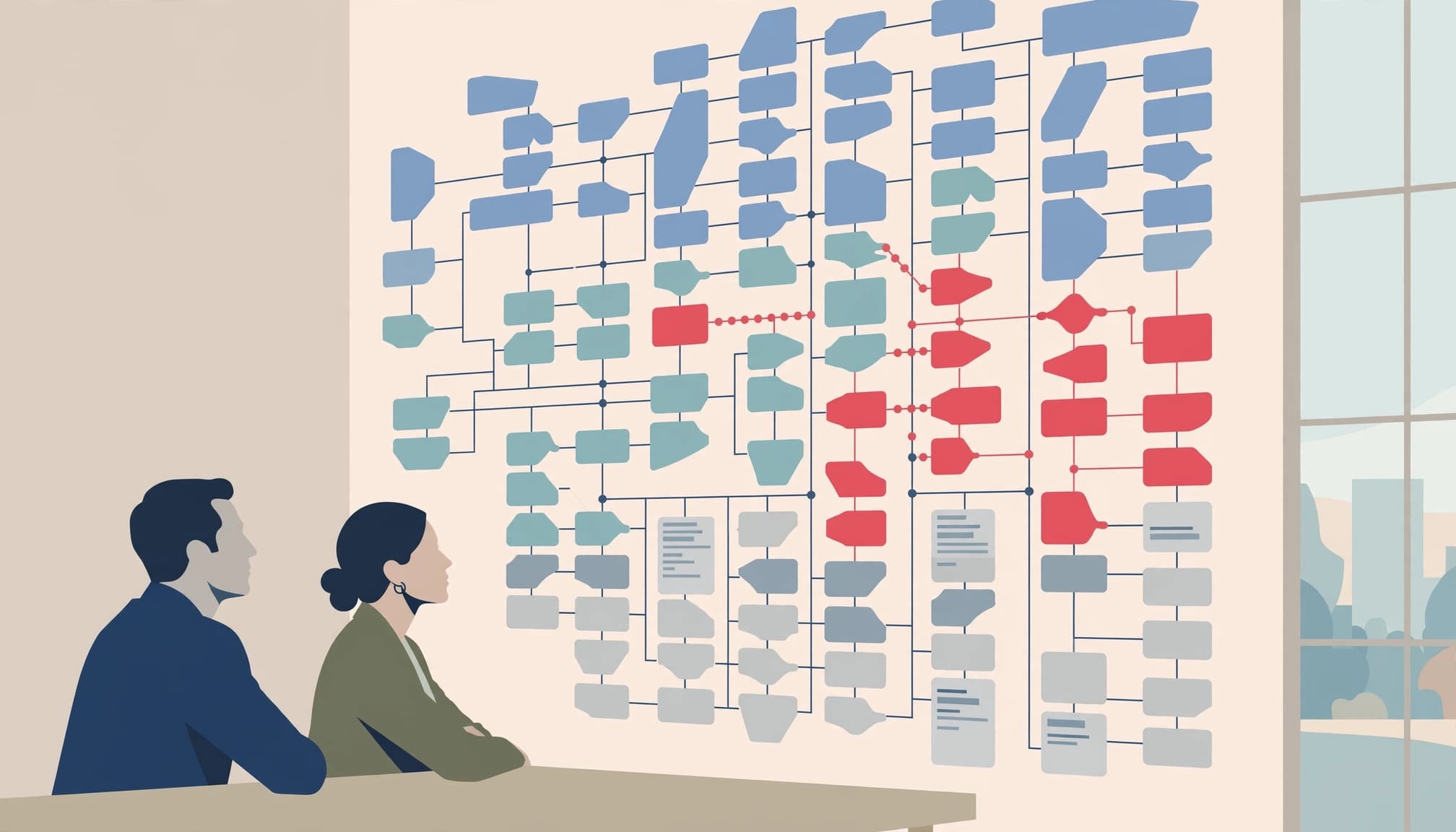
Maxio’s order-tracing audit method uses the phrase “staple yourself to an order.” Follow an order through sales, operations, accounting, and cash receipt to find revenue leakage. Ask for evidence at every handoff.
- During days 1 through 5, define the population and owners. Choose a completed billing period. Include material accounts and high-risk cases involving renewals, discounts, usage, scope creep, unbilled work, and manual adjustments. Assign finance, sales operations, delivery, and technology representatives.
- During days 6 through 12, match the records. Join contracts, CRM orders, delivery evidence, invoicing records, and receipts using stable customer and order identifiers. Compare quantities, prices, currencies, service periods, and contract versions. Reconcile record counts as well as amounts.
- During days 13 through 20, trace exceptions. For usage-based billing, follow an event through capture, storage, validation, rating, and invoicing. Require an event ID, customer ID, timestamp, and quantity. Test missing events, late arrivals, and duplicate retries. A replay mustn’t create a second charge.
- During days 21 through 30, quantify and assign action. Record each exception’s amount, cause, recoverability, owner, and deadline. Correct valid invoices and collection issues. Start with explicit escalation rules: investigate delivered orders past their contractual billing window and failed transfers unresolved after one business day.
Treat those thresholds as starting control rules, not industry benchmarks. Set tighter limits where customer harm or material exposure demands them.
A risk-selected sample identifies failure patterns. It doesn’t establish a reliable company-wide leakage percentage. Expand the reconciliation before presenting a total exposure estimate.
Prevent Repeat Losses With Clear Ownership
Recovery helps this quarter. Stronger ownership keeps the same problem out of next quarter’s close.
Put controls at the handoffs
Use contract management to set discount expiry dates, approve price changes, document service acceptance, and assign owners for renewals. Validate required fields and currencies before records move between systems.
Monitor rejected transfers and preserve an exception queue. Give every failure an accountable owner rather than relying on someone to notice an email.
Use automated dunning management and payment reminders to address overdue balances early. Apply late-fee structures only where contracts and applicable rules permit them. Separate failed-payment recovery from disputed invoices so reminders don’t aggravate unresolved customer problems.
Fund the fixes that protect revenue
Your technology roadmap should distinguish urgent control repairs from longer-term consolidation. Technical debt, tool sprawl, and weak vendor management matter when they repeatedly interrupt billing.
Measure technology ROI through recovered cash, prevented recurrence, and reduced reconciliation work. Don’t label all potential corrections as savings.
If nobody owns the cross-functional process, you have a technology leadership gap. A fractional CTO or interim CTO can coordinate system ownership, integration decisions, and control repair alongside finance.
That’s business-aligned technology strategy: funding work because it protects revenue and execution, with clear decision rights and measurable outcomes.
Give Your Board Reporting It Can Trust
EY’s estimate, cited in Forbes, puts annual losses at 1% to 5% of realized EBITA. Treat this as external context, not a percentage of sales or a target for your own losses.
Board-ready reporting should connect revenue leakage to actual exposure: unbilled amounts, underbilling, overdue disputed balances, recovered cash, and recurring exceptions. Include the oldest unresolved item and its accountable owner.
For SaaS, break the view down by product line, customer cohort, and billing period. Show failed-payment recovery rates separately from renewal performance. Use the principles behind trustworthy executive dashboards to keep definitions and ownership consistent.
SalesforceBen describes three broader priorities: generating new business, safeguarding margins through operations, and avoiding churn through renewals. Keep those workstreams visible without treating every growth problem as billing leakage.
For acquisition readiness, retain reconciliation evidence and remediation decisions. They help explain whether earnings depend on repeatable processes or manual workarounds.
Frequently Asked Questions
What leakage rate should you accept?
Don’t borrow the 42% prevalence figure or EY’s EBITA estimate as an operating target. Establish your measured baseline and trend. Investigate unexplained differences against contractual billings. Set escalation thresholds by value, age, recurrence, and customer impact.
Can you recover every missing dollar?
Some unbilled work and underbilling can be corrected. Other amounts may be unrecoverable because of contractual restrictions, missing delivery evidence, or insolvency. Record recovered cash separately from corrected invoices. An invoice correction is progress, but it isn’t collected money.
Will automated billing solve the problem?
Automation can reduce manual errors, but it also repeats incorrect pricing rules faster. Require reconciliation, versioned pricing, controlled changes, and an exception owner. The billing platform still needs evidence that source activity became the right charge exactly once.
Close the Gap Before Adding More Tools
Start with one completed order and one billing period. Trace the evidence, quantify the exceptions, and assign clear ownership before funding a larger change.
If your teams can’t agree on where the handoffs fail, Get an Executive Technology Clarity Check. We’ll help you identify the priorities and ownership your next decision needs.
Growth is easier to govern when leadership can see what was sold, what was billed, and what reached the bank.