decision making framework

cost of delay

How to Calculate the Cost of Delay for Tech Decisions

A technology decision can look expensive until you calculate what waiting costs. The cost of delay quantifies the economic impact of waiting, showing the value lost each week or month a decision remains unresolved. You don’t need a perfect forecast. You need a defensible view of lost revenue, avoidable cost, rising risk, and the time […]

How to Calculate the Cost of Delay for Tech Decisions Read More »
A balance scale compares custom code modules with connected cloud software blocks.

Build vs Buy Software: A CEO Framework for the Right Call

Most build vs buy software debates start with the wrong question: “Can we build this?” The better question is whether the capability should become part of your business, or whether you should rent it from someone else. A build vs buy software decision affects cash, speed, risk, engineering capacity, vendor dependence, and your ability to

Build vs Buy Software: A CEO Framework for the Right Call Read More »

A glowing trust meter surrounded by business risk and operations indicators.

How to Measure Trust Debt: Five Quarterly CFO Indicators

A CFO can see a budget variance quickly. It takes longer to see whether leadership still trusts the technology story. Trust debt is the accumulated cost of missed commitments, unclear ownership, weak reporting, unresolved risk, and decisions that keep getting reopened. If you want to know how to measure trust debt, start with operating evidence,

How to Measure Trust Debt: Five Quarterly CFO Indicators Read More »

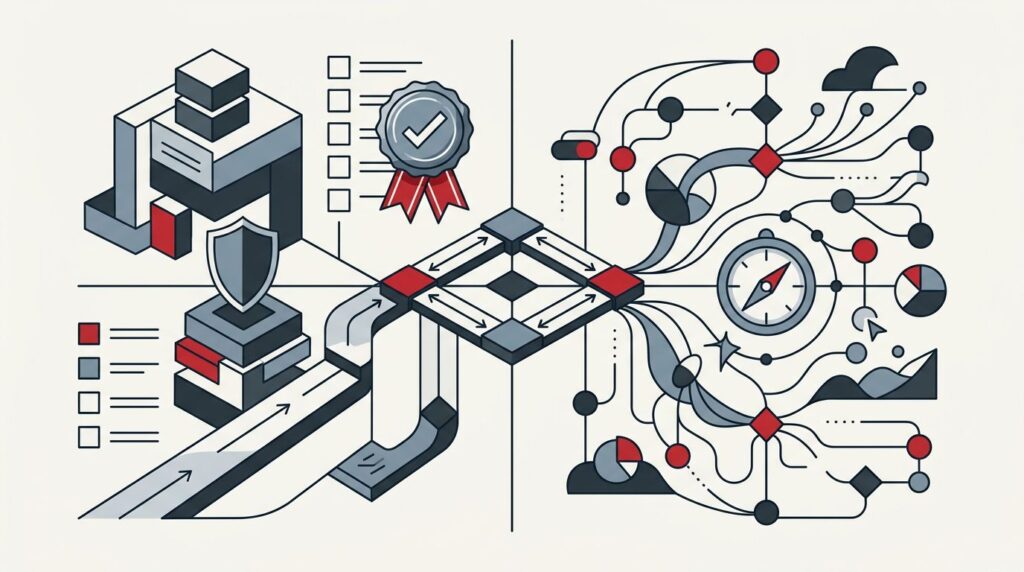
Split illustration comparing a structured certification system with a flexible risk management pathway.

ISO 42001 vs NIST AI RMF for Mid-Market Companies

Most mid-market companies don’t need another AI policy sitting in a legal folder. They need clear ownership, sensible controls, and practical AI governance that helps decide which risks deserve attention now. The ISO 42001 vs NIST AI RMF decision matters because the two frameworks support different kinds of leadership. The choice isn’t only about compliance.

ISO 42001 vs NIST AI RMF for Mid-Market Companies Read More »

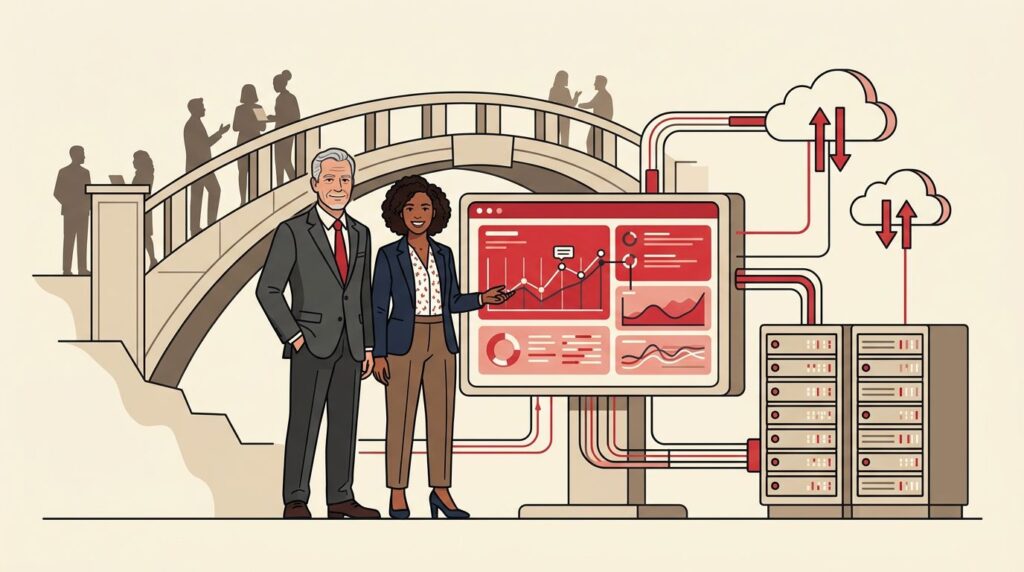
Two executives stand beside a digital dashboard, server racks, cloud icons, and a bridge.

Technology Leadership Family Businesses Need in Transition

Generational transition turns informal technology decisions into business decisions. You need the technology leadership family businesses can trust when ownership, authority, systems, and expectations change together. The outgoing generation may protect processes that built the company. The next generation may see outdated tools, weak data, and avoidable risk, and call for next-generation leadership. Neither side

Technology Leadership Family Businesses Need in Transition Read More »

An illustration comparing a software developer coding to an executive shaking hands with a vendor.

Build vs Buy AI Solution Decision Framework for Leaders

AI promises faster work and lower costs. A rushed decision can leave you with privacy risk, vendor lock-in, wasted spend, or a system nobody trusts. Your build vs buy AI solution decision framework is not only an engineering question. It is a business decision about speed, control, data, risk, ownership, and enterprise AI adoption. If

Build vs Buy AI Solution Decision Framework for Leaders Read More »