Responsible Innovation

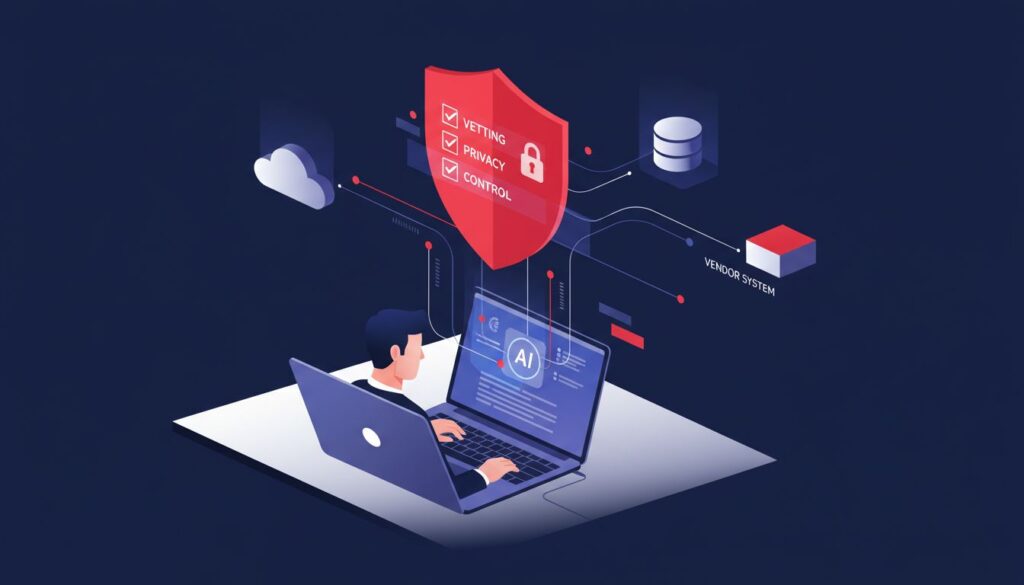
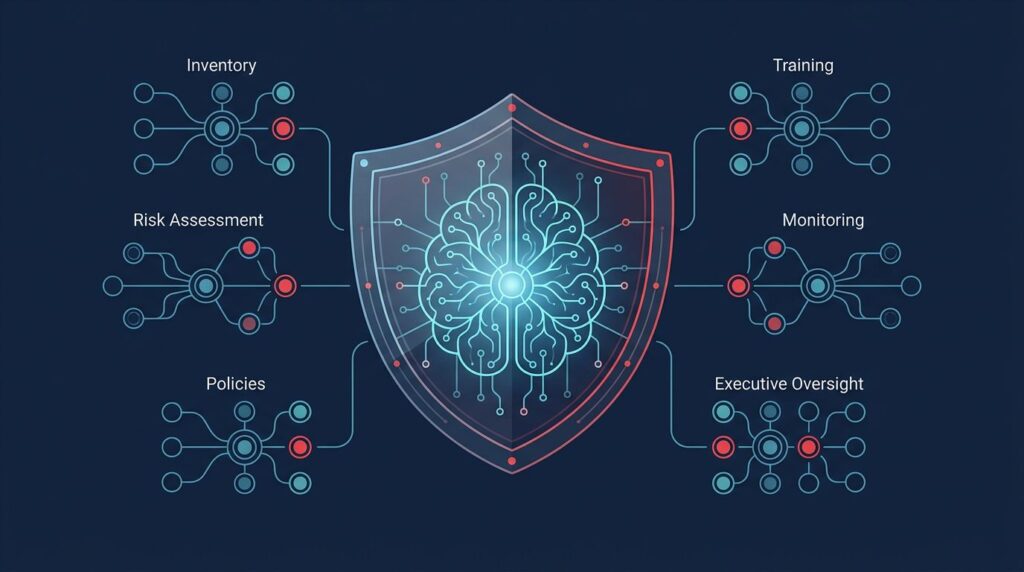
A glowing network core sits inside a red shield with blue control nodes.

How to Start an AI Governance Program in 90 Days

Your company may already be using public AI tools, embedded features, custom models, or employee-built automations without a shared policy, making generative ai governance increasingly important. That doesn’t mean your team is careless. It means enterprise ai adoption often moves faster than leadership structure. If you’re asking how to start an ai governance program, the […]

How to Start an AI Governance Program in 90 Days Read More »
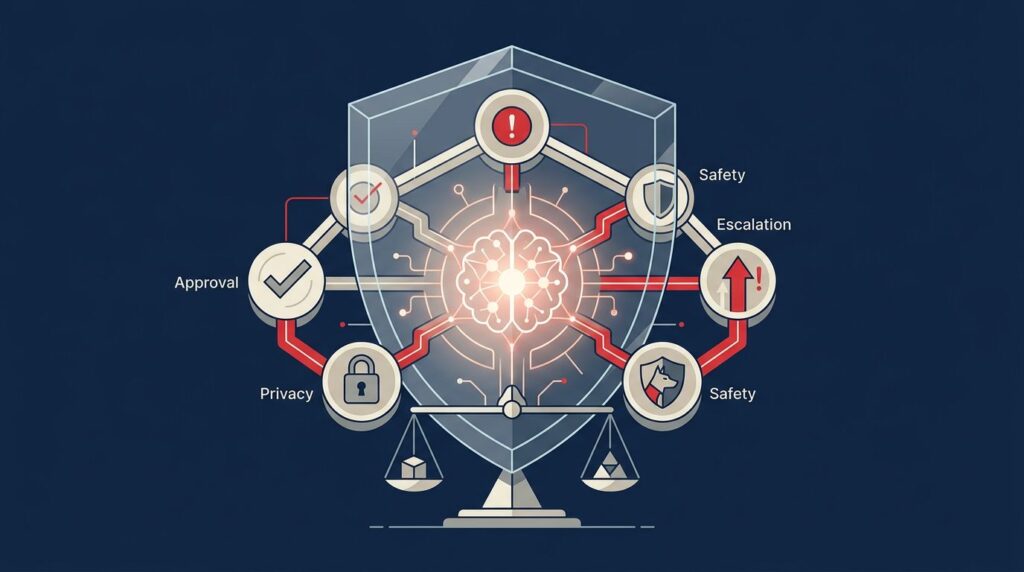
A glowing workflow network inside a glass shield, connected to approval, privacy, safety, and escalation symbols.

AI Liability Questions to Answer Before Customer Workflow Launch

Customer-facing artificial intelligence systems can answer questions, recommend actions, route cases, approve requests, and shape how people experience your company. That makes AI liability a business issue before it becomes a legal one. A wrong answer, exposed private data, or inconsistent treatment can create safety risks and encourage harmful reliance. Customers won’t blame the model

AI Liability Questions to Answer Before Customer Workflow Launch Read More »

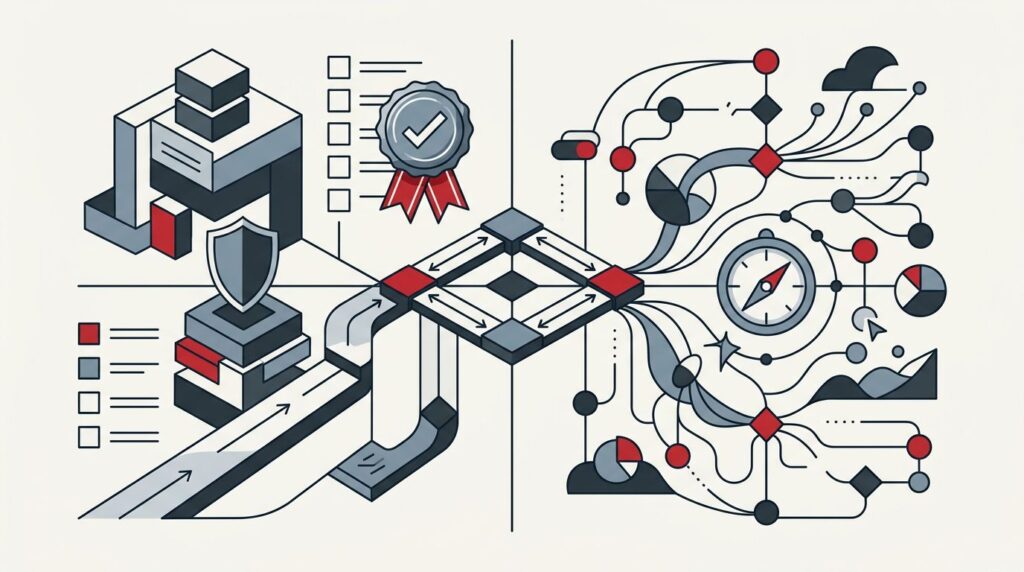
Split illustration comparing a structured certification system with a flexible risk management pathway.

ISO 42001 vs NIST AI RMF for Mid-Market Companies

Most mid-market companies don’t need another AI policy sitting in a legal folder. They need clear ownership, sensible controls, and practical AI governance that helps decide which risks deserve attention now. The ISO 42001 vs NIST AI RMF decision matters because the two frameworks support different kinds of leadership. The choice isn’t only about compliance.

ISO 42001 vs NIST AI RMF for Mid-Market Companies Read More »

A CEO in a suit reviews data on a glowing laptop with security shield graphics.

One-Page AI Acceptable Use Policy for Mid-Market CEOs

AI is already inside your business, whether you approved it or not. Employees may be pasting work into public chatbots, using AI features inside SaaS tools, or relying on generated answers that sound right but aren’t. A clear AI acceptable use policy template for business gives you a practical starting point. It protects customer trust,

One-Page AI Acceptable Use Policy for Mid-Market CEOs Read More »

A glowing tech hub with a red security shield and organized data pathways.

Shadow AI Is Already in Your Company: Set Guardrails That Work

Your employees may already be using ChatGPT, Claude, Gemini, Microsoft Copilot, AI meeting notes, coding assistants, and generative AI features inside software you already pay for. The question isn’t whether shadow AI use exists. It’s whether you can see it, understand the data involved, and decide who owns the risk. Knowing how to manage shadow

Shadow AI Is Already in Your Company: Set Guardrails That Work Read More »

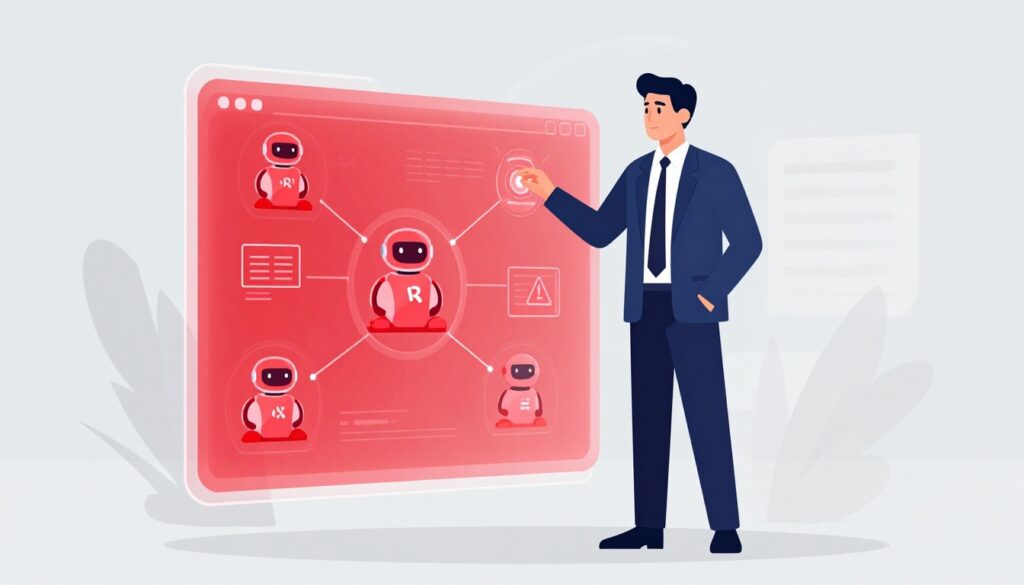
A business leader controlling a glowing holographic risk dashboard in a modern office.

Agentic AI Risk: What Leaders Need to Control

AI is moving past answering questions. It can now review invoices, update customer records, route work, open tickets, recommend purchases, and deploy autonomous AI agents to execute agentic workflows across systems with limited human input. That shift creates agentic ai risks for business leaders that are operational, financial, and reputational. You don’t need to learn

Agentic AI Risk: What Leaders Need to Control Read More »