

When technology priorities are aligned, you can feel it. Decisions move faster. Reporting makes sense. The budget points at business outcomes, not random projects.
When they are off, you feel that too. More meetings. More tools. More explaining. And a leadership team that keeps asking why the money, time, and risk still do not line up with growth.
Key takeaways: Misalignment shows up when the business case is fuzzy, the reporting is technical instead of useful, and the roadmap keeps drifting away from the outcomes you actually care about.
Start with the outcome, not the tool
As a COO, your first test is simple. Can each technology priority point to a business result? Revenue growth. Faster service. Lower risk. Better margins. Cleaner operations. If the answer is clear, you are on the right track. If the answer is “because the vendor recommended it” or “because we have always done it this way,” you are not.
That is where a business-aligned technology strategy earns its keep. It forces the same question every time. What problem are you solving, who owns the result, and what happens if you do nothing?
KPMG makes a similar point in its discussion of strategic IT and business alignment, where fragmented systems and weak business cases show up as slower execution and wasted spend. You do not need a huge framework to see the gap. You need a plain answer to a plain question.
If your team cannot tie the work to growth, risk, or customer experience, your COO technology strategy is already slipping into noise.
Watch the board pack and the reporting rhythm
A lot of misalignment shows up in reporting before it shows up in the budget. You get dashboards full of activity, but nothing that helps you make a decision. Ticket counts. Uptime. Project status. None of that tells you whether the business is moving in the right direction.
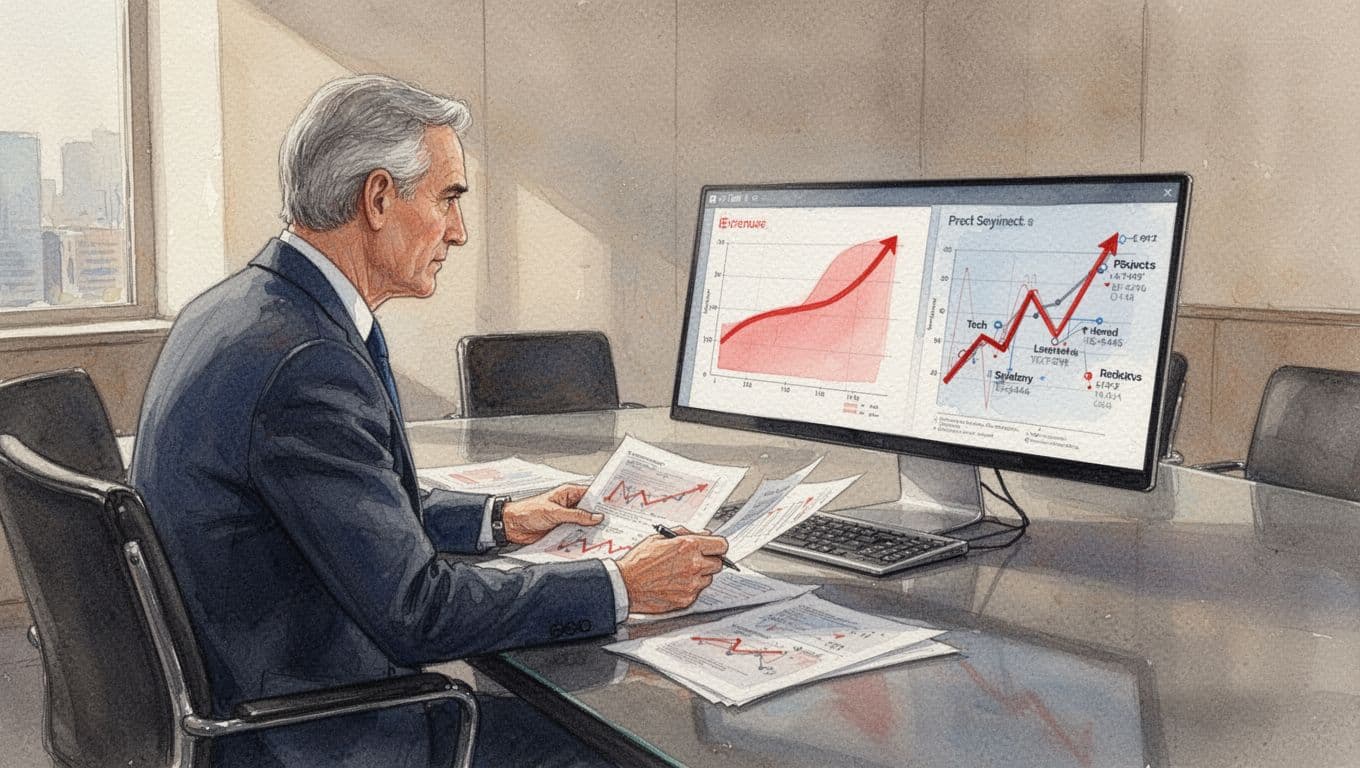
If your board deck still reads like an IT status log, you need board-ready technology reporting. The goal is not more detail. The goal is clearer judgment.
| What you see | What it usually means |
|---|---|
| More dashboards, less action | Reporting tracks activity, not outcomes |
| Faster IT delivery, same business pain | Priorities are technical, not business-led |
| Bigger spend, same uncertainty | Ownership and risk are still fuzzy |
That is the difference between board-ready reporting and noise. Cost-per-outcome reporting beats a flat project list every time. So does a short board-ready risk summary that says what matters, who owns it, and what happens next.
When spend and vendors start writing the roadmap
If your roadmap seems to follow vendor demos, renewal dates, or whoever shouted loudest in the last meeting, you have a governance problem. You may also have too much tool sprawl, too much shadow IT, and too much technical debt sitting under the surface.
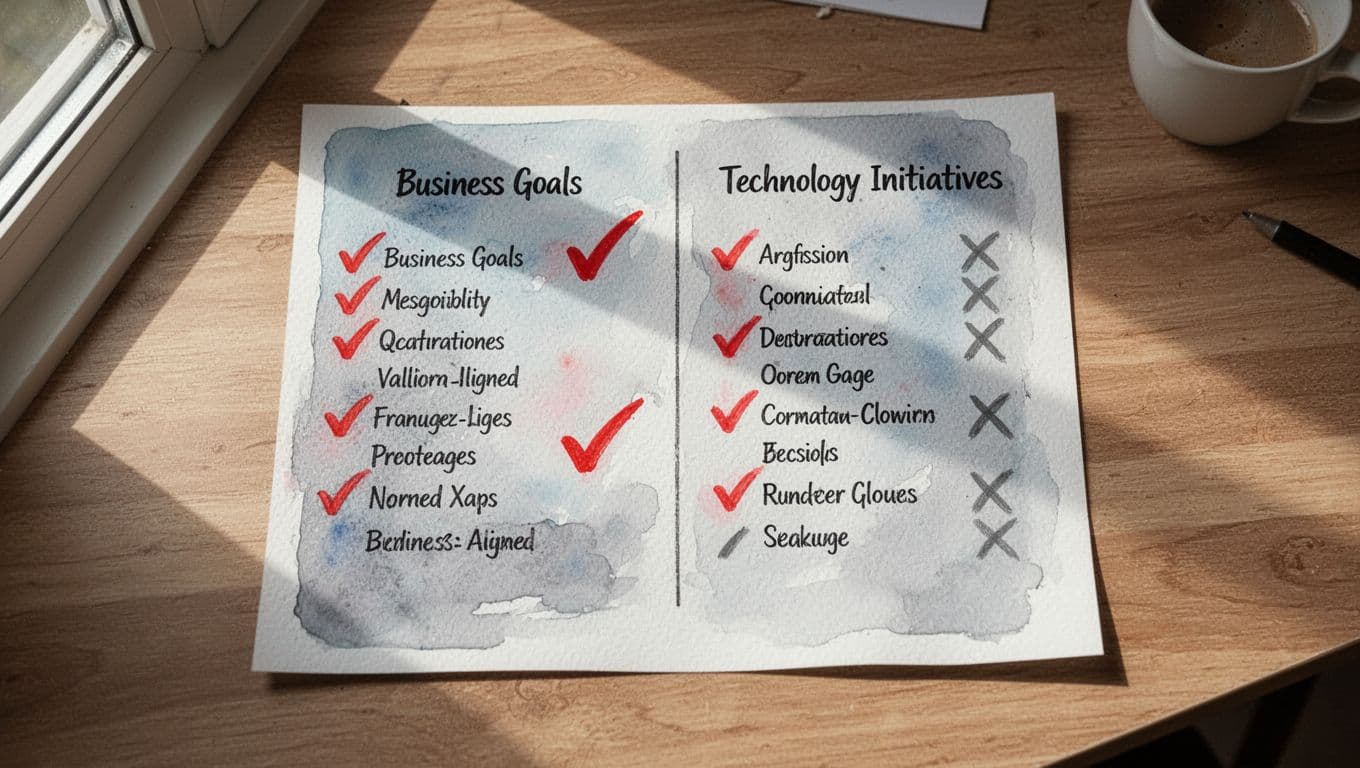
A real technology roadmap groups work by business outcome, not by system. It should fit inside a one-page technology strategy or a 12-month technology roadmap that you can defend in plain language. That is where strategic technology planning starts to matter.
You should also ask whether your spend is actually buying value. Technology spend optimization, tech spending ROI, and IT cost reduction are not finance buzzwords. They are signals that the company is deciding what to keep, what to stop, and what deserves more money.
This is also where vendor management turns into leadership work. Third-party risk management, vendor due diligence, vendor offboarding, and a vendor incident response plan should not live in a side drawer. If vendors are driving the roadmap, they are already too close to the wheel.
If no one owns this, fractional CTO services can help you reset the agenda without adding another full-time seat too soon.
Risk and AI expose the gap fast
Risk is where the story gets honest. If no one can explain cyber risk appetite, technology risk oversight, or the top failure points in business terms, the company has a governance problem, not just a security problem.
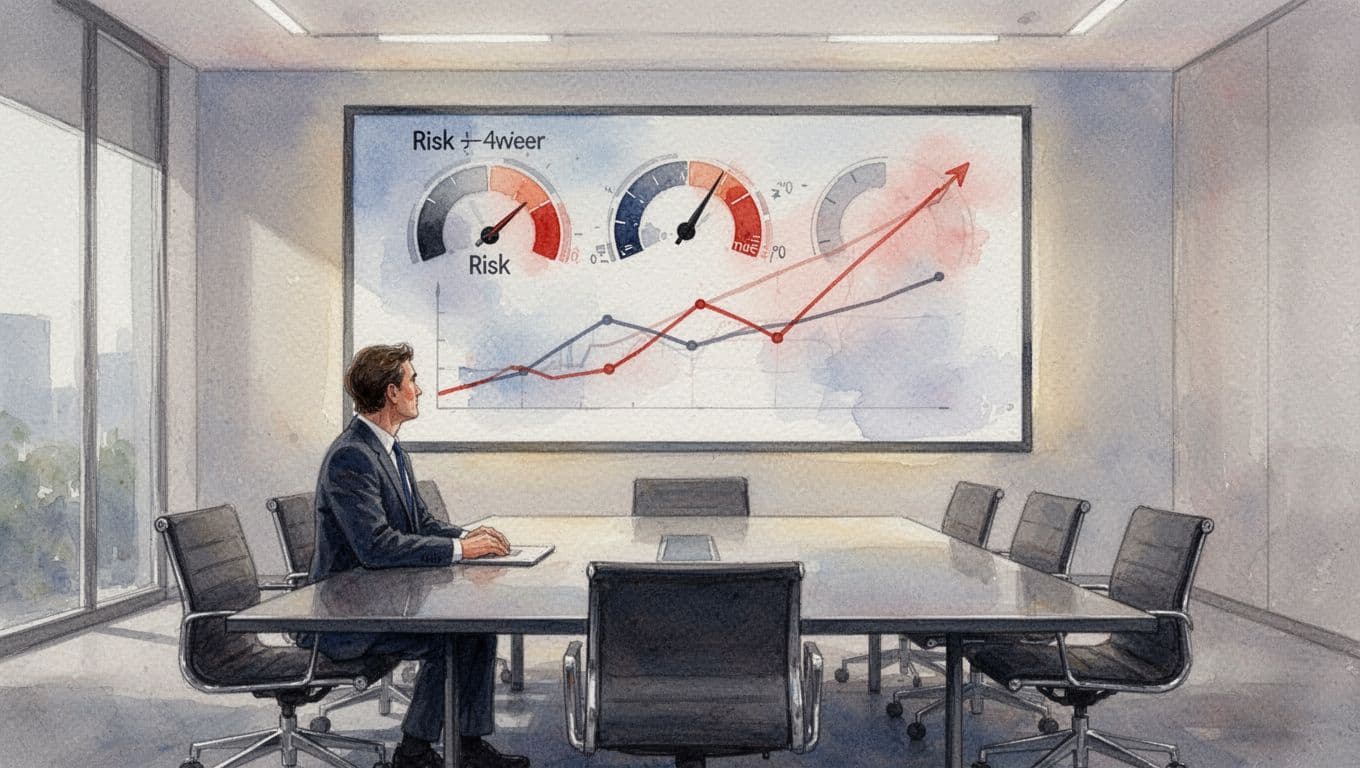
That is why technology risk oversight has to connect to business continuity planning, disaster recovery planning, incident response readiness, and ransomware readiness. Your executive incident response checklist should tell leadership what breaks, who responds, and what the board needs to hear.
The same logic applies to AI. If you are moving ahead without AI governance, an AI acceptable use policy, AI vendor due diligence, and a clear AI adoption strategy, you are adding risk faster than value. Responsible AI is not a slogan. It is a control point.
This is also the lane where a fractional CISO, virtual CISO, or interim CISO can help. In other cases, a fractional CIO or interim CTO is the better fit because the real issue is executive ownership, not a tool gap.
Ask these four questions:
- Who owns the biggest risks?
- What breaks if a key system goes down?
- Which vendor or tool would hurt most if it failed?
- Can you explain the exposure without technical jargon?
If the answers are fuzzy, you do not have visibility yet. You have exposure.
Know when the problem is leadership, not labor
This is the point where many COOs realize they do not need more tactical help. They need stronger technology leadership. That might be a fractional CTO, interim CTO services, a virtual CTO, a part-time CTO, or an outsourced CTO, depending on how sharp the gap is.
The label matters less than the outcome. You need someone who can close the technology leadership gap, align the work to business goals, and create a decision rhythm you can trust. In mid-market and growth-stage companies, that is often the difference between controlled growth and expensive drift.
If the business is moving toward acquisition readiness, technical due diligence and cybersecurity due diligence will expose the same weaknesses fast. So will post-merger technology integration if you are carrying weak ownership into a bigger organization.
When you are ready to sort it out, Get an Executive Technology Clarity Check. You will get a cleaner read on what is slowing the business, what is creating risk, and what deserves attention first.
Conclusion
You do not need to know every technical detail to spot misalignment. You need to know whether the work, the money, and the risk are all aimed at the same business goal.
If they are not, the fix is not another dashboard or another vendor promise. It is clearer ownership, better reporting, and a technology roadmap you can defend when the questions get hard. That is what technology alignment looks like when it works.