

As a COO, you usually feel business-IT misalignment before anyone puts a name on it. Meetings get longer, decisions get softer, and the tech work keeps moving without making the business easier to run. When technology business alignment breaks down, the damage rarely looks dramatic. It looks like drift, extra work, and money spent without a clean answer.
You do not need to be a technologist to spot it. You need a clear view of the business objectives you are chasing, the business outcomes, and a simple way to test whether current technology priorities support them. That is where the real check begins.
Key takeaways
- If technology priorities cannot be tied to business value such as growth, margin, risk, or customer experience, they are probably off track.
- Misalignment shows up in reporting, vendor influence, stalled decisions, and reduced operational efficiency before it shows up in the budget.
- The fix is stronger ownership, a simpler roadmap, and executive technology leadership that speaks to business and strategic goals first.
The warning signs show up in your weekly rhythm
The first clue is usually pace. Your team is busy, but the business still feels stuck. The IT strategy roadmap keeps changing. A vendor keeps steering next steps. Operations wants speed, but the tech team is tied up in debt, upgrades, or a platform move no one can explain in business terms.
That is when you should start asking whether you need fractional CTO services or interim CTO support. The question is not whether the team is working hard. The question is whether the team is working on the right things with solid collaboration between operations and the tech team.

A few other warning signs are hard to miss once you know where to look:
- Your dashboards show activity, but not outcomes.
- IT initiatives are called important, but nobody can tie them to growth or risk.
- The team keeps asking for more tools while the current ones are underused.
- No one can clearly say who owns the result.
If your technology plan needs a translation layer every time it reaches the executive team for decision-making, the plan is not ready.
That is also where a technology leadership gap starts to matter. You can have strong managers and still lack executive-level clarity.
Use a simple alignment test
When you want a fast read on misalignment, strip away the jargon. Ask four questions and force plain answers.
| Question | Healthy answer | Red flag |
|---|---|---|
| What business goal does this support? | Growth, margin, service, risk, or customer trust | “It’s important” |
| Who owns the result? | One named leader | Shared ownership or vendor ownership |
| What gets delayed if this waits? | A clear business consequence | “Nothing major” |
| How will we know it worked in 90 days? | KPIs and a date | More meetings or another dashboard |
If the answers drift into technical detail, you are not looking at a strategy problem. You are looking at an IT governance problem.
That is where board-ready technology reporting becomes useful. Your reports should help leadership act, not just observe. A good report gives you a board-ready risk summary, a view of priorities with clear business value, and a clean line between what matters now and what can wait.
If you want a useful outside reference on business-IT alignment and operator expectations, the COO Alliance piece on unclear expectations makes the point plainly. Strong execution needs clear ownership, not vague pressure.
Where the gap usually starts
Misalignment rarely comes from one bad decision. It usually comes from a weak operating model.
Founder-led technology decisions may still be shaping the roadmap long after the business outgrows them. Vendors may have too much influence because nobody is doing serious vendor management. Tool sprawl grows alongside legacy systems, shadow IT creeps in without a solid enterprise architecture, and technical debt gets treated like a side issue instead of a business drag.
That is also where board cybersecurity reporting and cyber risk appetite start to matter for cybersecurity and risk management. If the board cannot tell what risk you are carrying, it cannot help you govern it. If third-party risk management lives in a spreadsheet without ITSM to guide digital transformation, it is not really managed.
The same is true for spend and resource allocation. When technology budgets rise but the business does not feel more confident, you are probably dealing with weak technology governance for CEOs and boards, not a hardware problem. The work should point to a business-aligned technology strategy, not a pile of disconnected projects.
The State of the COO 2026 report shows a familiar pattern, ambition moves faster than execution on business objectives. That gap is exactly where business-IT alignment breaks and technology priorities slip out of sync.
What aligned priorities look like
When things are working, the picture gets simpler. You can explain the tech plan in one board meeting. You can name the owner for each major decision. You can tell which projects support business objectives like growth, which reduce risk, and which should wait.
A good operating rhythm usually includes:
- a one-page technology strategy
- a 12-month technology roadmap
- board-ready reporting and communication channels that show progress, risk, and spend
- named owners for major systems, vendors, and decisions
- regular review of technology return on investment and cost-per-outcome reporting
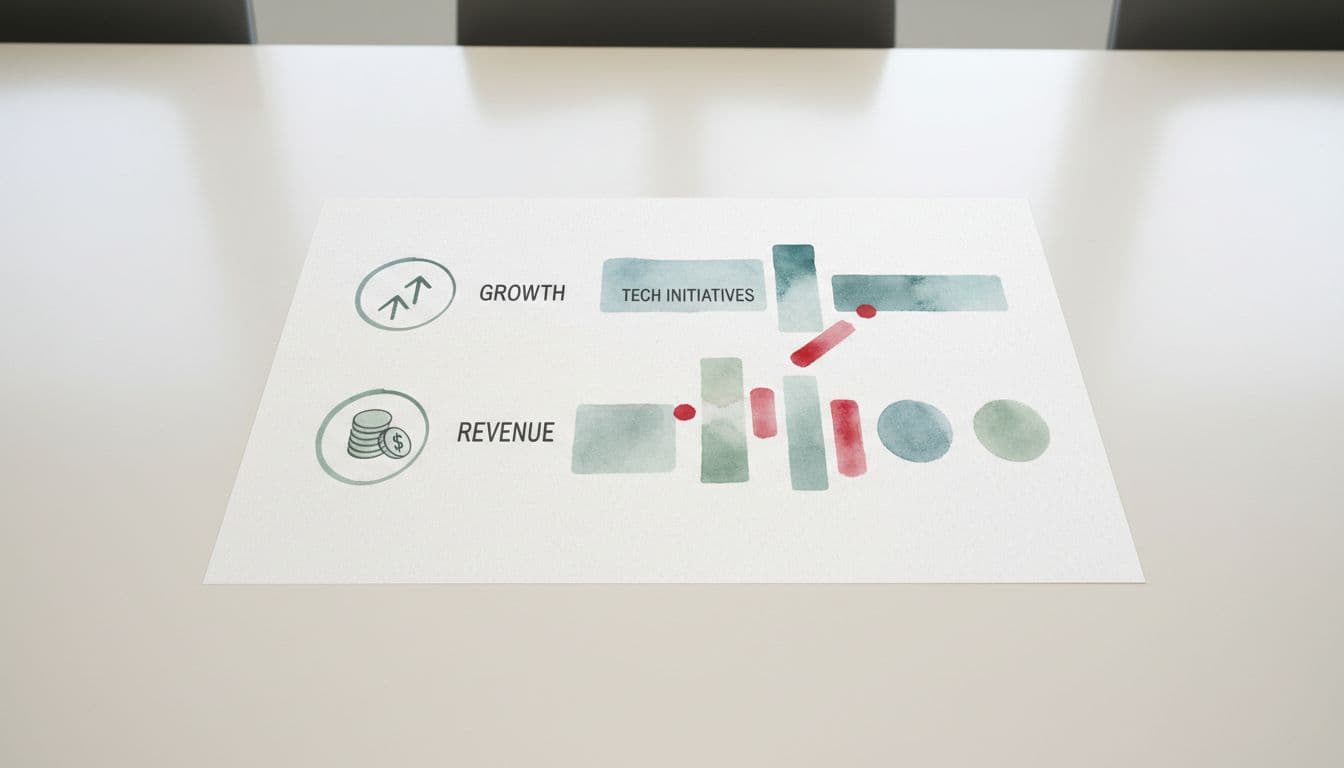
That is also where IT leaders in executive technology leadership earn their keep. It gives you the structure to make tradeoffs in innovation and agility without creating chaos. If the pressure is high and the leadership gap is obvious, Get an Executive Technology Clarity Check is a sensible first move to build stakeholder trust.
Frequently Asked Questions
What is business-IT alignment?
Business-IT alignment means technology priorities directly support clear business objectives like growth, margin, risk reduction, or customer experience. When aligned, you can explain the tech plan in one board meeting, name owners for major decisions, and tie every initiative to measurable outcomes. Misalignment shows as drift, extra work, and spend without business impact.
How can COOs spot misaligned technology priorities?
Look for pace issues: teams busy but business stuck, changing IT roadmaps, vendor steering, or dashboards showing activity without outcomes. Other signs include stalled decisions, underused tools, and no clear ownership of results. It appears in your weekly rhythm before hitting the budget.
What is a simple test for alignment?
Ask four questions: What business goal does this support? Who owns the result? What gets delayed if it waits? How will we know it worked in 90 days? Healthy answers tie to growth, margin, or risk with named owners and KPIs; red flags are vague importance or shared ownership. Use this to strip away jargon and reveal governance gaps.
Where does misalignment usually start?
It stems from weak operating models like founder-led decisions outgrowing the business, vendor influence without strong vendor management, tool sprawl, or untreated technical debt. Boards lack clear board-ready technology reporting on risk and priorities. The fix needs a one-page technology strategy and executive technology leadership.
How do I fix business-IT misalignment?
Build stronger ownership, a simpler 12-month roadmap, and board-ready reporting that shows progress, risk, and spend. Consider fractional CTO services or an Executive Technology Clarity Check for outside perspective. Focus on business value first to make tradeoffs clear and the business easier to run.
Conclusion
If your technology priorities lack business-it alignment, you will feel it in reporting, vendor pressure, and stalled decisions before you see it in the P&L. That is the part many leaders miss.
The fix is not more activity. It is clearer ownership, a better roadmap for continuous improvement, and stronger executive technology leadership. When you get that right, the business gets easier to run, and the next hard decision, such as adopting cloud computing, gets a lot cleaner while advancing your strategic goals.