

Integrating artificial intelligence in customer service can cut response times, answer routine questions around the clock, support your agents, and help you scale service without adding headcount at the same rate to improve operational costs and efficiency. For CEOs, COOs, founders, and boards, that speed can improve customer experience cx and operating margins.
However, one automated mistake can reach thousands of customers before anyone notices, expose private data, produce unfair outcomes, or turn a service error into a legal and reputational problem. When evaluating the full scope of ai customer service risks for business, the practical challenge is capturing AI customer service gains while keeping accountability, privacy, accuracy, and human judgment in place. Start with an AI use-case risk review before you expand deployment, then examine where the speed benefits end and your liability begins.
Key Takeaways: AI Customer Service Needs Speed, Guardrails, and Ownership
AI customer service can improve response times, but speed alone does not create a better customer experience. You still need accurate answers, fair treatment, strong privacy controls, and a clear person accountable for the system’s decisions.
The main lessons for managing AI customer service risks for business are straightforward:
- AI works best for narrow, repeatable service tasks with clear boundaries.
- Effective risk management in customer service proves that faster answers do not guarantee accurate, complete, or fair answers.
- Scale increases liability because one flawed response can reach many customers quickly.
- Privacy failures, weak vendor controls, and unclear accountability create the greatest exposure.
- High-risk decisions need human review, especially when they affect money, access, safety, or legal rights.
- You should measure business outcomes, not just automation rates or response speed.
- An executive owner should approve the use case, limits, monitoring, and escalation rules.
- Leaders should include AI service risks in broader technology risk oversight, not leave them buried in an operations dashboard.
Speed helps only when the answer stays inside safe limits
Fast responses have real value. Customers receive help sooner, agents spend less time handling repetitive questions, and your service team can support more volume without matching every increase with new headcount.
However, an AI system can also deliver a wrong answer at the same speed. If it invents a refund policy, misstates a contract term, or gives incorrect instructions during an outage, the response can spread across email, chat, social media, and self-service channels before your team recognizes the pattern.
That makes scope control more important than a high automation percentage. Start with questions that have stable answers, low consequences, and clear source material. Order status, business hours, basic product information, and routine troubleshooting may fit. Exceptions, complaints, account closures, disputed charges, and regulated advice usually need tighter controls.
Your goal is not to automate every interaction. Your goal is to automate the right interactions without weakening customer trust.
Guardrails must cover privacy, fairness, and escalation
A customer service model needs more than a content filter. You need controls that define what the system can access, what it can say, and when it must stop.
For example, your guardrails should address:
- Which customer records the system may retrieve and display.
- Whether personal information is masked, retained, or used for model improvement.
- Which topics require an immediate handoff to a trained employee.
- How the system handles uncertainty instead of guessing.
- How you review responses for biased treatment across customer groups.
- How you record incidents, complaints, overrides, and material changes.
A vendor’s security statement does not transfer your accountability. You still need to review data-use terms, access controls, audit rights, incident obligations, subcontractors, and service-level commitments. If a provider cannot explain how it protects customer data or supports investigation, the speed benefit may carry an unacceptable cost.
A useful escalation rule is simple: when the consequence of being wrong is high, the system should slow down and involve a person.
Ownership turns AI from a tool into a governed business process
Someone must own the customer outcome, not just the software configuration. That person should have authority to pause the system, approve changes, require testing, and report material incidents to executive leadership.
The owner also needs a practical monitoring rhythm. Review failed answers, repeat contacts, customer complaints, escalation rates, refunds, retention, and resolution quality. A lower cost per interaction means little if customers must contact you twice to correct an automated mistake.
Set approval rules before deployment. Decide who can change the knowledge base, expand the use case, connect new data sources, or alter escalation thresholds. Assign responsibility across customer service, technology, legal, privacy, and operations, then name one executive who resolves conflicts.
When AI affects customer access, pricing, refunds, or sensitive personal information, your leadership team should treat it as a business decision with technology dependencies. That structure gives you speed with a brake pedal, not speed without control.
## Where AI in Customer Service Creates Real Speed Gains
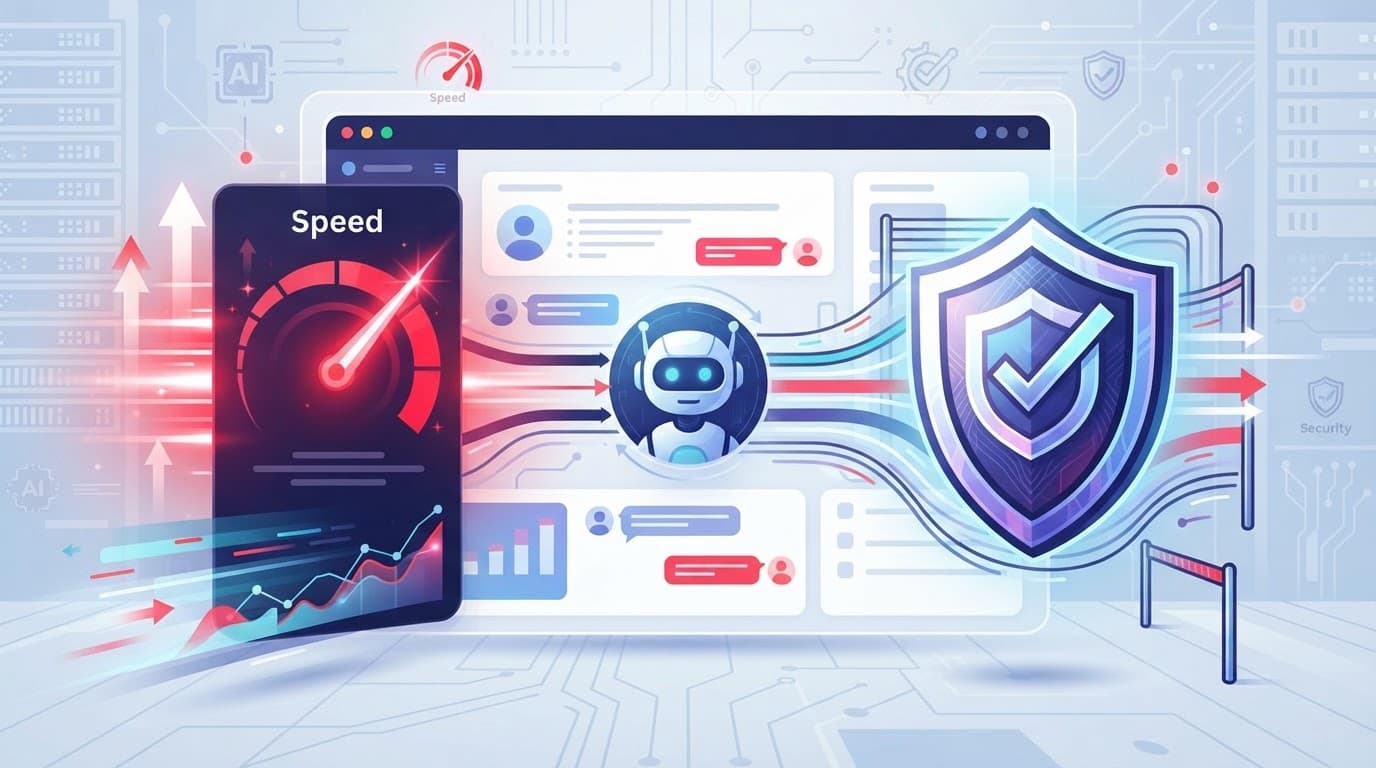
AI can reduce wait time, increase service coverage, and help agents handle more customer conversations. However, a faster first response is not the same as a resolved issue. If customers receive a quick but incomplete answer, your team may create more work while reporting better automation results. Organizations often deploy generative AI chatbots powered by natural language processing nlp to handle automated customer support, yet the fundamental service risks remain identical.
The safest path is to match each AI use case to the customer harm, process complexity, data sensitivity, and judgment required. Your business-aligned technology strategy should treat AI service projects as business decisions with measurable outcomes, not as additions to the roadmap because a vendor promotes them.
The Best First Use Cases Are Narrow, Repetitive, and Easy to Check
Start with work that has clear inputs, approved answers, and limited consequences when something goes wrong. AI can help answer routine policy questions, classify incoming tickets, translate messages, summarize calls, draft replies for human customer service agents, and find information in a controlled knowledge base.
These tasks can create real speed gains without giving the system broad authority. Ticket classification can send a billing issue to the right queue faster. Call summaries can reduce after-call work. Knowledge search can help support agent productivity by locating current return policies without searching several internal systems. Draft replies can shorten handling time while leaving human customer service agents responsible for delivering personalized customer service and the final answer.
A controlled knowledge base matters because the system needs a reliable source. If policies are outdated, contradictory, or scattered across documents, AI may make the confusion easier to access. Before you automate search or drafting, assign ownership for the content, define how updates are approved, and remove documents that should no longer guide customer responses.
Narrow use cases are also easier to test and reverse. You can compare AI-assisted replies with existing agent performance, review samples for accuracy, and pause the feature without redesigning your entire service operation. That makes early deployment more like a controlled pilot than an irreversible change to customer treatment.
By contrast, fully autonomous decisions about refunds, account closures, credit, eligibility, complaints, or safety carry greater risk. These decisions may involve contracts, financial loss, regulatory requirements, vulnerable customers, or facts the model cannot reliably assess. A wrong answer can deny access, create an unfair outcome, or trigger a complaint that takes far longer to resolve than the original request.
Keep a person in the workflow whenever an answer could materially affect a customer. Human review should cover exceptions, uncertain answers, sensitive data, escalated complaints, and decisions involving money, access, safety, or legal rights. Your goal is to remove avoidable delay, not remove judgment where judgment still matters.
### Measure Resolution and Customer Trust, Not Just Deflection
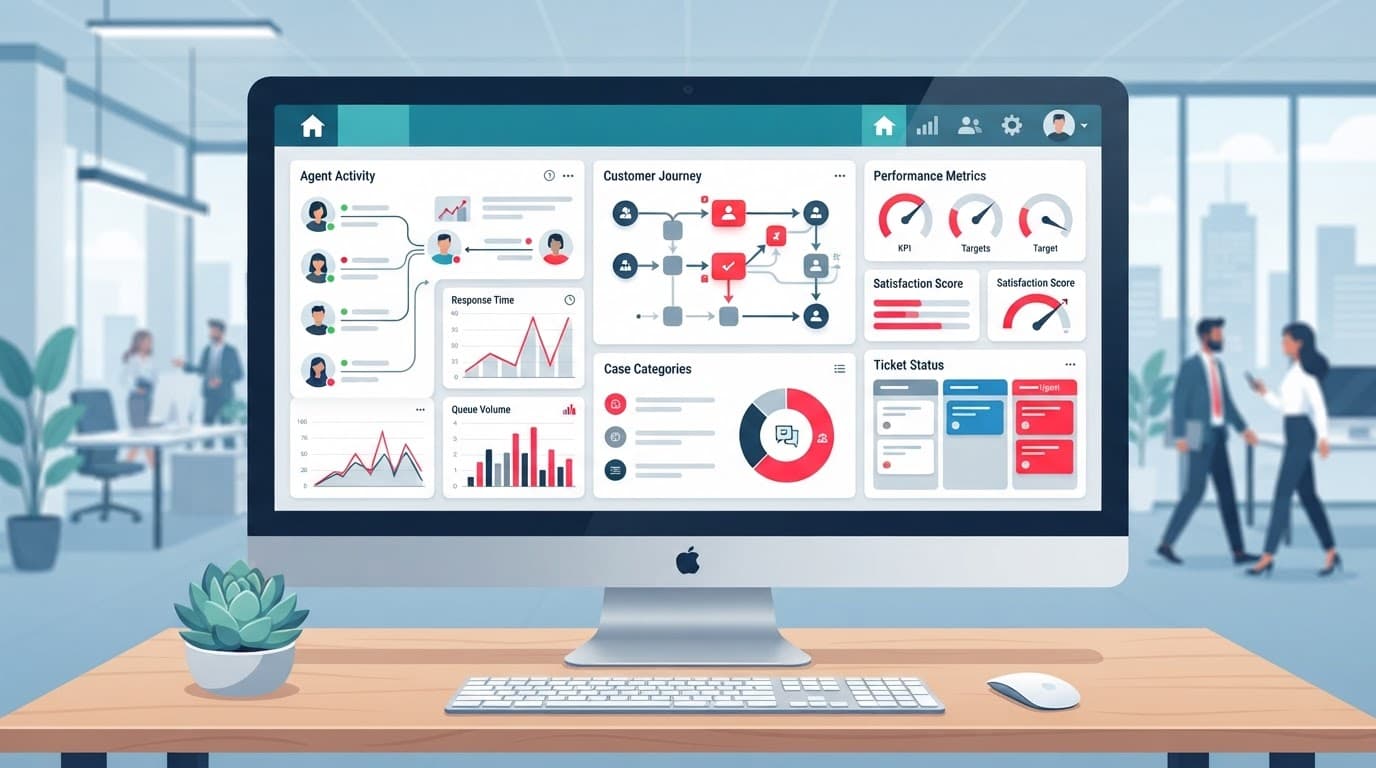
A high containment or deflection rate can look impressive while hiding a failing customer experience. Customers may abandon sessions, contact you again through another channel, or accept an answer they know is wrong because reaching an employee feels difficult.
You need a baseline before deployment. Compare AI-assisted service with the existing process using measures such as:
- Time to first response and average handling time.
- First-contact resolution and total resolution time.
- Backlog size, escalation volume, and transfer rates.
- Repeat contacts within a defined period.
- Customer satisfaction csat, complaint trends, and opt-out rates.
- Cost per contact, including follow-up work caused by errors.
Quality sampling should sit beside the operational data. Review a representative set of conversations for accuracy, completeness, tone, policy compliance, privacy handling, and appropriate escalation. A response can sound polished while still omitting an important condition or directing a customer to the wrong process.
Track errors by customer group, language, channel, product, and issue type. Overall accuracy can conceal uneven treatment if the system performs well for common requests but poorly for customers with limited English proficiency, accessibility needs, unusual account histories, or complex complaints.
If deflection rises while repeat contacts and complaints rise with it, your system is shifting work rather than solving it.
Set thresholds that trigger investigation or pause deployment. For example, a sudden increase in escalations, negative feedback, policy exceptions, or repeat contacts should receive executive attention before the team expands the use case. Review results with customer service, operations, technology, legal, and privacy owners so no single dashboard determines whether the system is safe.
Speed is useful when it leads to resolution, confidence, and fair treatment. Measure those outcomes, and you can see whether AI is improving service or simply moving the cost of failure somewhere less visible.
AI Customer Service Risks for Business: The Liability Hidden Behind Faster Answers
The liability from AI customer service is not limited to a chatbot saying something incorrect. Risk also appears when the system uses private or inaccurate data, treats customers inconsistently, makes a regulated decision, misrepresents company policy, or acts without a clear record of who approved its behavior.
Automation increases the reach and speed of good decisions, but it also spreads bad decisions quickly. Your governance model must account for accuracy, privacy, fairness, vendor control, and executive ownership before faster answers become expensive ones.
Wrong Answers Become Expensive When the System Sounds Certain
A hallucinated answer can look polished enough to earn customer trust. The system might invent a refund exception, describe a policy that doesn’t exist, expose incorrect account information, or give unsafe troubleshooting advice. If the customer acts on that answer, your company may face a refund dispute, service failure, safety complaint, or regulatory scrutiny.
The danger increases when the system speaks with certainty. A confident answer caused by ai hallucination and errors can cause a customer to cancel a service, disclose more personal information, change a medication-related behavior, miss a payment deadline, or rely on an inaccurate contract interpretation. When dealing with ai hallucination and errors, the customer sees your service channel, not the model behind it, so the business owns the resulting experience.
A disclaimer rarely fixes this problem. Telling customers that AI may make mistakes does not excuse a response that misstates your policy or directs someone to take harmful action. Disclaimers also do little when the interface, tone, and apparent authority encourage customers to rely on the answer.
Build controls into the service process instead:
- Use approved, current knowledge sources with named owners and review dates.
- Define answer boundaries, including topics the system must refuse or escalate.
- Add confidence checks that stop the response when the source material is incomplete or conflicting.
- Provide citations or policy references when customers need to verify an important answer.
- Test real conversations, including unusual wording, angry customers, incomplete facts, and policy exceptions.
- Escalate quickly when the system cannot verify the answer or when money, access, safety, or legal rights are involved.
You should also preserve a record of the source used, the response delivered, the model version, and any human approval. Without that evidence, investigating a complaint becomes guesswork.
Privacy, Bias, and Consumer Protection Risks Can Scale in Minutes
Customer service AI often touches account records, payment details, support histories, health information, identity data, and sensitive personal conversations. A poorly configured system may reveal one customer’s information to another, send private data to an unauthorized tool, retain conversations longer than necessary, or grant staff access beyond their role. Protecting data privacy and security ensures customer trust and transparency remain intact as interactions scale.
Fairness risks can spread just as quickly. The system may provide weaker answers to customers who use nonstandard language, rely on accessibility tools, speak another language, or describe complex circumstances. Addressing algorithmic discrimination and bias is essential, especially when ai ethics in cx demand fair treatment across all user groups. Inconsistent treatment can affect refunds, account access, complaint handling, or eligibility decisions.
These automated decisions must also align with evolving regulatory compliance standards. This includes meeting eu ai act requirements for high-risk deployments and following federal trade commission ftc guidance on deceptive automation and consumer protection.
Responsibility may involve both you and the AI vendor. The provider may control model training, subcontractors, infrastructure, and retention settings. You still control the business purpose, customer relationship, permissions, and deployment decisions.
Use data minimization, role-based access, retention limits, and documented customer notice where needed. Test outcomes across languages, disability-related needs, customer groups, and issue types. Most importantly, give customers a clear path to human review when an automated answer affects their money, access, privacy, or rights.
### Vendor Contracts Do Not Transfer Your Accountability
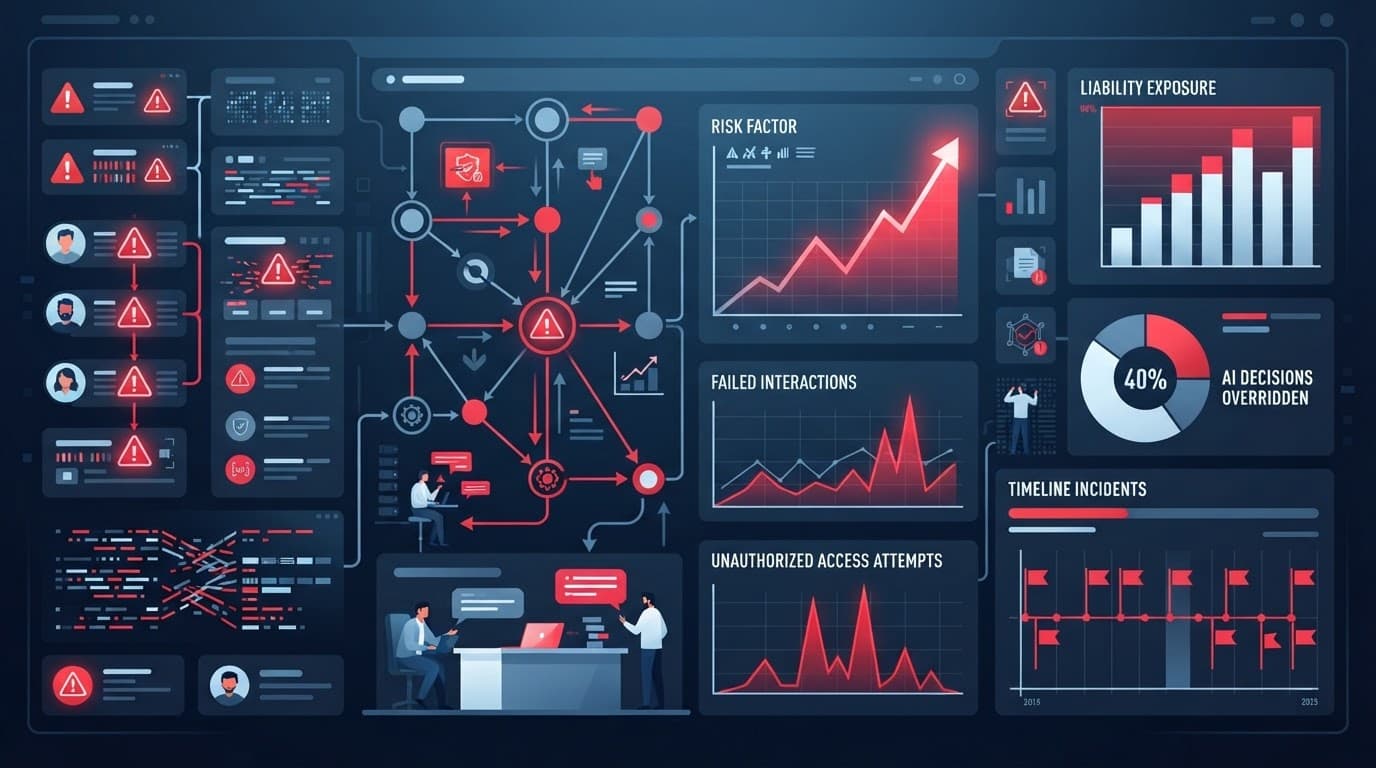
A third-party model can change behavior after an update, depend on undisclosed subcontractors, experience an outage, or alter how it stores and processes data. Your contract may also provide weak audit rights, vague incident-notification duties, and service levels that offer little protection when customer service stops working.
Before deployment, complete vendor due diligence and have legal, privacy, security, and technology leaders review the terms. Confirm approved data handling, model-change notifications, access controls, testing support, incident response, subcontractor disclosure, and meaningful remedies for service failures.
Performance testing should continue after launch. Measure accuracy, escalation quality, latency, privacy handling, and treatment across customer groups. Also define an exit plan, including data export, replacement options, retained records, and the authority to shut the tool off.
A vendor’s product design should not determine your customer service strategy. Review how to stop vendors from driving your roadmap before you let automation dictate service decisions, staffing, or customer access.
Executives and boards need concise reporting on material risks, owners, thresholds, and business impact. Use board technology reports to keep AI customer service risk visible, then arrange an AI use-case risk review before expanding the system’s authority.
How to Put Guardrails Around AI Customer Service Before You Scale It
You should treat AI customer service like a business process with controlled authority, not a software feature you switch on and forget. Before launch, classify each use case by customer impact, data sensitivity, and the cost of a wrong answer. Then assign a business owner, technology owner, privacy or legal reviewer where appropriate, and an escalation owner.
Your assurance layer and guardrails should define what the system may answer, what it must refuse, when it must transfer the conversation, and how customers can challenge an outcome. That structure gives you a practical way to capture efficiency without allowing your conversational ai technology to outrun accountability.
Test the System Against Real Conversations and Failure Scenarios
A polished demonstration does not prove that an AI service system is ready for customers. Test it with the conversations your team actually receives, including routine questions, incomplete information, ambiguous requests, angry customers, vulnerable customers, and customers who need accessibility or language support.
You should also test deliberate attempts to make the system fail. Include prompt injection attempts, requests for another person’s information, efforts to bypass identity checks, conflicting policy documents, outdated instructions, and multilingual requests. Ask whether the system refuses safely, protects private data, and escalates instead of guessing.
Your test plan should measure more than answer accuracy. Review:
- Whether answers remain consistent across similar questions.
- Whether the system follows current policy and avoids invented exceptions.
- Whether it treats customer groups and languages fairly.
- Whether it limits access to personal and account information.
- Whether escalation rules activate at the right time.
- Whether logs capture the conversation, source, model version, and human action.
- Whether the service recovers cleanly after a vendor outage or data connection failure.
Test policy changes before you publish them to customers. A revised refund rule, eligibility requirement, or service term should produce the correct answer across every supported channel. You also need a rollback procedure when a model update, knowledge-base change, or integration creates harmful behavior.
A system that passes common questions but fails angry, vulnerable, or privacy-sensitive customers is not ready to scale.
Testing continues after launch because models, source data, policies, integrations, and customer behavior change. Set a review schedule, sample live conversations, investigate complaints, and pause expansion when error rates or escalation patterns move beyond approved limits.
Create a Human Escalation Path That Customers Can Actually Use
Human review is only a safeguard if customers can reach a trained person without being trapped in an automated loop. Give customers a clear handoff option, preserve the conversation history, and avoid forcing them to repeat sensitive details after transfer, connecting them smoothly back to human customer service agents.
Define escalation triggers before launch. These may include disputed charges, account closure, identity concerns, threats, safety issues, vulnerable customers, legal complaints, uncertain answers, repeated failed attempts, and any request involving another person’s data. The system should also escalate when a customer asks for a person, rather than treating that request as another opportunity to deflect.
Set service-level targets for urgent and routine cases. Decide which agents can issue refunds, correct records, override an AI response, or restrict an account. Require supervisor review for high-impact decisions and formal complaint handling when an automated response may have caused loss or unfair treatment.
Agents need training on the limits of AI. They should know when to trust a response supported by approved information, when to challenge it, and how to correct an inaccurate answer without blaming the customer or the tool. Record the original response, the agent’s decision, the reason for any override, and the customer outcome.
That record gives you evidence for complaints, quality reviews, policy changes, and board reporting. It also helps you identify whether the problem comes from the model, the knowledge base, the workflow, or unclear agent authority.
Give the Board a Simple View of AI Performance and Exposure
Your board does not need model architecture or technical logs in the main report. It needs a concise monthly or quarterly view of where AI operates, what customers experience, what could harm the business, and who owns the response.
Include active use cases, customer volume, resolution rates, transfer rates, repeat contacts, material errors, complaints, privacy events, bias findings, vendor incidents, open remediation items, and measurable business value. Show trends and thresholds, not isolated percentages. A high resolution rate means little if complaints and repeat contacts are rising.
The executive summary should also identify decisions required from leadership. State whether you should expand, limit, pause, or retire a use case. Keep supporting evidence behind the summary, including test results, incident records, vendor updates, and remediation plans.
Use a consistent format for AI and broader risk reporting. A board-ready cybersecurity reporting template can help you connect AI oversight with cyber, privacy, vendor, and operational risk. The same report should name each owner, status, deadline, and accepted tradeoff.
When leaders can see performance, exposure, business value, and unresolved actions in one place, they can govern AI customer service risks for business before those risks become customer complaints or financial surprises.
A Safer AI Customer Service Rollout Starts With One Accountable Decision
You can reduce AI customer service risks for business when one accountable executive owns the decision to launch, limit, pause, or stop each use case. That owner does not need to configure the model or manage every support interaction. They do need authority to approve the purpose, risk boundary, data access, vendor terms, escalation rules, and success measures, especially when deploying customer service automation tools.
Without a named owner, responsibility spreads across customer service, IT, legal, privacy, and vendors. Everyone contributes, yet no one can answer a basic question: who decided this system was safe for customers? A clear decision owner closes that gap and gives leadership someone who can act when results move outside approved limits.
Choose the problem before you choose the platform
Start with one low-risk customer service use case. Ticket classification, agent reply drafts, internal knowledge search, or routine order-status questions may offer useful speed without giving generative ai chatbots authority over refunds, account access, or complaints.
Document the intended outcome in business terms. For example, you might want to reduce first-response time for routine tickets while maintaining first-contact resolution, data privacy and security, and customer satisfaction csat. That statement is stronger than a general goal to “implement AI” because it tells you what success must look like and what tradeoffs you will not accept.
Establish a baseline before launch. Record current response times, resolution rates, repeat contacts, transfer volume, complaints, error rates, and cost per interaction. Otherwise, a higher automation rate may look successful even when customers contact you twice to correct an answer.
Before the pilot begins, approve the controls that protect customers and the business:
- Limit the data the system can access to what the use case requires.
- Confirm how the vendor stores, processes, and deletes customer information.
- Identify approved knowledge sources and assign owners for keeping them current.
- Define topics that require human review or an immediate transfer.
- Set quality thresholds for accuracy, privacy handling, fairness, escalation, and repeat contacts.
- Decide who can change the model configuration, knowledge base, workflow, or customer-facing scope.
Do not buy a broad AI platform before you know which problem you are solving. A large contract can create pressure to automate more processes simply because the capability exists. That reverses the proper order of decisions and can turn a small service experiment into an unmanaged business dependency.
Stage the rollout, then let evidence decide what happens next
A controlled rollout should move through clear gates:
- Choose one low-risk use case and name the executive owner.
- Document the intended customer and business outcome.
- Establish a baseline using current service and cost measures.
- Approve data, privacy, security, vendor, and access controls.
- Test normal interactions, edge cases, privacy attacks, policy conflicts, and failure scenarios.
- Launch with human review and a visible customer escalation path.
- Monitor results by channel, issue type, language, and customer group.
- Expand only when the evidence supports broader use.

Leadership should pause or stop the use case when customer harm exceeds the measured value, when controls fail, or when ownership becomes unclear. A pause is a management decision, not an admission that the entire AI strategy failed. You may need to narrow the scope, correct the knowledge source, renegotiate vendor terms, retrain agents, or retire the workflow while evaluating artificial intelligence in customer service initiatives and striving for personalized customer service.
If your team needs executive judgment without a full-time technology hire, fractional CTO services can provide a practical bridge. You can also Get an Executive Technology Clarity Check to review the use case, risks, ownership, controls, and next sensible step before committing more money or customer volume.
Frequently Asked Questions
What are the main risks of using AI in customer service?
The primary risks include AI hallucinations providing inaccurate information, privacy breaches, inconsistent customer treatment, and the rapid scale of automated errors. If an automated response is incorrect or biased, it can quickly reach thousands of customers before your team notices.
How can businesses prevent AI from giving wrong answers?
You can prevent inaccurate responses by using controlled and approved knowledge bases, setting strict answer boundaries, and integrating confidence checks that stop the system when source material is lacking. High-risk decisions, such as refunds or account closures, should always require human review.
Why is executive ownership important for AI customer service?
An executive owner ensures that the AI deployment is treated as a governed business process rather than just a software tool. This leader holds the authority to approve changes, pause the system, monitor customer trust metrics, and resolve conflicts across departments.
Are vendor contracts enough to protect a company from AI liabilities?
No, third-party vendor terms do not transfer your accountability for customer relationships or data protection. Businesses must still perform rigorous due diligence, monitor ongoing performance, and maintain a clear exit strategy in case of service failures.
Conclusion
AI can improve response speed, answer consistency, agent productivity, and service capacity. Effectively managing ai customer service risks for business allows organizations to safely deploy conversational ai technology while preserving customer trust and transparency. You need to explain what the system does, what data it uses, where it can fail, who owns the outcome, and how customers reach a person when the system is wrong.
Responsible adoption means starting with a narrow use case, measuring real customer outcomes, protecting sensitive data, and keeping human judgment in high-impact decisions. Give executives a clear view of performance, exposure, ownership, and tradeoffs before expanding the system’s reach.
Before you commit more customer volume or authority, Book an AI use-case risk review to test whether your controls match the speed and scale of the system.