
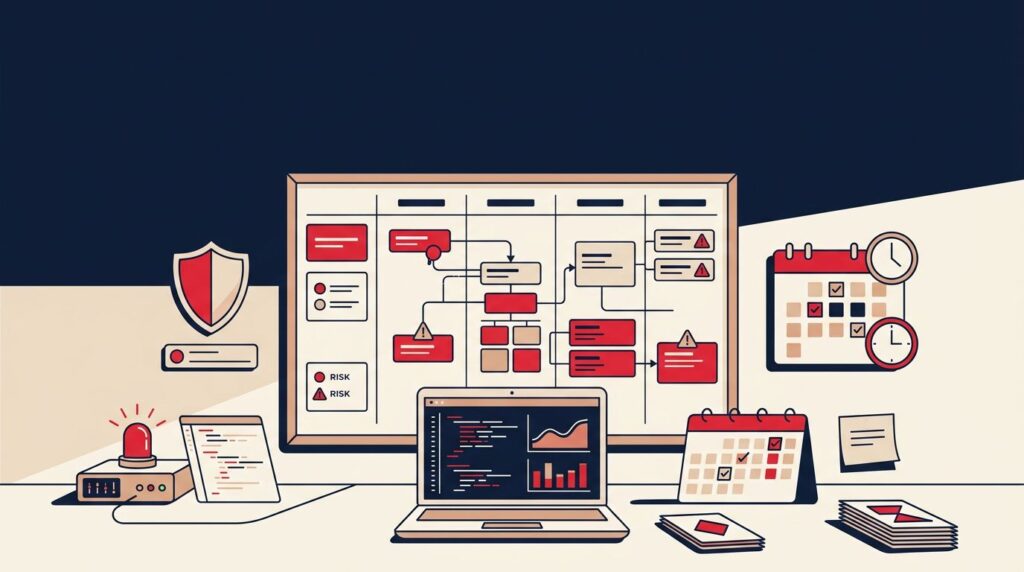
A technology plan should do more than list software, projects, and technical tasks. When you learn how to write a technology plan, you create a framework that helps you make better calls about growth, cost, risk, resilience, and execution. This kind of technology plan bridges the gap between high level objectives and daily operations.
The strongest plans connect business goals to technology priorities, named owners, timelines, measures, and tradeoffs. That is the kind of executive decision support behind CTO Input’s services and practical technology strategy guidance.
Key Takeaways for Writing a Useful Technology Plan
Start with business goals, not tools. Conduct a thorough needs assessment of the systems, data, vendors, risks, and team capacity you already have. Then choose a small number of priorities, assign decision rights, estimate cost and risk, and review progress on a set schedule.
Your technology plan should support a business-aligned technology strategy and show how you will align technology with business goals. The successful implementation of your strategy requires consistent oversight. One person must own the plan, even when several teams and vendors contribute. A roadmap without clear ownership is a list of hopes.
Start Your Technology Plan With Business Goals, Not Tools
A plan built around vendor proposals and tool preferences becomes a shopping list. You need a plan that starts with what the business must improve to better serve its organizational mission.
That may mean increasing revenue, improving margin, reducing manual work, protecting customer data, improving reporting, or preparing for an acquisition. State what needs to change, how you will measure it, and what can safely wait.
A one-page technology strategy can get leadership aligned before you add detail.
Define the Business Outcomes Your Technology Must Support
Choose three to five outcomes that matter now. Avoid vague statements such as “modernize systems.”
Instead, format these as SMART goals to achieve your desired outcomes in plain business language:
- Reduce month-end reporting time from ten days to five.
- Lower the cost to serve customers by removing repeated manual work.
- Improve uptime for a customer-facing system.
- Reduce exposure from weak identity and access controls.
For each outcome, name the business owner, the technology contribution, the measure, and the target date. Technology should be judged by business value, not the number of completed projects.
Assess Your Current Systems, Data, Risks, and Capabilities
Perform a thorough needs assessment of your current hardware and software, alongside your broader infrastructure, to establish a practical baseline for your applications, integrations, data quality, security controls, vendor contracts, technical debt, team capacity, and operational dependencies.
This separates urgent exposure from useful long-term improvement. If no one can explain who owns the decisions, you may have a technology leadership gap, not a planning problem. Stronger executive technology leadership brings the facts, tradeoffs, and decisions into one operating picture for your technology plan.
Build the Plan Around Priorities and Tradeoffs
A useful technology plan is focused. Rank initiatives by business impact, urgency, risk reduction, cost, effort, dependencies, and your confidence that the work will deliver.
Use a business technology roadmap to show the order of work. Pair it with a clear view of technology spending ROI so leadership can see exactly how the budget aligns with the value the company receives.
A good plan states what you will not do yet.
Balance growth investments with reliability, security, maintenance, and technical debt. Ignoring any of these areas in your technology plan creates expensive surprises later.
Choose the Few Initiatives That Matter Most Now
Group work into near-term actions, planned improvements, and future options. A simple scoring method can help, but it cannot make the decision for you.
Your top priorities may include replacing a failing ERP, improving management reporting, reducing duplicate digital tools, strengthening identity controls, or automating a costly manual process. Dealing with a variety of hardware and software is necessary, but too many overlapping solutions create issues. Tool sprawl is a governance problem when nobody can explain who approved the tools or why they remain.
Set Budget, Dependencies, Risks, and Decision Rules
Each initiative needs an estimated one-time cost, an ongoing operating budget, expected benefit, assumptions, dependencies, delivery risks, and security or compliance impact.
Name the person who can approve a material scope, budget, or timing change. Define what risk leaders can accept and what must be escalated. Vendors can inform the plan, but they should not write it. Keep control by learning how to stop vendors from driving your roadmap.
Turn the Plan Into an Executable Roadmap
Start with a clear action plan, then provide a broader six to 18-month view. This roadmap acts as the visual timeline for the implementation of your technology plan. The further out you look, the less granular the detail should be.
A technology plan explains the choices and outcomes, while a roadmap provides the sequence of events. A project schedule tracks detailed tasks. If you do not have a CTO, do not leave the plan unowned. A COO, fractional CTO, or interim CTO can provide executive ownership while you decide on the longer-term structure. It also helps to know when a fractional CTO fits.
Assign Owners, Milestones, and Measures
Write every initiative in plain language. Define the business problem, desired outcome, accountable owner, delivery lead, scope, deadline, budget, dependencies, risks, and success measures. During this process, the technology team and key stakeholders must agree on the project timeline to ensure alignment. Additionally, include staff training as a critical component of the implementation phase to ensure your team is prepared for new systems.
“IT owns it” is not enough. The business sponsor owns the why and the outcome, while the technology lead owns delivery and technical choices within agreed limits.
Review Progress With Reporting Leaders Can Trust
Report business results, material risks, decisions needed, budget variance, delivery confidence, and changes in expected value. Avoid technical dashboards that hide the tradeoffs.
Use board technology reporting and technology risk oversight practices that make ownership visible. Cyber updates should cover the reporting basics in a board-ready cybersecurity template, including what the board should hear about cyber, risk appetite, and third-party exposure.
Avoid Common Technology Planning Mistakes
The most effective technology plan serves as a vital component of your broader strategic plan rather than a standalone document. Avoid the mistake of starting with tools or listing every individual request. Do not hide ongoing costs, ignore data quality, isolate security plans from core operations, or overlook the necessity of staff training and process change. Neglecting professional development for your team often leads to a disconnect between the vision of the strategic plan and actual execution.
Most of all, do not write the technology plan once and abandon it. Update it as business conditions, vendor performance, risks, and priorities change. If you are preparing for a transaction, technical due diligence should test whether your plan reflects reality.
Questions Leaders Ask About Technology Plans
What should it include? Goals, current state facts, priorities, costs, risks, owners, measures, technical support requirements, and review dates.
How long should it be? Short enough for leadership to use. A one-page summary plus supporting detail often works well.
Who owns it? One accountable executive owns it. Teams and vendors support it.
How often should you update it? Review it monthly, with a deeper quarterly reset.
How do you estimate cost and ROI? Include implementation, recurring licenses, internal labor, vendor fees, avoided risk, and expected business benefit. This should also be informed by your evaluation process and a clear understanding of available funding options for ongoing staff training.
Keep the Plan Useful Under Pressure
A strong technology plan connects spending, systems, people, vendors, risk, and business outcomes. By maintaining this focus and giving one person clear ownership, you ensure the plan serves as a robust technology vision for the future of the organization. Regularly review these initiatives with leadership to prevent drift before it turns into operational damage.
If the plan keeps sliding back into firefighting, the issue may be unclear ownership rather than poor writing. If you are struggling with how to write a technology plan that sticks, you can Get an Executive Technology Clarity Check. This evaluation process identifies exactly what is slowing your growth, where technical risk is building, which funding options make the most sense, and how to improve your overall infrastructure health.